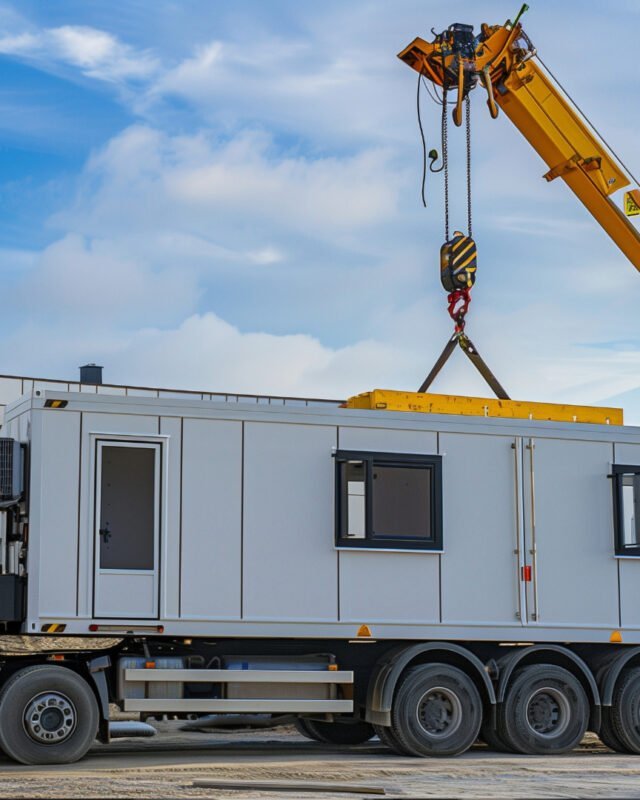


As 2030 approaches, Saudi Arabia is under intense pressure to deliver giga-projects like NEOM and The Line on time. Traditional construction methods are too slow to meet these deadlines, triggering a nationwide pivot toward modular construction in Saudi Arabia as the new default. The modular market reached USD 1,735.3 million in 2024 and is on track to hit USD 2,760 million by 2030 at an 7.9% CAGR. This rapid expansion shows that off-site volumetric construction is now central to Vision 2030’s delivery strategy.
The Speed Factor: Why Modular Construction in Saudi Arabia Outpaces Traditional Methods

Modular construction is emerging as the fastest way to build large-scale housing, commercial districts, and industrial sites. Off-site assembly cuts project timelines by up to 50%, a critical edge when entire new cities must rise within a few short years.
Permanent modular buildings, which already dominate the sector with a 71.32% revenue share, continue to grow because they support the accelerated delivery requirements of NEOM’s zones and The Line’s linear urban form. Prefabricated buildings are also rising, expected to grow from USD 2.30 billion in 2025 to USD 3.5 billion by 2030 at a 9% CAGR.
Speed is no longer optional. It is the only way to keep Vision 2030 on schedule.
Read Also: Saudi Real Estate Outlook: $195B Fuels Smart Construction Boom
Jeddah and Riyadh Become Production Hubs for Modular Construction in Saudi Arabia
Saudi Arabia’s urgent demand for modular units is reshaping the country’s industrial landscape. Jeddah and Riyadh are becoming major hubs for pre-cast and modular production.
Companies such as Red Sea International are advancing modular capabilities in Jeddah, while giants like Zamil Steel and Nesma & Partners expand prefabrication operations across the Kingdom. These investments support housing, industrial zones, and giga-projects that require high-volume, repeatable building components.
As modular output increases, Saudi Arabia is set to remain the Middle East & Africa’s leading modular market, with the wider GCC expected to hit USD 4.93 billion by 2032.
Labor Shift: From Low-Skilled On-Site Teams to High-Tech Assembly Lines
Modular construction changes how labor is used. Instead of depending on large teams of low-skilled on-site workers, the model shifts to controlled factory environments where high-tech assembly dominates.
This aligns directly with Vision 2030’s ambition to upskill the national workforce. Factory-based production reduces reliance on traditional labor camps, improves safety, and increases precision. It also supports advanced design tools like 4D/5D BIM, which are now standard in giga-project planning.
Modular methods don’t just build faster, but they build smarter.
Read Also: Fast-Tracked Cities: Modular Methods Cut Build Time in Saudi Arabia
A Strategic Future Built on Modular Construction in Saudi Arabia
As Vision 2030 accelerates, modular construction in Saudi Arabia stands at the center of the Kingdom’s push to deliver cities, districts, and infrastructure at record speed. For organizations seeking deeper insights into the modular market and its growth across the region, Saudi Arabia Construction by Eurogroup Consulting offers over 40 years of strategic advisory experience. Their market research expertise and on-the-ground support make them an essential partner for navigating Saudi Arabia’s rapidly evolving construction landscape.