
3D printed buildings Saudi Arabia are no longer experimental. They are now part of a national housing strategy since Saudi Arabia needs more than 115,000 new homes every year until 2030. Despite rising homeownership, shortages remain. Traditional construction cannot scale fast enough to satisfy the demand. The Ministry of Housing has responded by embracing 3D concrete printing as a real solution, not a pilot idea.
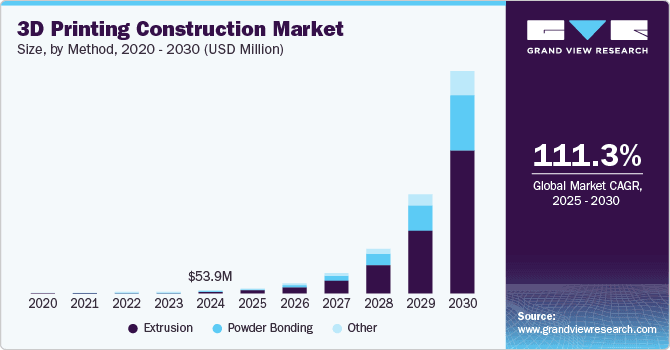
This shift is backed by economics. The Saudi 3D construction market is projected to grow from USD 1.2 billion in 2025 to USD 5.4 billion by 2031, at a 28.7% annual growth rate. That momentum has forced regulators, developers, and suppliers to act.
From Speed to Scale: Why Regulation Became Inevitable
Speed is the key advantage. 3D concrete printing can cut construction time from four to six months to weeks, and in some cases to 24 hours. Costs drop by more than 50% due to lower labor needs and reduced waste.
Read Also: How Modular Construction in Saudi Arabia Powers Giga-Speed
Dar Al Arkan’s 3D-printed villa in Riyadh showed what is possible. The project delivered the world’s tallest on-site 3D printed building. A three-story villa, 9.9 meters high. The first 130 square meters were printed in just eight days.
These 3D printed buildings Saudi Arabia also save energy. Integrated insulation layers reduce energy use by up to 30% compared to traditional buildings. That aligns directly with Vision 2030 goals on efficiency and sustainability.
2026 Codes Lock In 3D Printed Buildings Saudi Arabia
For years, regulation lagged behind innovation. That is now changing.
Research has validated 3D printed reinforced concrete columns against Saudi Building Code SBC 304 standards. Tests show structural performance comparable to conventional construction under axial loads.
These results paved the way for the 2026 regulations, which will standardize 3D printed concrete codes nationwide. This move turns what was once a novelty into a regulated building method. Around 50% of Sharakat developer projects already use 3D printing, signaling that adoption is well underway.
Cement Companies Race to Control the Ink
The most intense competition is not among developers. It is among cement producers.
Saudi cement firms are racing to patent their own “printable ink” formulas. Saudi Readymix has partnered with Black Buffalo 3D to develop localized concrete mixes using 99% domestic materials. The goal is clear: reduce costs and control supply chains. Some estimates target prints below USD 10,000 per villa.
Across the region, companies are innovating self-reinforced mixes that reduce steel use and improve strength. Saudi firms are moving fast to secure patents as the market scales.
Why The 3D Printed Buildings Saudi Arabia Strategy Matters Now
This is no longer about technology trials. It is about industrial positioning.
3D printed buildings in Saudi Arabia are becoming a regulated, competitive, and high-growth market. Companies that understand regulation, materials, and demand dynamics will lead.
Read Also: Smart Construction and Modular Building Growth in Saudi Arabia
For deeper insight into 3D printed buildings Saudi Arabia, stakeholders can explore advisory and market research services from Saudi Arabia Construction by Eurogroup Consulting. With 40 years of distinguished experience and a strong focus on Saudi Arabia, Eurogroup Consulting helps investors, developers, and manufacturers succeed in the Kingdom’s rapidly evolving construction landscape.