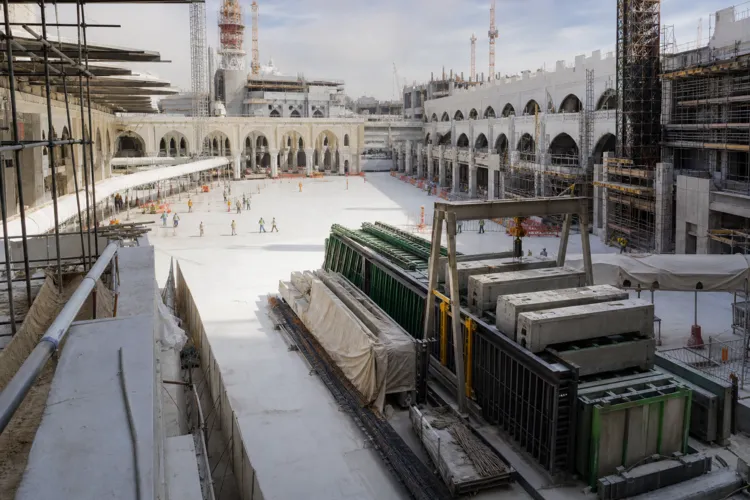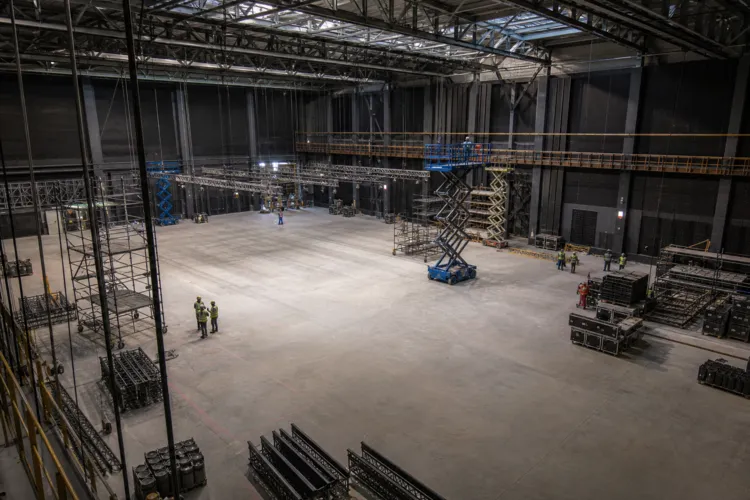

Geopolitical conflicts continue to shape economic conditions across many regions. For Saudi Arabia, these tensions create both risks and uncertainties for businesses. The Saudi Construction Business Impact of geopolitical instability is closely linked to economic growth, investor sentiment, and project execution. Because construction is a major pillar of the national economy, any disruption to economic stability can influence the pace of development and investment in the sector.
Global studies show how conflict affects economic performance. According to the Institute for Economics and Peace (IEP), countries experiencing high levels of conflict see an average 5% decline in GDP growth annually. Economic slowdowns directly affect large infrastructure investments. Governments and private investors often delay projects when uncertainty rises. As a result, construction pipelines can slow during periods of geopolitical tension.
Foreign investment also reacts strongly to instability. Research published in the World Bank Economic Review indicates that geopolitical tensions can lead to a 20% drop in foreign direct investment (FDI) in conflict-affected economies. For Saudi Arabia, international investment plays an important role in funding major construction initiatives. Reduced investor confidence can therefore influence project financing, partnerships, and long-term development plans.
Economic Stability and Investor Confidence in Construction
The construction industry holds a central position in Saudi Arabia’s economy. According to McKinsey & Company, the sector contributes about 8% of Saudi Arabia’s GDP and employs roughly 1.5 million people. This scale makes construction one of the most important non-oil industries in the country. Its performance has direct implications for employment, infrastructure development, and economic diversification.
Despite geopolitical uncertainty, government spending continues to support construction activity. The Saudi Arabian General Investment Authority (SAGIA) reports that the sector is expected to grow by around 7.5% annually. This growth is largely driven by public investment and large development programs. These initiatives help maintain momentum even when regional tensions create uncertainty for global investors.
Read also: Saudi Real Estate Outlook: $195B Fuels Smart Construction Boom
However, geopolitical instability can still create operational challenges for construction projects. A report from Deloitte Insights shows that projects in regions with unstable geopolitical environments often experience cost overruns of up to 30%. These increases are usually caused by delays, additional security requirements, and disruptions to supply chains. For large infrastructure developments, such cost increases can significantly affect budgets and timelines.
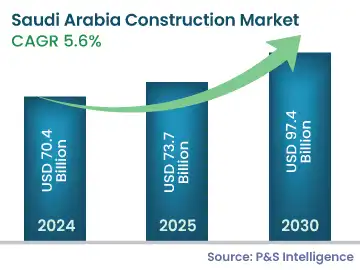
Operational costs are also rising for construction firms. According to the KPMG Global Construction Survey, 56% of construction companies say geopolitical risks have significantly affected their operational expenses. Companies often need to adapt logistics strategies, manage supply chain risks, and allocate additional resources to maintain project continuity during uncertain periods.
Investor sentiment plays a major role in shaping construction investment decisions. The PwC Global Investor Survey 2022 shows that 70% of investors consider geopolitical stability a key factor when deciding to invest in new construction projects. Investors typically evaluate regional stability before committing capital to long-term developments. This means geopolitical conditions can influence both the scale and timing of new construction investments.
Market confidence can shift quickly when tensions escalate. According to Arabian Business, confidence in the construction sector dropped by 15% following regional tensions in 2021. Lower confidence often leads to cautious investment behavior. Developers may delay new projects, while financial institutions tighten funding conditions.
Taken together, these figures highlight the broader Saudi Construction Business Impact of geopolitical conflicts. A potential 5% decline in GDP growth, combined with a 20% reduction in FDI, shows how macroeconomic pressures can affect construction activity. At the same time, operational risks such as 30% project cost overruns and rising expenses for 56% of firms demonstrate the financial challenges companies face during unstable periods.
Still, the sector remains resilient due to strong government spending and long-term development strategies. Continued investment in infrastructure and urban development helps maintain construction activity even when global tensions create uncertainty.
For policymakers and businesses, managing geopolitical risk is therefore essential. Strengthening supply chains, maintaining investor confidence, and ensuring stable project financing will remain critical priorities. By addressing these risks proactively, Saudi Arabia can continue advancing its construction sector while maintaining economic stability.
Talk to us for your needs in:
-
Sustainable Construction Solutions
-
Strategic Construction Planning
-
Customer-Centric Construction Services
-
Operational Excellence in Construction
-
Leadership and Change Management for Construction
-
Digital Transformation in Construction
-
Saudi Construction Market Research
-
In-Depth Market Study for Construction
-
Market Intelligence and Insights in Construction
-
Feasibility Study and Assessment in Construction
-
Saudi Construction Benchmarking