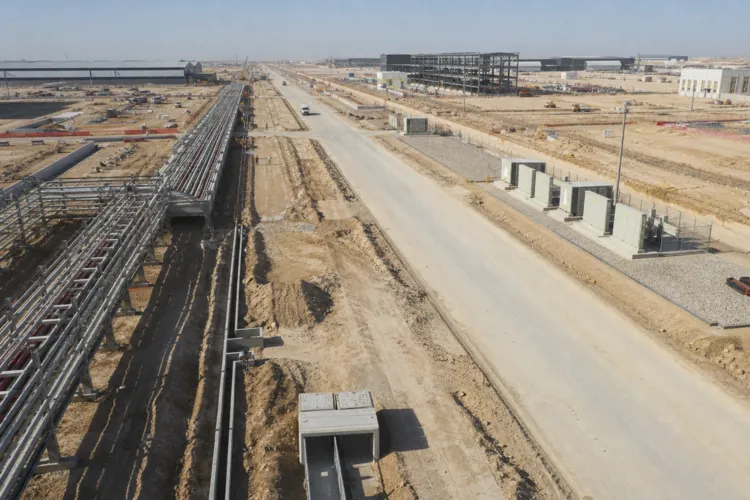
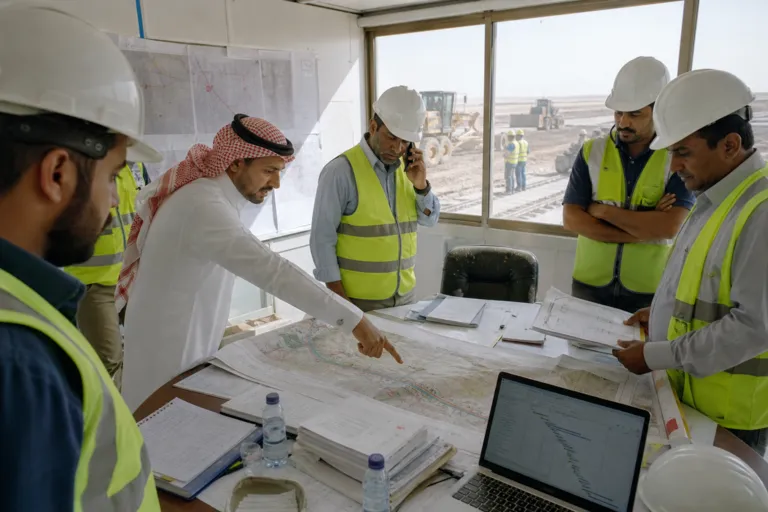
The latest Saudi Landbridge railway construction 2026 conversation is now less about ambition and more about execution mechanics. One headline figure anchors the civil scope: 950 km of civil works. That number sets expectations for contractors, suppliers, and logistics planning, because civil works drive the earliest schedule-critical activities on rail jobs. With a corridor-scale scope like 950 km, the market tends to watch how the client sequences procurement, how packages are defined, and how quickly bids can be evaluated and awarded without repeated stop-start cycles.
A rolling tender pipeline is one way project owners try to keep momentum. It signals that procurement is not treated as a single event, but as a staged release of packages that can move in parallel. That approach is common in large rail programs that divide construction into multiple packages to promote competitive tendering, as noted in the UAE’s Etihad Rail stage two delivery approach, which encompassed a total of 605 km and was divided into several packages. For Landbridge, a rolling pipeline can mean clearer line-of-sight for bidders and better resource planning over time, even when not all packages are released at once.
What ‘Rolling’ Procurement Implies for Delivery Risk
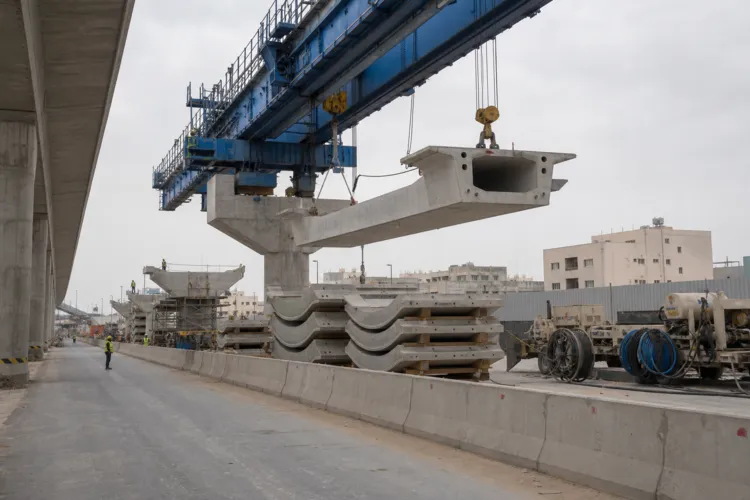
For bidders, a rolling pipeline tends to reshape strategy. Firms can target packages aligned to their strengths, rather than stretching to cover every scope element at once. It can also reduce congestion in the market by spreading bid submission windows. The region has recent examples of complex rail execution that underline why procurement clarity matters. The Oman-UAE rail link work has required tunnels, bridges, and flood protection systems, and reported progress included more than 27 million cubic metres of earthworks and over 100,000 cubic metres of concrete works, alongside 80 major structures, 900 concrete piles, and 130 box culverts under construction. Large civils numbers like these show how quickly on-the-ground scope can escalate when terrain and resilience features stack up.
Rolling procurement also interacts with technology and operations readiness. Saudi Railway’s partnership with Ericsson to deploy 5G and smart rail tech was framed as improving reliability and efficiency and supporting a future-ready railway network with high safety and performance standards. While that partnership is not described as Landbridge-specific in the provided sources, it highlights a wider industry direction: rail programs increasingly coordinate physical build, communications, and digital operations requirements. In practical terms, this can influence tender documents, interface management, and how early systems requirements are reflected in civil and track design obligations.
The Saudi market also continues to position itself as a convening point for rail industry engagement. Riyadh hosted the second annual Saudi International Rail on October 19-20 at the Roshn Front, under the patronage of the Minister of Transport and Logistic Services Saleh Al-Jasser. The event was described as a platform to promote international investment, transfer and localize cutting-edge technology, and empower national talent. For Saudi Landbridge railway construction 2026 stakeholders, these forums can matter because they compress networking, supplier discovery, and partnership formation into defined windows that can align with a rolling tender pipeline.
In the near term, the most actionable signal to watch is how clearly the 950 km civil works scope is translated into bid-ready packages, with consistent evaluation criteria and predictable release timing. A rolling tender pipeline can help keep competition active and resources mobilized, but only if interfaces between packages are well defined. As the industry tracks procurement cadence, the emphasis will remain on converting the stated civil scope into executable contracts, supported by supply chain readiness and the broader push for technology-enabled rail operations.
What is the key civil works figure in this Saudi Landbridge update?
What does a rolling tender pipeline mean in rail procurement?
Why is packaging used on large rail programs?
How does the keyword 'Saudi Landbridge railway construction 2026' relate to the procurement approach discussed?
Talk to us for your needs in:
-
Sustainable Construction Solutions
-
Strategic Construction Planning
-
Customer-Centric Construction Services
-
Operational Excellence in Construction
-
Leadership and Change Management for Construction
-
Digital Transformation in Construction
-
Saudi Construction Market Research
-
In-Depth Market Study for Construction
-
Market Intelligence and Insights in Construction
-
Feasibility Study and Assessment in Construction
-
Saudi Construction Benchmarking