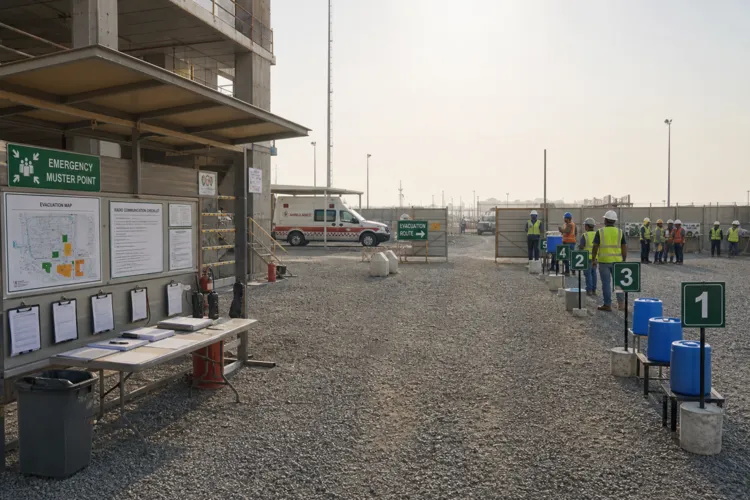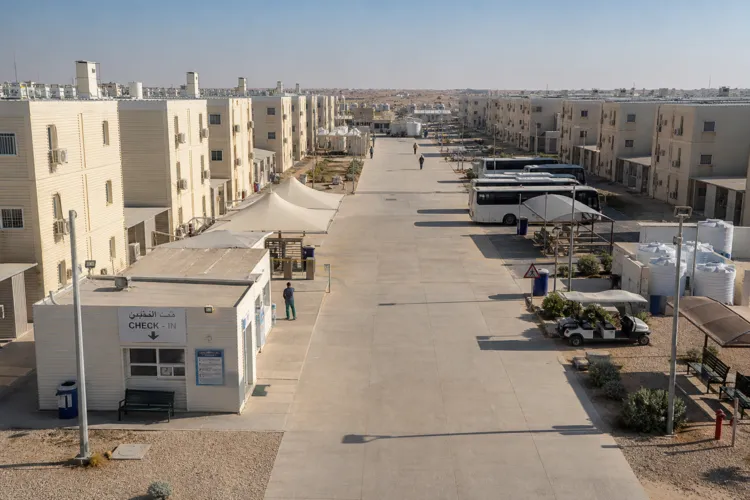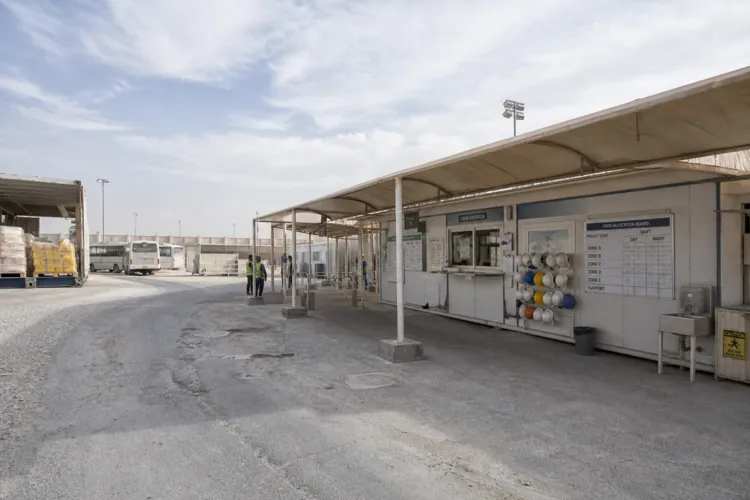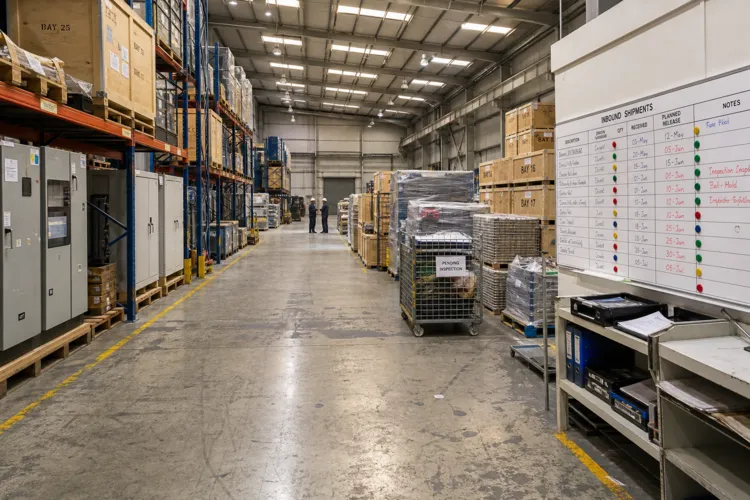
King Salman International Airport construction is a mega-expansion planned to serve Riyadh. It is under development and would succeed the current King Khalid International Airport and be built around it. The master plan was unveiled in November 2022, and the project is positioned under Saudi Arabia’s Vision 2030. The design team includes Foster + Partners, with engineering consultancy Jacobs also named in the sources.
Several core scope numbers appear consistently across sources and help explain why packaging matters. The airport is planned to cover 57km² (22 square miles). It includes six parallel runways. Sources also describe an airport with six passenger terminals, plus an iconic terminal and a private aviation terminal, and another source describes seven terminals including the site’s existing terminals. Capacity targets stated in the sources include 100 million passengers per year by 2030 and 185 million passengers per year by 2050.
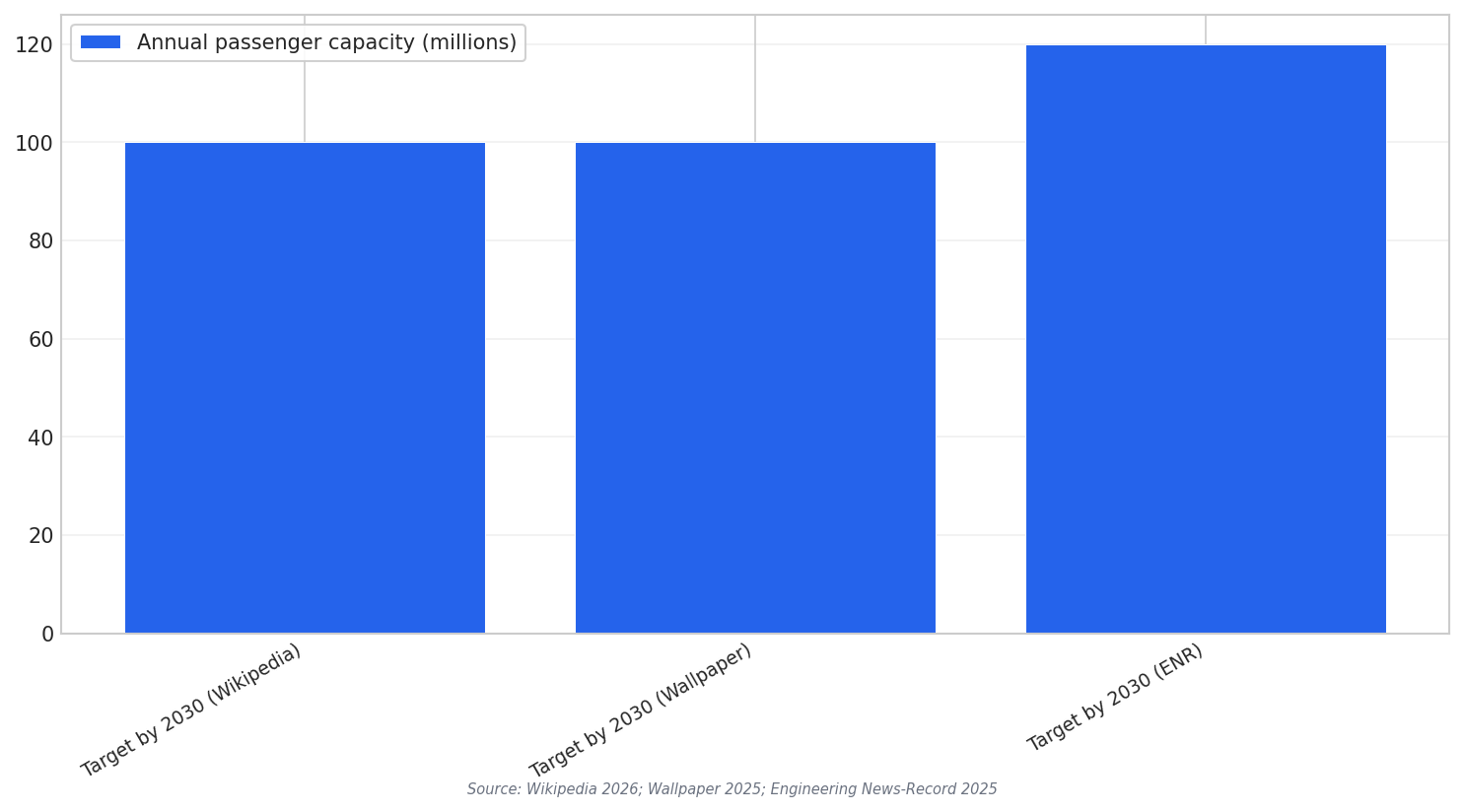
These figures also show why readers should track which statement is being used and where it came from. Wikipedia and Wallpaper both state a 100 million passengers per year target by 2030. Engineering News-Record reports a target to accommodate 120 million passengers per year, with 2030 targeted for the expansion’s completion. For long-range planning, Wikipedia adds 185 million passengers per year by 2050 and 3.5 million tonnes of cargo per year by 2050.
Packages Timeline and Tier-1 Contractor Map
The timeline starts with the master plan launch in November 2022, announced by Crown Prince Mohammed bin Salman, who is also described as PIF chairman in one source. After that, procurement activity becomes the next visible marker. A procurement update notes that the King Salman International Airport Development Company (KSIADC) called for best offers for key construction packages. It explicitly names EPC “best-offer” packages for the Iconic Terminal and Terminal 6, using an early-contractor-involvement model.
On the Tier-1 contractor map, multiple delivery partners are named in the sources. Engineering News-Record states KSIADC announced delivery partner agreements with Bechtel and Parsons at the Saudi-US Investment Forum in Riyadh on May 13. The same report also names Saudi Arabia-based Mace Group as the delivery partner focusing on planning and construction schedules, and Nera as providing technical and operational solutions for aviation and air navigation.
Ownership and contracting authority are also part of the map. The procurement update describes KSIADC as a PIF-owned project SPV and contracting authority. Another source describes the project as being undertaken by KSIADC, a Public Investment Fund (PIF) company, and calls it a $30bn project. Together, these details help explain how packages, delivery partners, and planning roles fit into King Salman International Airport construction as it moves from master planning to best-offer EPC steps.
What is King Salman International Airport construction building in Riyadh?
When was the master plan unveiled for King Salman International Airport?
Which key packages were called for best offers?
Who are the Tier-1 delivery partners named in the sources?
What capacity targets are stated for the airport?
Talk to us for your needs in:
-
Sustainable Construction Solutions
-
Strategic Construction Planning
-
Customer-Centric Construction Services
-
Operational Excellence in Construction
-
Leadership and Change Management for Construction
-
Digital Transformation in Construction
-
Saudi Construction Market Research
-
In-Depth Market Study for Construction
-
Market Intelligence and Insights in Construction
-
Feasibility Study and Assessment in Construction
-
Saudi Construction Benchmarking