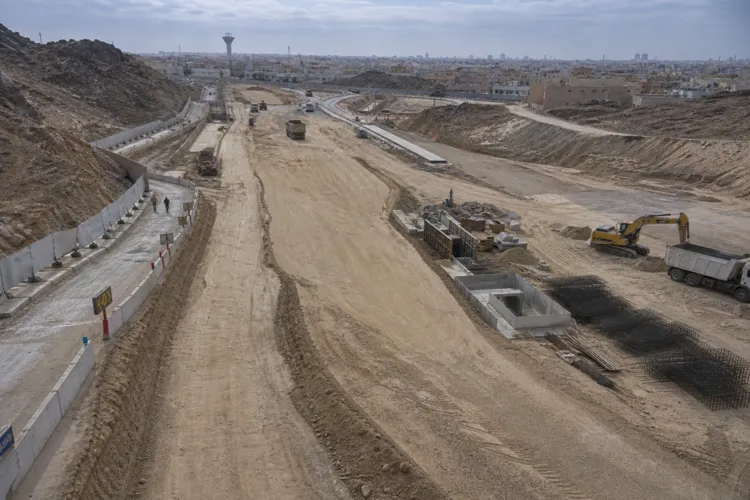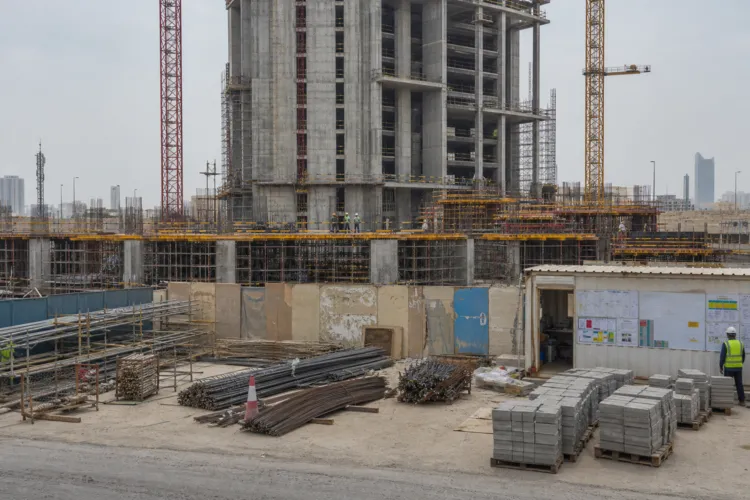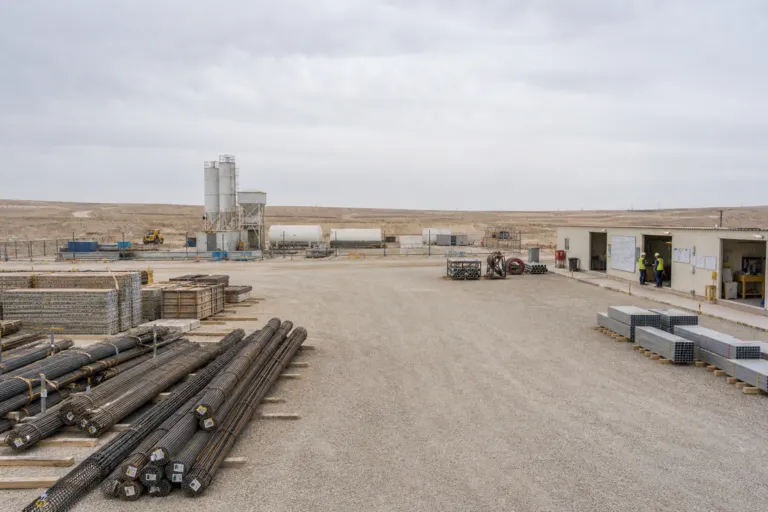
For nuclear power plant civil construction in Saudi Arabia, readiness starts with a simple reality check. International Atomic Energy Agency (IAEA) / PRIS figures show Saudi Arabia produced 0 TWh of nuclear electricity in 2019, 2020, and 2021. In the same period, it had 0 operable nuclear power reactors and 0 MWe (net) of nuclear power capacity. That matters for suppliers because the early work is not an expansion of an operating fleet. It is the first build-up from “none” to “some,” where every step before concrete placement carries outsized schedule and credibility weight.
Program structure and licensing signals are the next readiness layer. The World Nuclear Association reports that the Saudi government approved the Saudi National Atomic Energy Project (SNAEP) in July 2017 as part of Vision 2030, and that the Saudi Nuclear Energy Holding Company (SNEHC) was established in February 2022 to act as the developer of the national nuclear energy programme. It also notes that Duwaiheen Nuclear Energy Company (DNEC) holds a site licence granted in March 2023. For civil contractors, these are not marketing details. They define who develops, what is licensed, and which counterparties control site access and scope packaging.
What Suppliers Should Validate Before Mobilizing for Duwaiheen
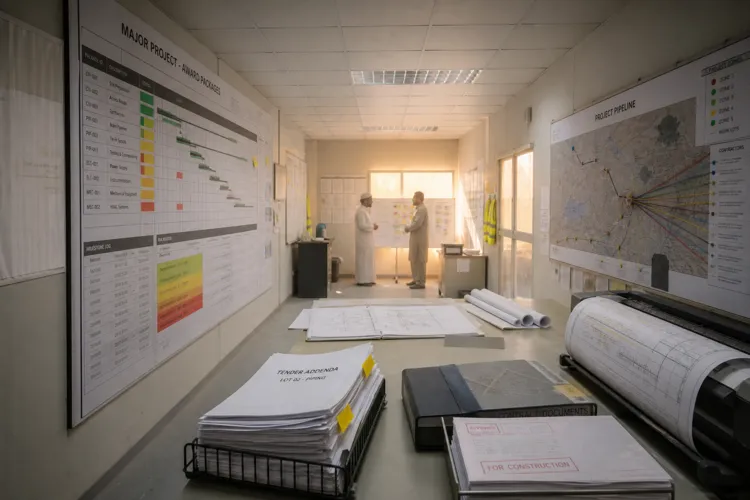
Procurement status shapes how civil scopes can be priced, scheduled, and insured. The World Nuclear Association states that the issue of reactor procurement remains unresolved, and that DNEC has sought bids for two reactors of about 1.4 GWe each, with Chinese, French, South Korean and Russian companies as approved bidders. It adds that bid deadlines have been postponed repeatedly since the tender was launched in 2022, and that there is still no vendor selected or contract awarded after more than four years. A separate report also says no reactor vendor has been selected and no construction timetable established, even while describing the offer as two reactors of approximately 1.4 GWe each for 2.8 GW of nameplate capacity. Civil suppliers should treat this uncertainty as a gating risk for final IFC drawings, interface matrices, and long-lead procurement timing.
International agreements affect what technologies and partner ecosystems are practical, which can influence specifications and compliance workflows. The World Nuclear Association reports that in November 2025 the US and Saudi Arabia signed an agreement described by the US as the legal foundation for a long-term partnership in which US companies would be Saudi Arabia’s preferred civil nuclear partners. It also reports that in July 2026 the USA and Saudi Arabia signed a nuclear cooperation “123 agreement,” subject to Congressional review, plus an accompanying bilateral safeguards agreement. Separately, an Arms Control Association FAQ says the cooperation agreement states that Saudi Arabia “agrees to partnering with Qualified Suppliers for nuclear power reactors, nuclear reactor fuel, and all other aspects of the nuclear fuel cycle.” For civil construction suppliers, these signals help frame compliance expectations and the likely direction of supplier qualification.
Finally, suppliers should understand why “before the first pour” is commercially meaningful even when the wider industry is growing. One market report values the nuclear power plant services market at $28.4 billion in 2025 and projects $46.7 billion by 2034, with a CAGR of 5.7%. It also states that, as of early 2026, approximately 440 reactors are operable globally, generating nearly 10% of the world’s electricity, with more than 60 additional reactors under construction across 18 countries. Those numbers are global context, not Saudi-specific performance. For Saudi Arabia, the practical readiness test remains local: a licensed site at Duwaiheen, a defined developer, and a procurement process that still must resolve vendor selection before civil construction can lock into final baselines.
What is Saudi Arabia’s verified nuclear power baseline today?
Which entity develops Saudi Arabia’s national nuclear energy programme?
What is the current status of the Duwaiheen reactor procurement?
How much capacity is described for the first Duwaiheen plant concept?
What should nuclear power plant civil construction suppliers in Saudi Arabia watch before committing major resources?
Talk to us for your needs in:
-
Sustainable Construction Solutions
-
Strategic Construction Planning
-
Customer-Centric Construction Services
-
Operational Excellence in Construction
-
Leadership and Change Management for Construction
-
Digital Transformation in Construction
-
Saudi Construction Market Research
-
In-Depth Market Study for Construction
-
Market Intelligence and Insights in Construction
-
Feasibility Study and Assessment in Construction
-
Saudi Construction Benchmarking