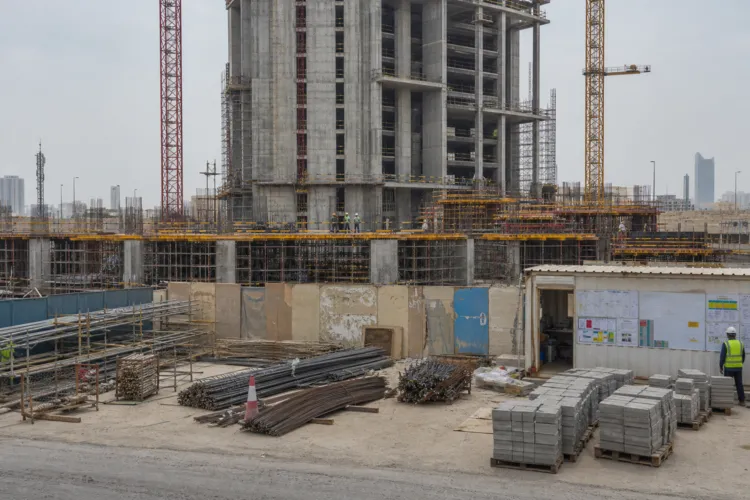
Wind farm construction EPC in Saudi Arabia is now being judged on execution details, not only on installed megawatts. Dumat Al Jandal in Al Jouf remains a reference point because it was Saudi Arabia’s first utility-scale wind project, built as a 400 MW plant. It comprises 99 wind turbines of approximately 4 MW each, and it connected to the national grid through dedicated substation and transmission infrastructure. The project’s commercial outcome is often cited alongside its engineering reality: a competitive procurement under the National Renewable Energy Programme and a winning bid of USD 0.0199 per kilowatt-hour (approximately SAR 0.075) under a 20-year power purchase agreement with the Saudi Power Procurement Company.
Foundations are not a background task in the Kingdom’s desert conditions; they are the physical schedule driver for erection readiness. At Dumat Al Jandal, turbines were specified for high-temperature desert operation, with enhanced cooling systems and dust-resistant components, and they are among the largest deployed in the Middle East, with rotor diameters exceeding 130 meters and hub heights of approximately 85 meters. Civil design has to respect those dimensions. It also has to respect the wind resource. The Al Jouf region has average wind speeds exceeding 8 meters per second at hub height, a point that influences turbine selection and how EPC planners think about weather windows for heavy lifts and commissioning.
Access Roads, Grid Tie-In, and Erection Sequencing: What EPC Teams Are Doing
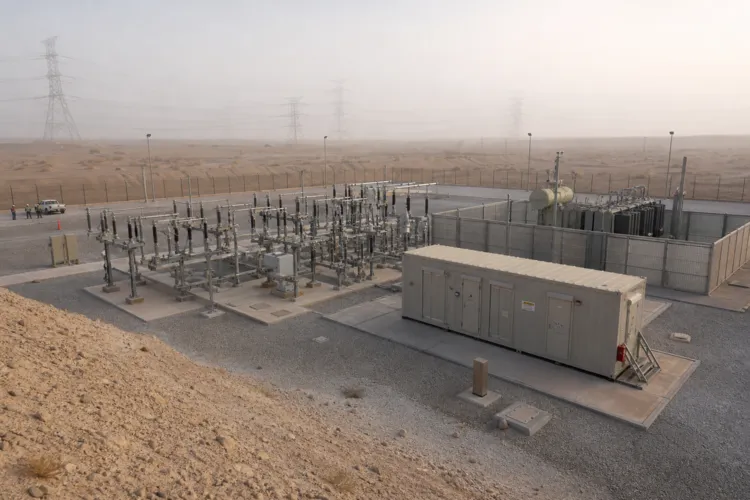
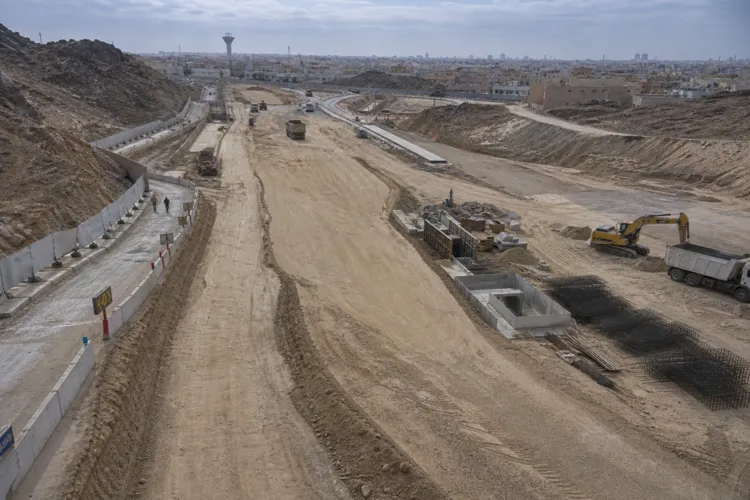
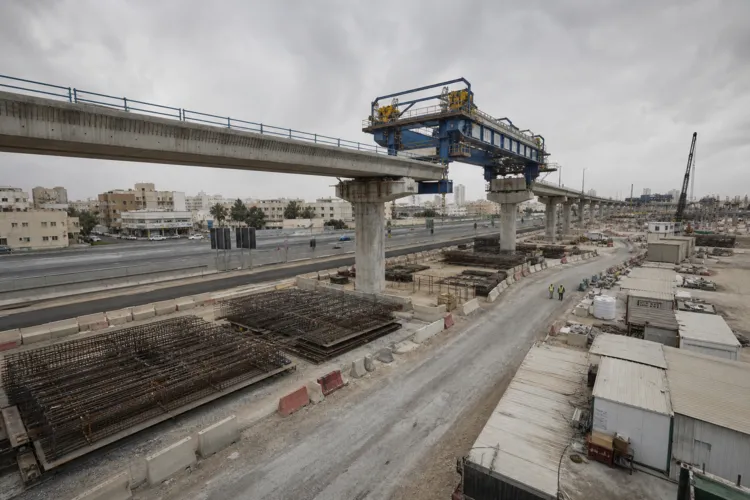
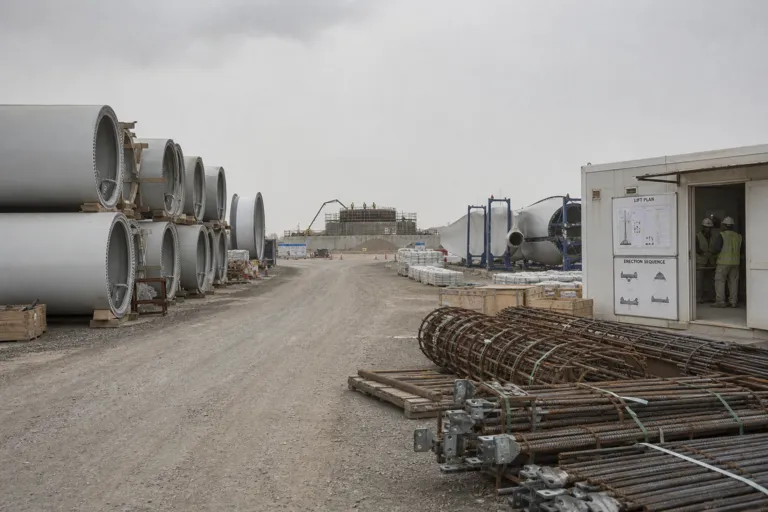
Execution lessons are visible in the 600 MW Al Ghat Wind Power Project, where EPC teams advanced civil works, logistics planning, and early construction activities across the site. Moving into the first quarter of 2025, engineers completed foundations for the first 20 turbines while launching substation construction works. The project also includes comprehensive access roads, reinforced foundations, and essential civil works to support erection and maintenance. A dedicated substation and transmission lines were constructed to integrate generation into the Saudi national grid, showing how road access and grid works must be synchronized so turbine delivery, crane mobilization, and energization steps do not create avoidable idle time.
Al Ghat also signals a technology and logistics shift because it represents the first time 7.7 MW turbine units have been integrated into Saudi Arabia’s grid. That matters for erection strategy. Larger unit sizes change lift planning, laydown needs, and how carefully EPC teams must sequence assembly and erection to reduce delays and enhance overall efficiency. In Al Ghat’s case, teams completed civil works and turbine foundations before commencing installation activities, then carefully sequenced turbine assembly and erection to optimize logistics. Shandong Electric Power Construction Corporation III (SEPCO3) is the EPC contractor named for the project, anchoring accountability for this integrated civil-electrical-erection pathway.
These project mechanics sit inside a scaling story. Saudi Arabia’s NREP Round 7 totals 5.3 GW across solar PV and wind and is managed by SPPC, with the wind portfolio concentrated in the Madinah region at 2.2 GW split between the 1.3 GW Bilghah Wind IPP and the 900 MW Shagran Wind IPP. In parallel, longer-run targets are being framed under Vision 2030 and the Saudi Green Initiative, including a 50% renewables aim for electricity generation and a wind capacity target set at 16 GW by 2030. As the fleet expands, downstream readiness grows in importance: Saudi Arabia’s wind turbine operations and maintenance market was valued at $13.53 million in 2025 and projected to reach $111.2 million by 2030, a 52.4% CAGR, reinforcing why access, maintainability, and build quality are becoming core EPC success criteria.
What makes Dumat Al Jandal a key reference for Saudi wind EPC delivery?
Which project shows active planning for access roads and reinforced foundations during construction?
How are Saudi projects sequencing turbine erection to reduce delays?
How much capacity is included in NREP Round 7, and how much of it is wind?
What trends indicate growing demand around wind farm construction EPC in Saudi Arabia?
Talk to us for your needs in:
-
Sustainable Construction Solutions
-
Strategic Construction Planning
-
Customer-Centric Construction Services
-
Operational Excellence in Construction
-
Leadership and Change Management for Construction
-
Digital Transformation in Construction
-
Saudi Construction Market Research
-
In-Depth Market Study for Construction
-
Market Intelligence and Insights in Construction
-
Feasibility Study and Assessment in Construction
-
Saudi Construction Benchmarking