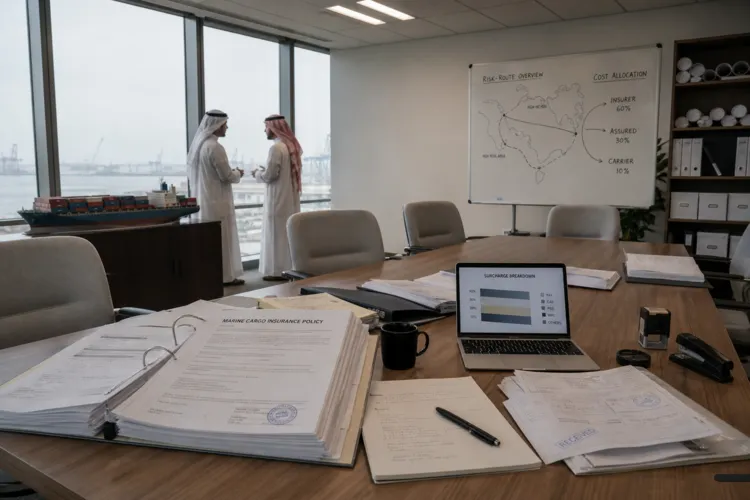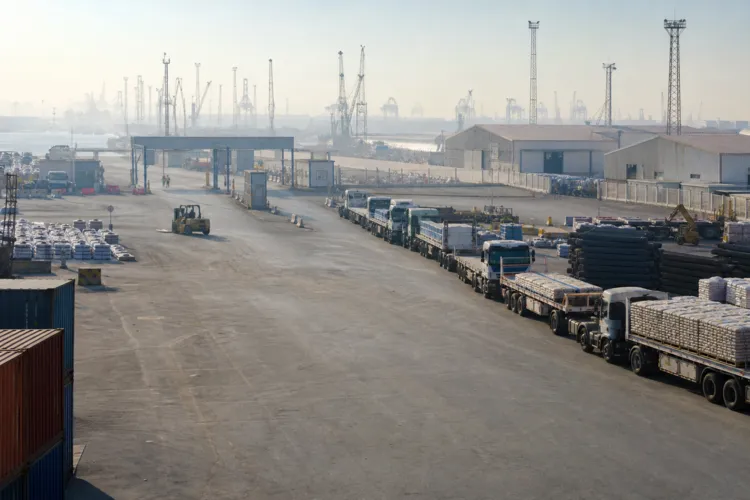
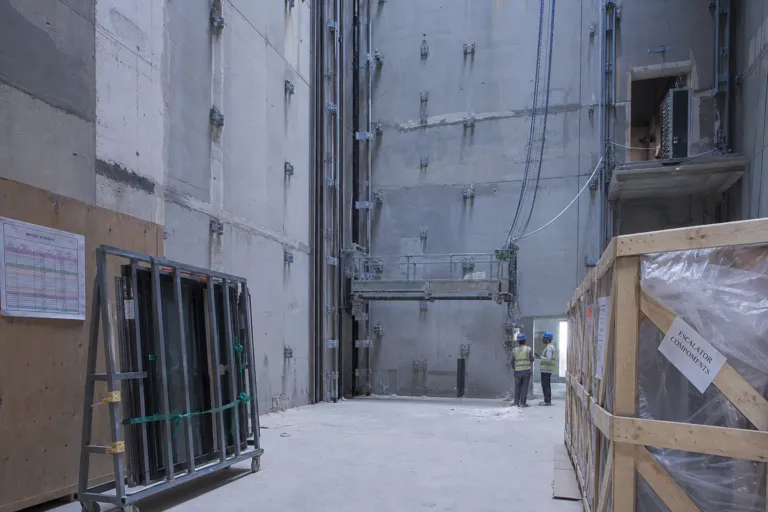
Saudi Arabia’s vertical-transportation demand is being pulled by the same forces reshaping the wider built environment: Vision 2030 mega developments, smart-city plans, and transit expansion. Multiple reports tie demand to giga projects such as NEOM, The Red Sea Project, Qiddiya, and Diriyah Gate, plus modernization of airports, metro stations, and hospitals. In this context, the elevator escalator supply Saudi construction market is not only about equipment availability. It is also about whether projects can secure the technicians, installers, and service capacity to deliver buildings and stations on schedule.
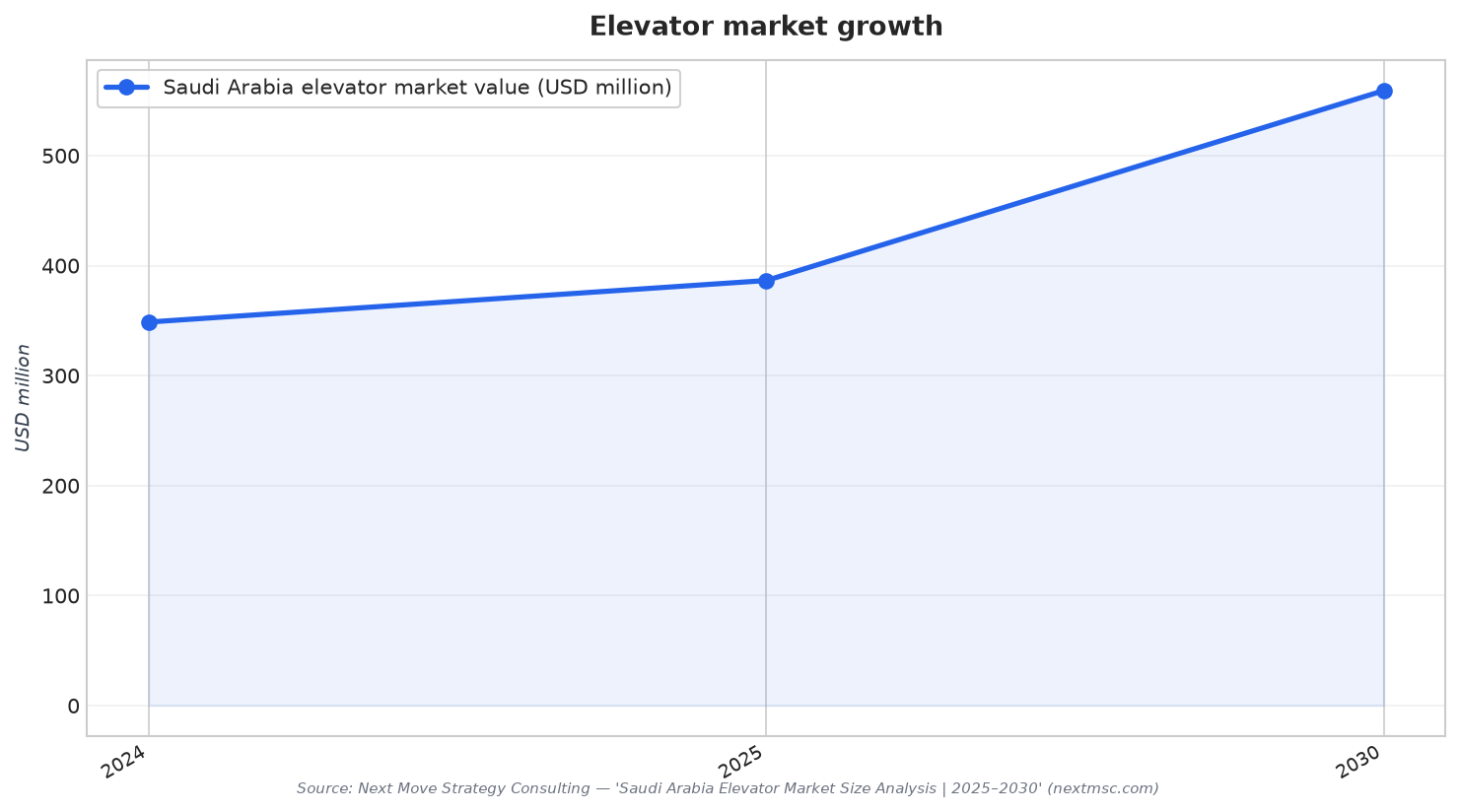
Demand signals are visible in the market trackers. One Saudi-focused elevator study values the elevator market at USD 348.71 million in 2024 and projects USD 386.45 million by 2025, reaching USD 559.10 million by 2030, with a 7.67% CAGR from 2025 to 2030. The same source puts volume at 2 thousand units in 2024, rising to 3 thousand units by 2025 and 5 thousand units by 2030. A separate Saudi elevators-and-escalators report values that broader market at USD 17,137.3 million in 2026, projecting USD 21,328.9 million by 2031 at a 4.47% CAGR, and notes it outpaces a cited global growth rate of 2.9%.
Where the Bottlenecks Form: Labor, Costs, and Delivery Risk
Supply pressure is not just factory capacity. A Saudi market brief calls out a “critical shortage of skilled labor” as a structural challenge under the Vision 2030 construction pipeline, saying demand for technical workers has risen sharply while supply remains constrained. The same source projects construction costs in Saudi Arabia will rise by 5% to 7% in 2025, citing supply-chain disruptions and a growing labor shortage, especially in high-demand sectors such as renewable energy, digital infrastructure, and housing. Another Saudi elevator analysis adds that high installation, modernization, and maintenance costs can restrain expansion, particularly for smaller developers.
At the project level, the pull from infrastructure is clear. A global market report describes infrastructure as the fastest-growing use case at a 6.9% CAGR as governments invest in metro extensions and airports, and it highlights Riyadh’s USD 196 billion 2025 contract awards as an example of scale. Another Saudi-focused note links demand to government investment of over USD 300 billion into transport, utilities, and mega projects, explicitly including the Riyadh Metro and airport expansions. It also projects new installations of elevators and escalators in Saudi Arabia will reach nearly 20,000 units by 2030, alongside a stated market CAGR of 4%.
With schedules tight, suppliers and building owners are leaning on data-driven maintenance to protect uptime. One Saudi market release says AI monitors real-time sensor data to predict and prevent malfunctions, reducing downtime and improving reliability, and notes that KONE and Otis have implemented AI-based predictive maintenance globally, including in Saudi Arabia. In the wider market, KONE’s 24/7 Connected Services resolved 70% of alerts proactively in 2024, while Schindler’s Ahead suite cut mean repair time by one-third after learning from millions of service calls. For Saudi Arabia’s towers and transit nodes, these tools are being positioned as operational buffers when labor and supply constraints collide with rising demand.
What is driving elevator and escalator demand in Saudi Arabia’s construction pipeline?
What are the main supply pressures in the Saudi elevator and escalator market?
How big is the Saudi elevator market according to recent reports?
How does the elevator escalator supply Saudi construction market affect metro and airport projects?
How are companies using AI and IoT to reduce downtime in Saudi Arabia?
Talk to us for your needs in:
-
Sustainable Construction Solutions
-
Strategic Construction Planning
-
Customer-Centric Construction Services
-
Operational Excellence in Construction
-
Leadership and Change Management for Construction
-
Digital Transformation in Construction
-
Saudi Construction Market Research
-
In-Depth Market Study for Construction
-
Market Intelligence and Insights in Construction
-
Feasibility Study and Assessment in Construction
-
Saudi Construction Benchmarking