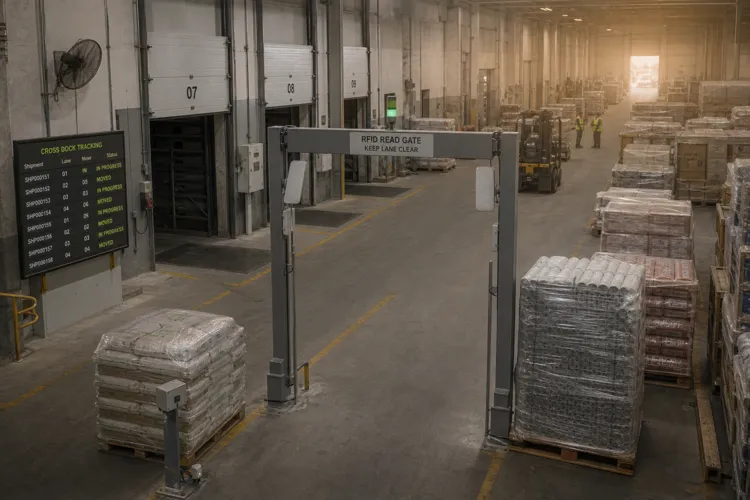
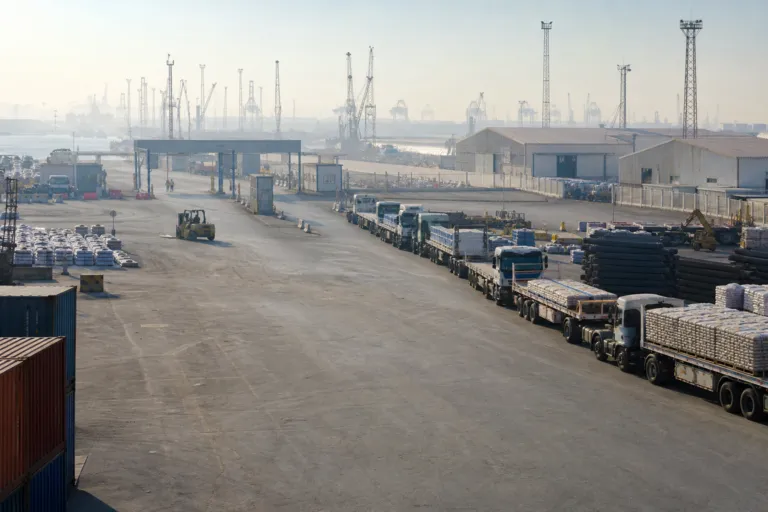
Saudi Arabia’s building supply chain is being re-routed by prolonged disruption at Gulf maritime chokepoints. Industry experts told AGBI that construction costs are rising as contractors are forced to deliver by truck materials that would normally arrive by sea, with shipping through the Strait of Hormuz still not back to pre-war levels. The disruption is showing up in freight bills and forward planning rather than in quality delivered on site, according to Mace Consult’s managing director for the Middle East and Africa, Chris Seymour. In his view, the cost impact at the source has not changed much, while the largest cost is bringing materials in and moving them onward.
Price signals in specific inputs underline that the pressure is uneven. AGBI reported that bulk, locally produced materials have changed little, and cement fell slightly in July compared with a year earlier. By contrast, imported and copper-dependent products have moved sharply: electrical wire and cable were up as much as 22% and 26% year on year, respectively. The re-routing also changes how freight moves. Seymour said cargo that was once shipped through ports such as Khor Fakkan now travels by road instead to Saudi Arabia, stressing that moving by truck rather than ship is “huge” in cost. This is the practical reality behind the keyword topic of Hormuz disruption, construction materials, and trucking into Saudi Arabia.
Red Sea Port Diversions Grow, but They Don’t Replace Everything
Trade data shows a clear tilt toward Saudi Arabia’s Red Sea gateways even as overall Gulf flows contract. Dun & Bradstreet reported that, after events beginning on February 28, 2026, import bookings to the Persian Gulf region fell from 62,935 TEUs (February 21–27) to 18,663 TEUs in the next seven days, then to 5,395 TEUs (March 16–22), while cancelled import bookings jumped 463% from 17,374 TEUs to 97,897 TEUs (February 28–March 6). Against that backdrop, Saudi Red Sea ports saw import bookings rise 68%, from 13,569 TEUs (February 21–27) to 22,861 TEUs (March 16–22). Export bookings into Red Sea ports also rose 86%, from 10,396 TEUs to 19,323 TEUs over the same periods. Dun & Bradstreet estimates that, together with Omani volumes, these alternatives cover about 50–60% of lost export volume, but only around 20% of lost import volume.
The detour is not only about ports; it is also about the inland corridors that connect them to industrial demand. IndexBox described how operators are adapting by developing land routes and combined sea-and-land services. It highlighted Saudi Arabia’s Route 95, which bypasses older paths and reduces travel time between the start and end points by 16 hours, according to the report. Oman’s Ramlet Khelah crossing is also seeing higher throughput: the Oman Public Authority for Special Economic and Free Zones put the value of goods crossing at nearly tripled to $830 million in March, up from $300 million in February, with construction materials among the cargo categories. For longer-haul container logistics, IndexBox said MSC Mediterranean Shipping Company is launching a service from Antwerp in May 2026, shipping containers to Jeddah and King Abdullah Port on the Red Sea, then transferring them by truck to Dammam on the east coast.
Regional overland bridges and longer ocean diversions are reinforcing the same shift: more reliance on redundancy, and more trucking. Strategy International cited the Safaga–Duba sea-road bridge as moving around 500 refrigerated containers and roughly 12,500 tons of cargo per day, with Egypt acting as a transit bridge during Hormuz and Red Sea disruptions. Dun & Bradstreet separately noted that vessels are increasingly diverted around the Cape of Good Hope, adding 10 to 14 days to transit times. Meanwhile, Al Jazeera reported that Saudi Arabia saw a smaller drop in port calls than neighbours, down 15%, helped by pipeline networks and access to Red Sea ports. For contractors, the takeaway is that delivered cost and schedule risk are now shaped by where cargo lands, how quickly it can cross borders, and whether roads and trucks can absorb work that sea routes used to carry.
Why is trucking becoming more important for Saudi construction materials during the Hormuz disruption?
Which construction inputs showed the biggest year-on-year increases in the sources?
What evidence is there that Saudi Red Sea ports are gaining container volume?
How much of the lost Gulf trade volume do alternative routes cover, according to Dun & Bradstreet?
What new overland and intermodal options are mentioned for moving cargo around Hormuz constraints?
Talk to us for your needs in:
-
Sustainable Construction Solutions
-
Strategic Construction Planning
-
Customer-Centric Construction Services
-
Operational Excellence in Construction
-
Leadership and Change Management for Construction
-
Digital Transformation in Construction
-
Saudi Construction Market Research
-
In-Depth Market Study for Construction
-
Market Intelligence and Insights in Construction
-
Feasibility Study and Assessment in Construction
-
Saudi Construction Benchmarking