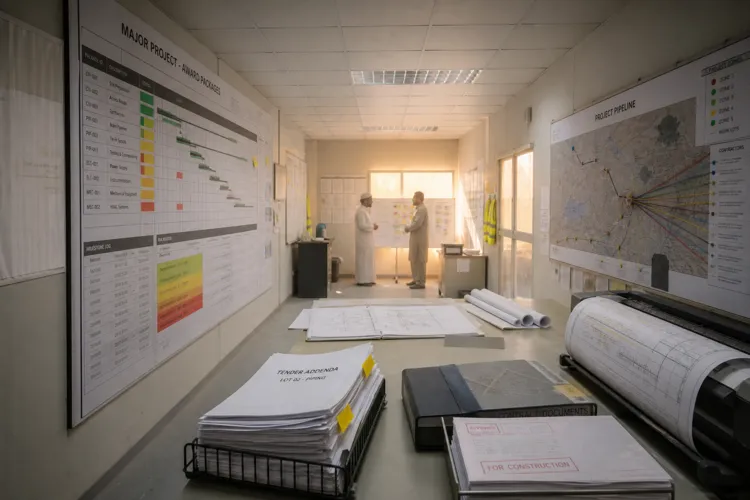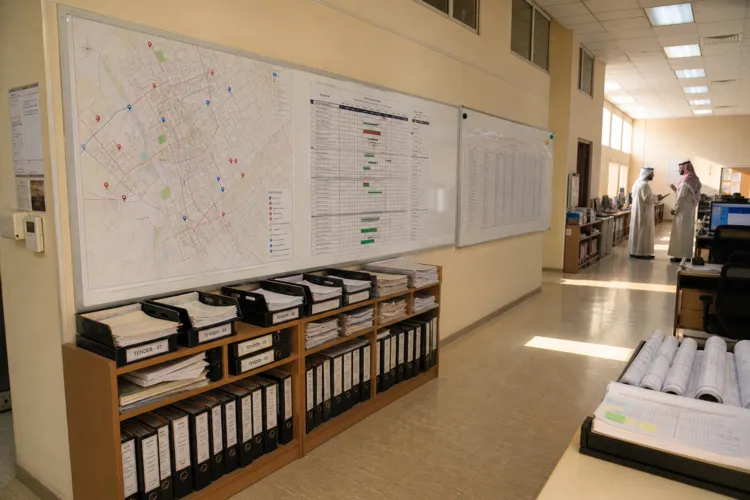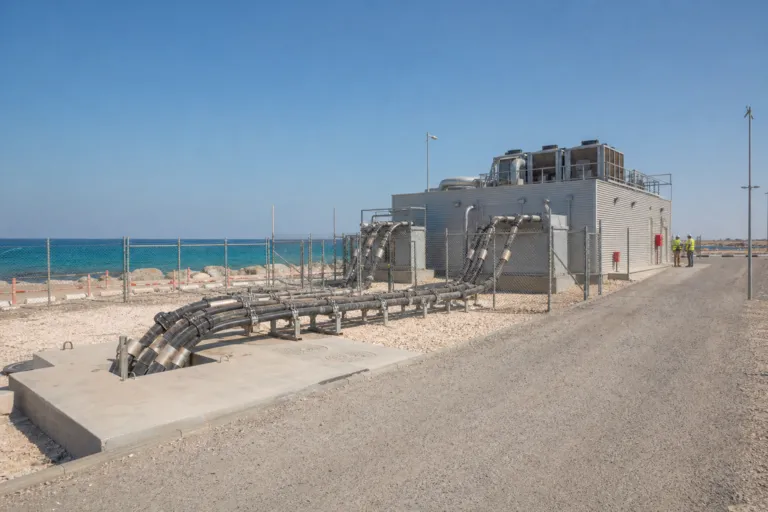
Along Saudi Arabia’s Red Sea coast, the construction story is increasingly about pairing connectivity with compute. Jeddah is positioned as a western hub that leverages submarine cable landings to reduce latency toward Africa and Europe, and it is described as the Kingdom’s interconnection door to Europe, East Africa, and Asia because main Red Sea subsea systems land on its coast. This coastal role matters as Saudi Arabia’s total data centre capacity grew from approximately 50 MW of IT load capacity in 2020 to over 300 MW by 2025, with committed projects expected to more than double capacity by 2028. Within Saudi regional distribution, the Western Region holds 23.5% and is the fastest-growing, driven by Jeddah’s landing stations that connect Saudi Arabia to Europe, Asia, and Africa.
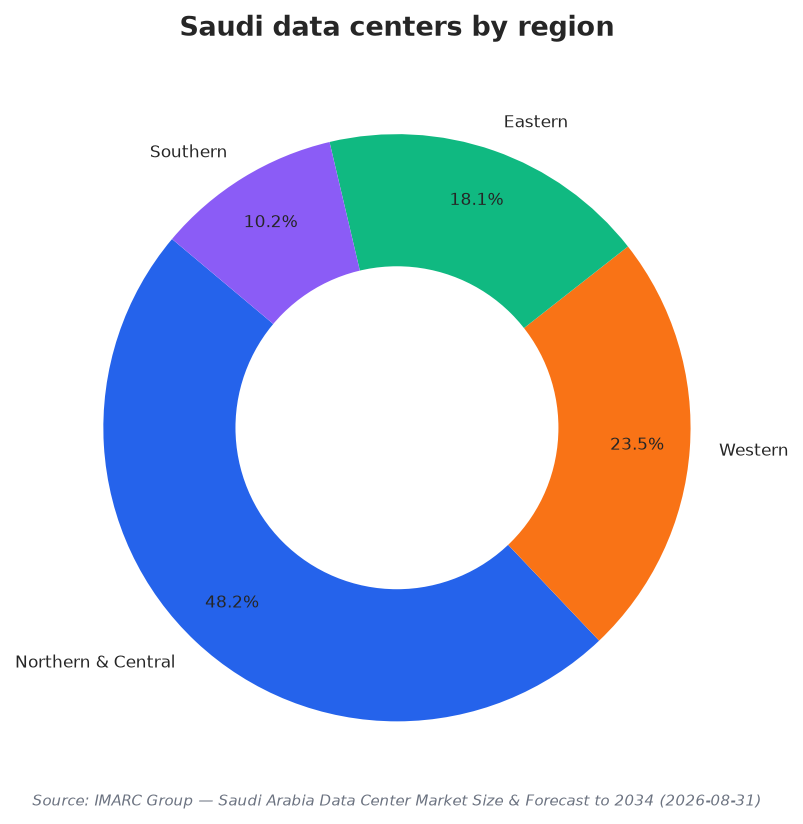
Red Sea landing routes also align with how Saudi operators and developers are thinking about edge and interconnection design. New subsea cables such as Africa-1 and 2Africa land in Jeddah, positioning the Kingdom as a regional transit hub and attracting content and cloud ecosystems that prioritize route diversity. In the Saudi Arabia data center construction market, coastal hubs Jeddah and Dammam each host more than 120 MW, supported by 2Africa and Africa-1 cable landings that enable sub-25 ms round-trip latency to three continents. This connectivity-first logic complements a market that includes colocation facilities, hyperscale campuses, edge deployments, and government-owned data centers, with product portfolios spanning carrier-neutral colocation, cloud on-ramp connectivity services, and GPU-ready infrastructure.
From Cable Landings to Edge Nodes: What Builders Must Deliver
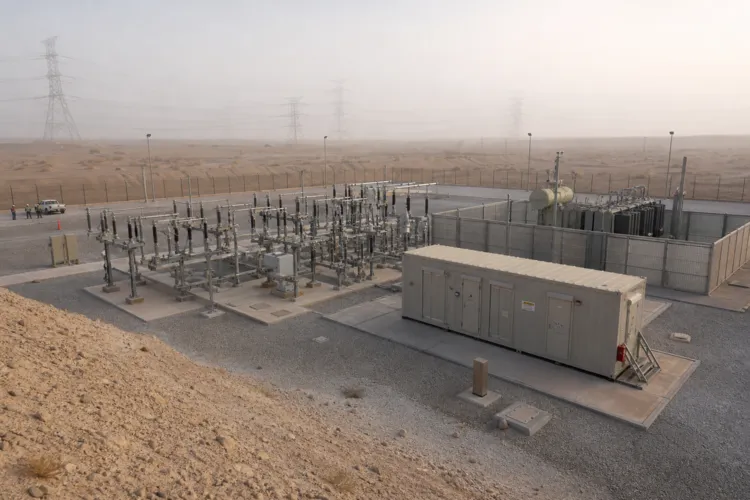
Construction specifications are being influenced by AI and edge use cases, not only by traditional enterprise hosting. New facilities are targeting 60 or more kW per rack versus the traditional 5–10 kW, which changes design economics and on-site engineering priorities. At the same time, Saudi Arabia’s mobile and fiber expansion pushes compute outward. The Communications, Space and Technology Commission auctioned 600 MHz, 700 MHz, and 3.8 GHz bands in 2024, expanding licensed mobile spectrum by 27% and enabling urban 5G download speeds beyond 250 Mbps. As edge compute nodes proliferate for real-time analytics, operators also bank on land-banking near 380 kV substations to secure grid connections for buildable capacity across multiple metros.
Investment signals further explain why coastal construction plans increasingly combine subsea landing connectivity with edge-ready sites. In February 2025, Mobily announced a USD 905 million (SAR 3.4 billion) investment in data centers and submarine cables, including building data centers with around 39 MW capacity and expanding subsea cable networks to support AI and cloud demand. At the market level, Saudi Arabia’s data centre market is valued at approximately SAR 15 billion and is growing at over 20 percent annually. Mordor Intelligence also estimates the Saudi Arabia data center market worth USD 2.38 billion in 2026 and growing at a CAGR of 12.84% to reach USD 4.35 billion by 2031, while the Saudi Arabia data center construction market is set to climb from USD 2.11 billion in 2026 to USD 8.11 billion by 2031 at 30.91% CAGR.
For a subsea cable landing station data center Saudi build program along the Red Sea, the winning pattern is not a single facility type. Riyadh remains the primary hub, but Jeddah and Dammam act as redundancy and connectivity anchors, with Jeddah favored for carrier-neutral interconnection and route diversity. Center3, the data center and connectivity unit of stc, spans Riyadh, Jeddah, and Dammam and links Saudi capacity to subsea cable systems landing on the Red Sea and Gulf coasts. On the demand side, Red Sea Global’s tourism buildout expands demand for on-premise edge nodes handling guest analytics and environmental IoT feeds, while the market simultaneously gravitates toward very large hyperscale parks feeding global clouds and compact micro-edge boxes processing traffic where it originates.
Why is Jeddah central to Red Sea connectivity for data centers?
What subsea cable systems are cited as landing in Saudi Arabia to support connectivity?
How fast has Saudi Arabia’s data center capacity grown in recent years?
What is changing in facility design due to AI workloads?
What does a Red Sea subsea cable landing station and edge data center build need to support in Saudi Arabia?
Talk to us for your needs in:
-
Sustainable Construction Solutions
-
Strategic Construction Planning
-
Customer-Centric Construction Services
-
Operational Excellence in Construction
-
Leadership and Change Management for Construction
-
Digital Transformation in Construction
-
Saudi Construction Market Research
-
In-Depth Market Study for Construction
-
Market Intelligence and Insights in Construction
-
Feasibility Study and Assessment in Construction
-
Saudi Construction Benchmarking