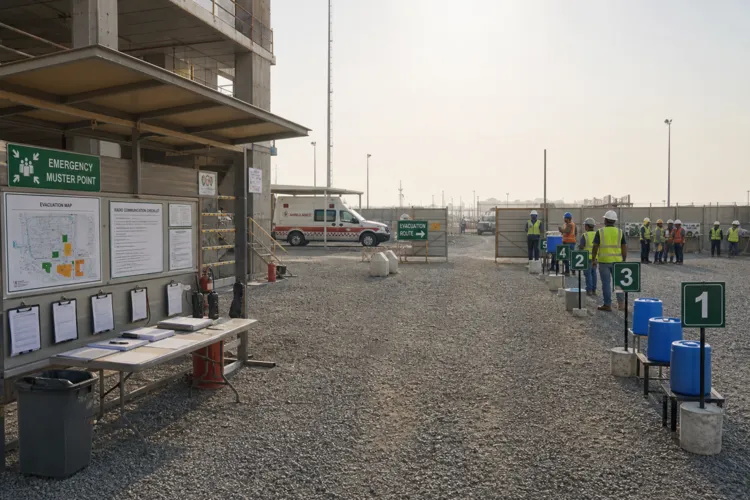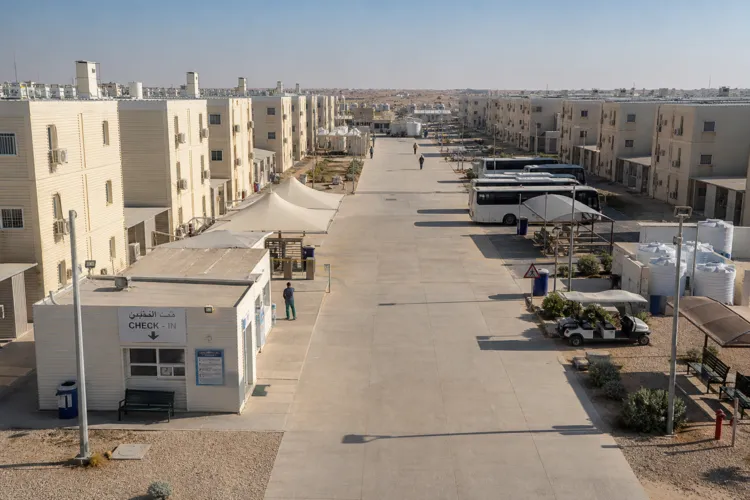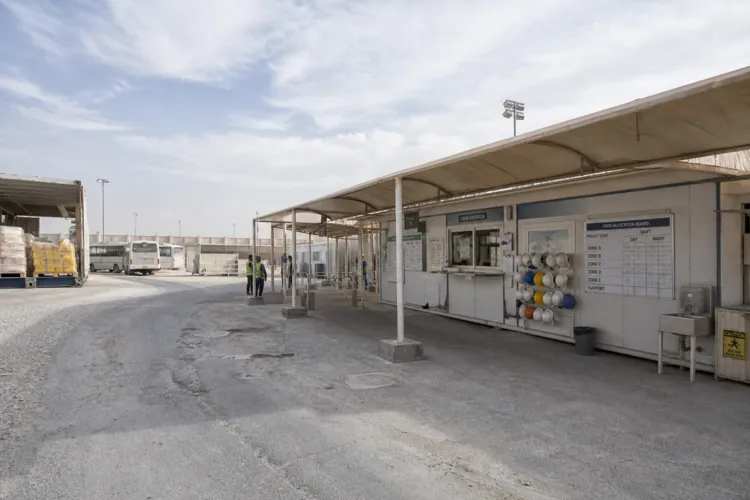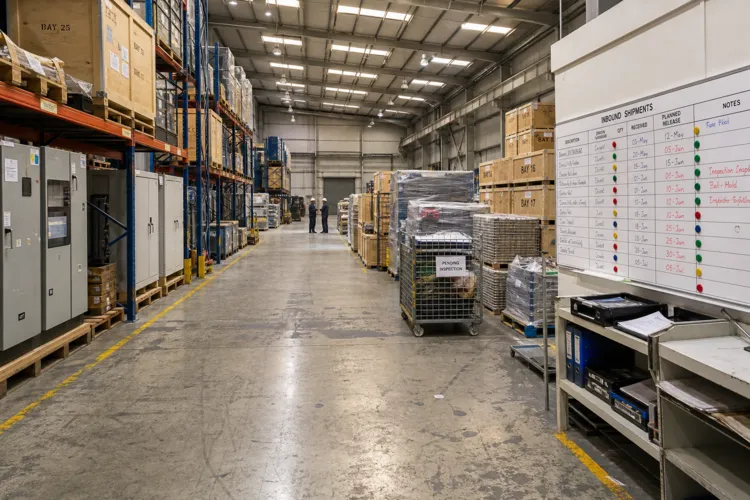
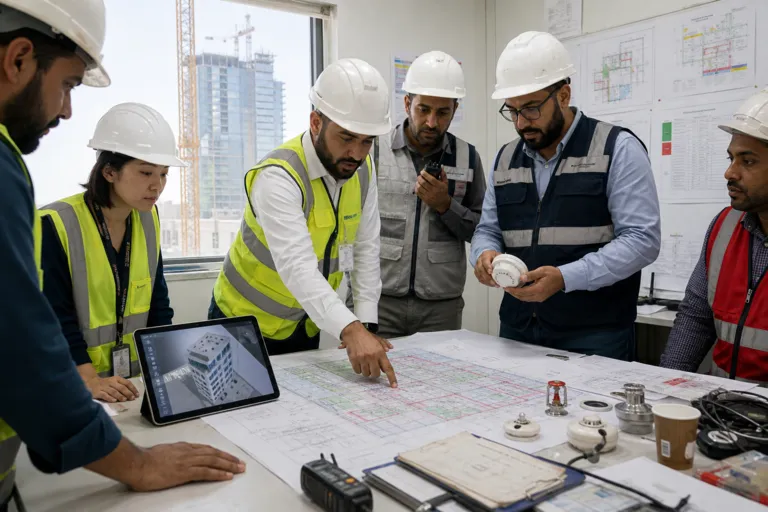
Saudi Arabia’s rising towers are being shaped by a clear shift in how life-safety is delivered. A market analysis notes that developers are moving beyond purely prescriptive requirements and are choosing engineered solutions tailored to building risk profiles and occupancy patterns. This approach aligns with the needs of high-rise buildings and mega mixed-use developments, where detection, suppression, smoke control, emergency lighting, and evacuation systems perform best when designed as a single coordinated framework. In parallel, enforcement of updated fire and life-safety requirements accelerated in 2025 across commercial, residential, and industrial buildings, increasing investments in upgrades to fire alarm, suppression, and evacuation systems to meet stricter approval and inspection expectations.
Those code-and-approval pressures are also changing project delivery. Ken Research describes the engineering, design, and consulting services segment as leading the Saudi fire protection system market, driven by the increasing complexity of the Saudi Building Code and Civil Defense approval processes and the need to integrate fire systems with smart building platforms. For high-rise work, this is not just about selecting devices. It is about making evacuation signaling, smoke management, and suppression compatible with building operations and inspection readiness. The same source values the Saudi Arabia Fire Protection System Market at approximately USD 640 million, based on a five-year historical analysis, and links growth to urbanization, rapid population growth, Vision 2030 infrastructure programs, and rising fire safety awareness.
Evacuation Performance Depends on Integrated Design
Integrated design becomes most visible when planning evacuation outcomes. Expert Market Research notes that fire detection accounts for a sizable share of the Saudi Arabia fire fighting system market because it plays an integral role in detecting fires or fire risks, enabling speedy evacuation and further fire prevention measures. Its description of system scope is practical: depending on application and requirement, a fire fighting system can include components for fire detection, fire response, fire sprinkler, fire suppression, or fire analysis. It also points to Saudi government regulations regarding compulsory installation of fire detection, alarm, and safety systems, particularly in the industrial sector. For tower teams, that emphasis reinforces a life-safety pathway where early detection supports coordinated alarms, decision-making, and controlled movement to safety.
Codes and referenced standards add structure to these engineered choices. A Saudi-focused overview explains that NFPA 13 provides detailed guidelines for the design and installation of automatic sprinklers, supporting reliable suppression in expanding commercial towers and complexes. It also highlights NFPA 101 as focused on protecting human life through building design and occupancy rules, covering evacuation planning and emergency lighting, and notes that Saudi building code regulations often reference NFPA 101 when approving large-scale developments, especially high-rise towers and stadiums. The same overview says incidents like the Grenfell Tower fire in London have shaped NFPA’s approach to high-rise safety, and that Saudi regulators are incorporating these lessons into policies with enhanced fireproofing, evacuation planning, and system redundancy.
Market spending signals how fast these requirements are being operationalized across assets, including tall buildings. Mobility Foresights projects the Saudi Arabia Fire and Safety Equipment Market to grow from USD 3.6 billion in 2025 to USD 7.1 billion by 2032, registering a CAGR of 10.2%. It attributes growth to expanding regulatory enforcement, rapid construction across residential and commercial real estate, and rising investment in industrial fire risk management infrastructure. It also ties demand to smart fire detection and alarm adoption and to comprehensive system integration as urbanization and high-rise activity increase. In this context, fire life safety systems for high-rise projects in Saudi Arabia are increasingly framed as engineered, integrated, and compliance-ready programs rather than disconnected product purchases.
Why are Saudi high-rise projects moving toward engineered fire solutions?
What systems are being integrated in tower life-safety design?
How do NFPA standards connect to approvals for large Saudi developments?
How much is the Saudi Fire and Safety Equipment Market projected to grow?
What does the keyword topic mean for fire life-safety systems in Saudi high-rises?
Talk to us for your needs in:
-
Sustainable Construction Solutions
-
Strategic Construction Planning
-
Customer-Centric Construction Services
-
Operational Excellence in Construction
-
Leadership and Change Management for Construction
-
Digital Transformation in Construction
-
Saudi Construction Market Research
-
In-Depth Market Study for Construction
-
Market Intelligence and Insights in Construction
-
Feasibility Study and Assessment in Construction
-
Saudi Construction Benchmarking