Saudi Arabia’s phosphate story is a long-term construction and operations play. Phosphate ore was first discovered in 1983 at Hazm al-Jalamid, with further deposits identified at Umm Wu’al and al-Khabra, but the Kingdom’s first phosphate export shipment was not recorded until 2017. That timeline matters for project teams, because it signals that mine development, processing readiness, and logistics commissioning must mature together, not in isolation. The sector is underpinned by reserves estimated at 2.7 billion tons, concentrated largely in the Northern Borders Province, with deposits in Turayf’s Wa’ad Al Shamal City described as representing about 7% of global phosphate reserves.
Demand pull is only part of the construction lesson. The pace of exploitation increased sharply between 2014 and 2019, when phosphate exploitation surged by 199.11%, rising from 1.9 million tons to 5.7 million tons, according to the General Authority for Statistics. In parallel, Saudi phosphate ore production is described as around 3 million tons annually. These figures reinforce a practical point for planners: capacity ramps have to be engineered across mining, beneficiation, and downstream conversion so that no single bottleneck forces costly rework. The Kingdom’s strategy has leaned on industrial hubs, with Wa’ad Al Shamal and Ras Al Khair positioned as the backbone for scale-up and export delivery.
What Wa’ad Al Shamal and Ras Al Khair Teach About Integrated Delivery
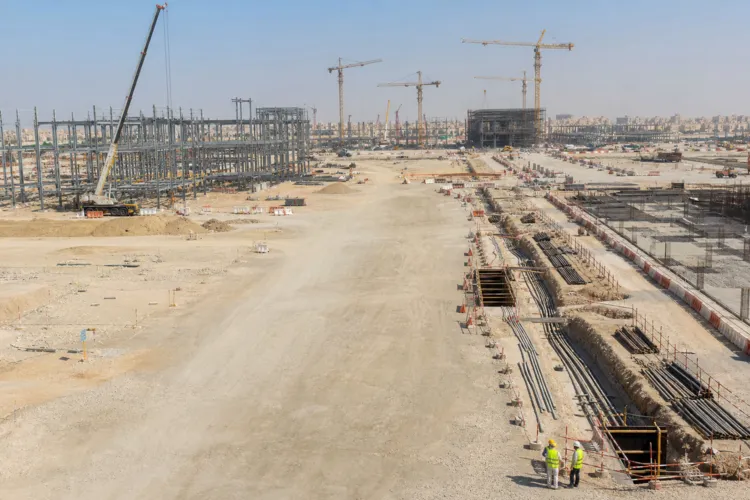
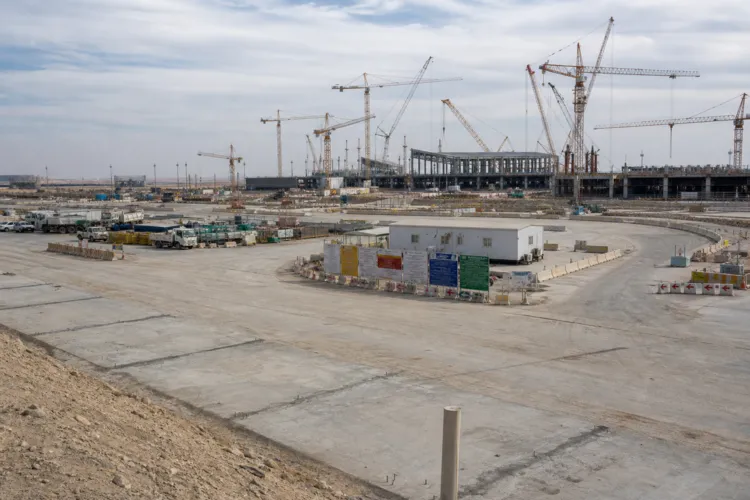
Wa’ad Al Shamal is described as an industrial city spanning 440 square kilometers, inaugurated in 2018, with investments exceeding SAR 80 billion. Within that footprint, 150 square kilometers are dedicated to Ma’aden’s phosphate projects, including ore concentration facilities and sulfuric and phosphoric acid plants, supported by integrated logistics infrastructure. A separate overview describes the Wa’ad Al Shamal Phosphate Project as a $8 billion integrated mining and processing complex, including the Al Jalamid open-pit mine with annual capacity exceeding 11 million tonnes of ore. Together, these details point to a clear construction lesson: integrated scope design reduces interface risk, because mine output specifications, plant feed requirements, and export schedules can be aligned under one delivery roadmap.
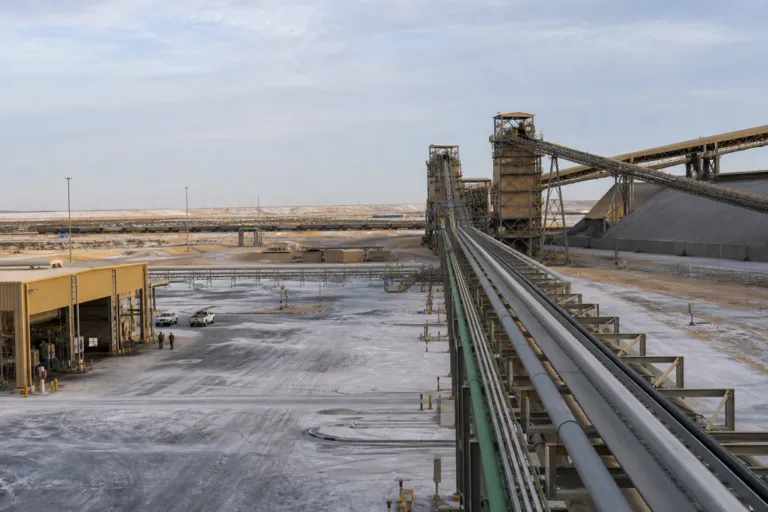
Ras Al Khair emerges in the sources as a logistics and processing anchor that construction teams must design around early. Middle East market analysis highlights “modern port infrastructure at Ras Al Khair” as a Saudi competitive advantage, while also flagging logistics for bulk sulfuric acid and ammonia as a supply bottleneck. The same analysis notes the region imports some sulfur, and that storage and port infrastructure are critical for export logistics. This helps explain why Saudi phosphate industrialization has favored downstream processing rather than raw rock exports: the value chain described for Wa’ad Al Shamal includes producing DAP, MAP, phosphoric acid, sulfuric acid (from imported sulfur), and ammonia (from domestic natural gas), with output primarily exported into Asia.
As the Ma’aden Phosphate 3 mega project advances, the sources frame the endgame as a step-change in finished-product output rather than mine-only growth. A February 2026 update describes Phosphate 3 as expanding phosphate production capacity and boosting annual output to 9 million tons through advanced integrated facilities, while also describing the Wa’ad Al Shamal phosphate complex as producing 3.1 million metric tonnes of phosphate annually. In 2025, the phosphate business produced a record 6.72 million tonnes of di-ammonium phosphate, up 9% year on year, and generated SAR 20.77 billion in revenue with EBITDA margins at 47%. The construction takeaway is straightforward: execution discipline must protect throughput, because every constraint in utilities, import handling, storage, or port loading can dilute the value of downstream conversion.
What makes Wa’ad Al Shamal central to Saudi Arabia’s phosphate buildout?
How fast did Saudi phosphate exploitation grow in the last decade cited?
Why does Ras Al Khair matter for construction and commissioning plans?
What output targets are described for Ma’aden’s Phosphate 3 expansion in Saudi Arabia?
What results did Ma’aden’s phosphate business report for 2025?
Talk to us for your needs in:
-
Sustainable Construction Solutions
-
Strategic Construction Planning
-
Customer-Centric Construction Services
-
Operational Excellence in Construction
-
Leadership and Change Management for Construction
-
Digital Transformation in Construction
-
Saudi Construction Market Research
-
In-Depth Market Study for Construction
-
Market Intelligence and Insights in Construction
-
Feasibility Study and Assessment in Construction
-
Saudi Construction Benchmarking