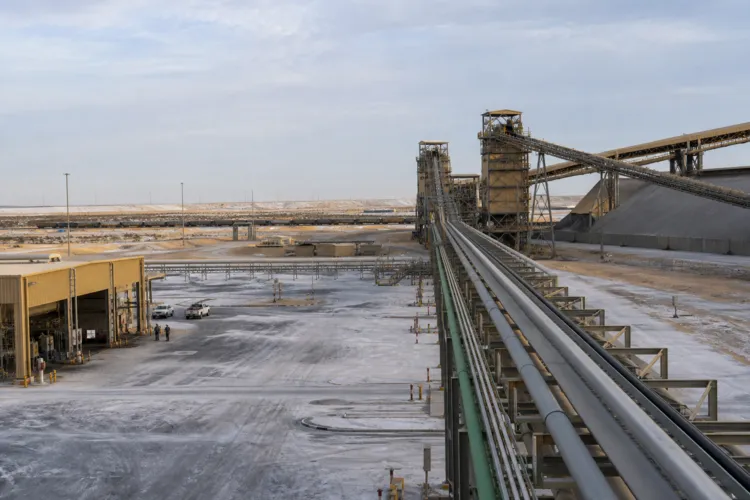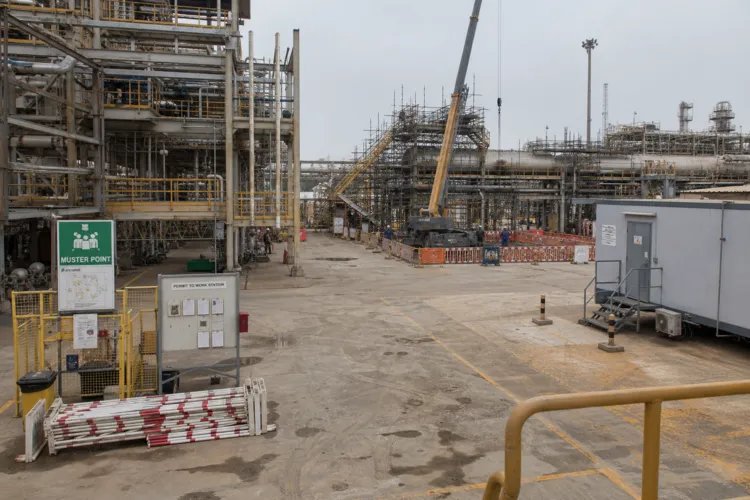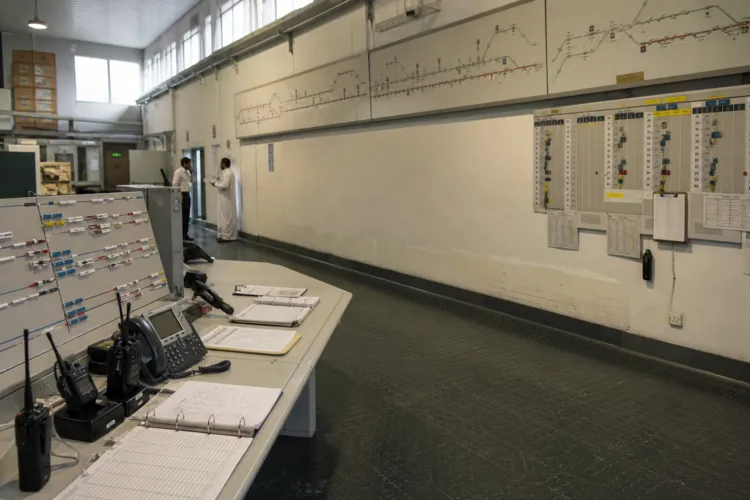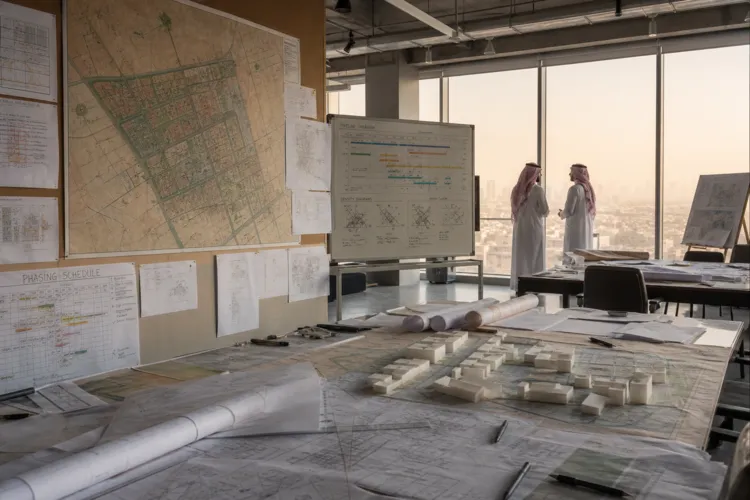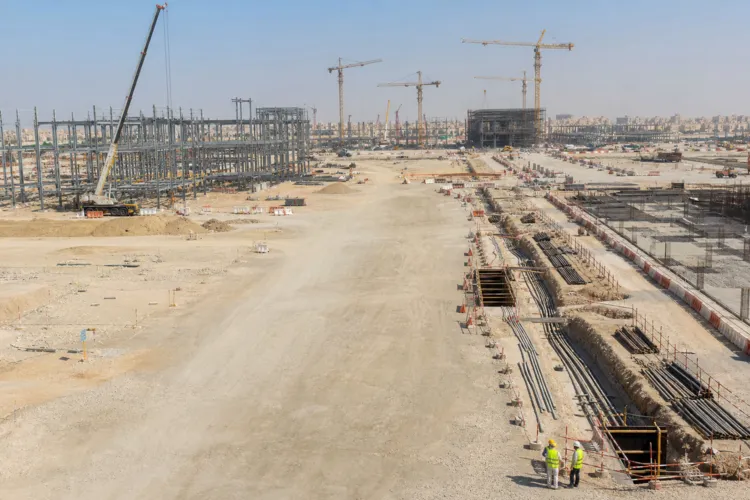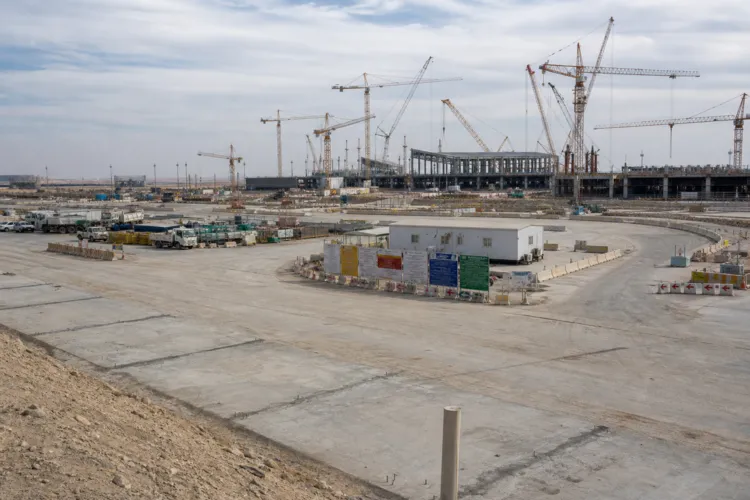
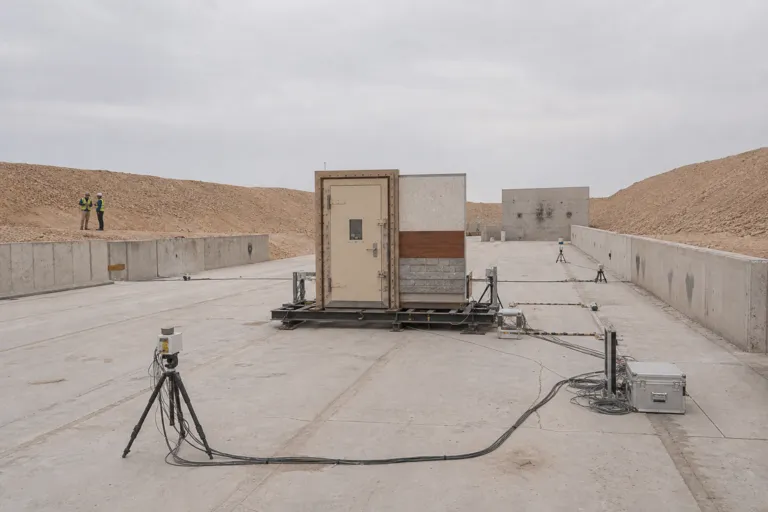
After the 2026 energy-facility attacks, operators across the Kingdom face a practical question: how do you keep essential services running when physical sabotage is a credible scenario? Blast-resistant and bulletproof buildings are engineered to withstand explosive overpressure, ballistic impact, or forced entry using approaches such as reinforced concrete cores, laminated glass assemblies rated to specific threat levels, and steel-composite panel systems. These measures are not only about protection of people. They also protect high-value assets and the control functions that keep industrial operations stable. As global security concerns rise, these systems are increasingly positioned for military, diplomatic, financial, and critical infrastructure use cases where continuous operations matter.
Demand signals also show up in deployment counts tied to Gulf energy and industrial corridors. One market source reports that, in 2023, over 58,000 modular and permanent structures with blast or ballistic protection were deployed globally. In the same source’s regional detail, Saudi Arabia is described as leading with 4,800 buildings deployed across petrochemical, military, and commercial segments, while the UAE added 2,100 blast-rated shelters and offices across energy facilities and government buildings. The same report notes that roughly 3,500 installations exceeded 1,000 ft² in 2023, with over 1.2 million square feet constructed in that category, particularly in U.S. air bases and Gulf state energy corridors. For blast-resistant design in critical infrastructure in Saudi Arabia, these figures underline that adoption is already measurable, and scaling is now an execution challenge.
What “Protective Construction” Means in Practice: Buildings, Facades, and Materials
Protective construction is not a single product category. It spans structural systems, facade assemblies, and specialized materials that manage blast energy and fragmentation risk. On the buildings side, one estimate values the global blast resistant and bulletproof buildings market at US$ 1.35 billion in 2026 and projects it to reach US$ 2.79 billion by 2033, a 10.9% CAGR from 2026 to 2033. Regional shares in that same source place North America at over 36% in 2026 and Europe at over 25%, with Asia Pacific over 19% and described as the fastest-growing region. For facades specifically, another source projects the global blast resistant facades market to grow from $540.6 million in 2021 to $951.8 million by 2033 at a CAGR of 4.826%, and states North America held over 37% of global revenue in 2025, while Asia Pacific shows the highest CAGR at 5.619%. These global figures provide context for procurement planning and supply-chain depth, not a substitute for local market sizing.
Materials choices and verification regimes shape whether designs perform as intended. A separate market report values the global blast mitigation materials market at $8.4 billion in 2025 and projects $13.7 billion by 2034, representing a 5.8% CAGR from 2026 through 2034. It describes demand across blast-resistant polymers, reinforced composites, specialized glass formulations, and protective metals, and highlights steel-reinforced concrete with specialized fiber additions for blast walls and protective barriers, including polypropylene, steel, or aramid fibers to enhance blast-resistance characteristics. Compliance is also becoming more region-specific. One source states that product qualification thresholds are defined by regimes such as the U.S. Department of Homeland Security SAFETY Act, Underwriters Laboratories ballistic standards, and NATO STANAG blast criteria, and adds that Saudi Arabia’s General Authority for Military Industries is developing localized certification regimes, which can affect multinational sourcing and qualification paths.
Finally, hardening programs succeed or fail on delivery models. Market commentary emphasizes that project finance and operational leasing are reshaping competitive entry in hardened infrastructure, and that modular units and prefabricated panels are gaining share because factory-controlled fabrication can reduce site vulnerability and accelerate deployment timelines. It also notes that data centers represent the fastest-growing building type as operators harden against physical sabotage, while military installations and government facilities hold the largest share of current procurement. For Saudi operators responding after the 2026 attacks, the takeaway is clear: specify threat-rated systems, align them to a certification path that buyers and regulators accept, and procure through models that compress timelines without diluting verification.
What does blast-resistant design typically include for high-risk facilities?
What do the sources report about Saudi deployment of blast- or ballistic-protected buildings?
How large is the global market for blast resistant and bulletproof buildings in 2026?
How does the keyword topic—blast-resistant design for critical infrastructure in Saudi Arabia—connect to certification?
What growth is projected for the blast mitigation materials market?
Talk to us for your needs in:
-
Sustainable Construction Solutions
-
Strategic Construction Planning
-
Customer-Centric Construction Services
-
Operational Excellence in Construction
-
Leadership and Change Management for Construction
-
Digital Transformation in Construction
-
Saudi Construction Market Research
-
In-Depth Market Study for Construction
-
Market Intelligence and Insights in Construction
-
Feasibility Study and Assessment in Construction
-
Saudi Construction Benchmarking