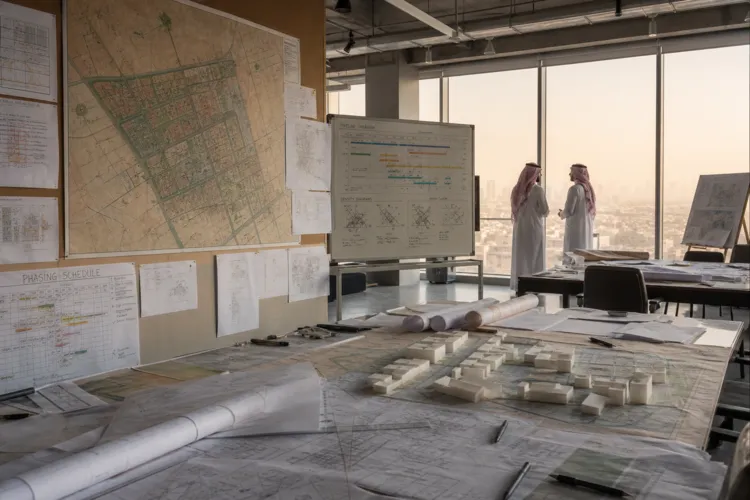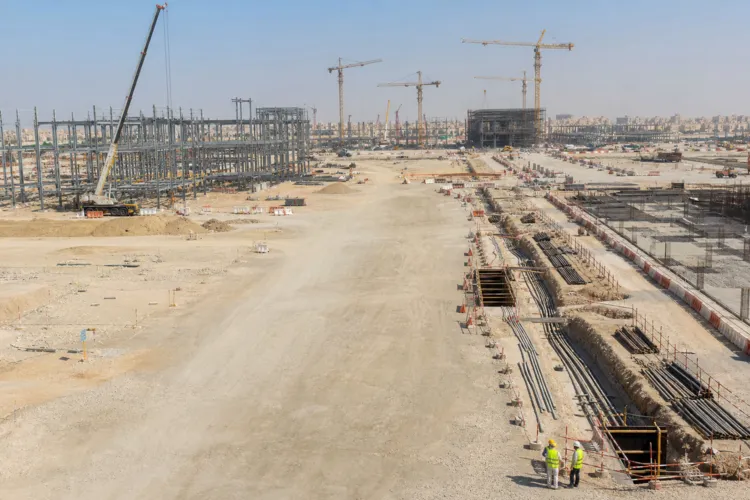
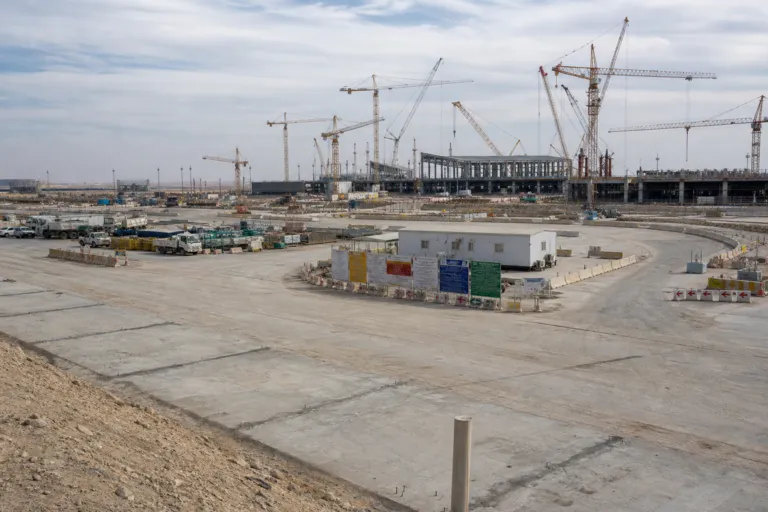
In Saudi Arabia, Jedco has outlined the next major expansion phase at King Abdulaziz International Airport (KAIA) and is giving advanced notice to international and local contractors. The goal is practical. Contractors can prepare consortia and financing ahead of formal tenders. Jedco’s public mapping of the opportunities signals procurement intent and reduces guesswork for bidders. The plan centers on six major contractor packages that Jedco expects to bring to market between 2026 and 2028. The works are described as typical of hub airport expansions, ranging from hundreds of millions to billions of dollars in scale.
The expansion requirements are linked to Jeddah’s role as a main gateway for Hajj and Umrah pilgrimage traffic. During peak times of the Islamic calendar, millions of passengers pass through KAIA each year. In this context, a phased, six-package procurement structure is positioned as a delivery tool as much as a commercial strategy. Jedco’s approach enables phased implementation while letting contractors specialize by category of airport infrastructure, rather than forcing a single delivery model. For companies tracking Jeddah airport expansion construction packages 2026, the key signal is the 2026–2028 window for six large contract opportunities.
How KAIA’s Packages Fit Saudi Arabia’s Aviation Build-Out
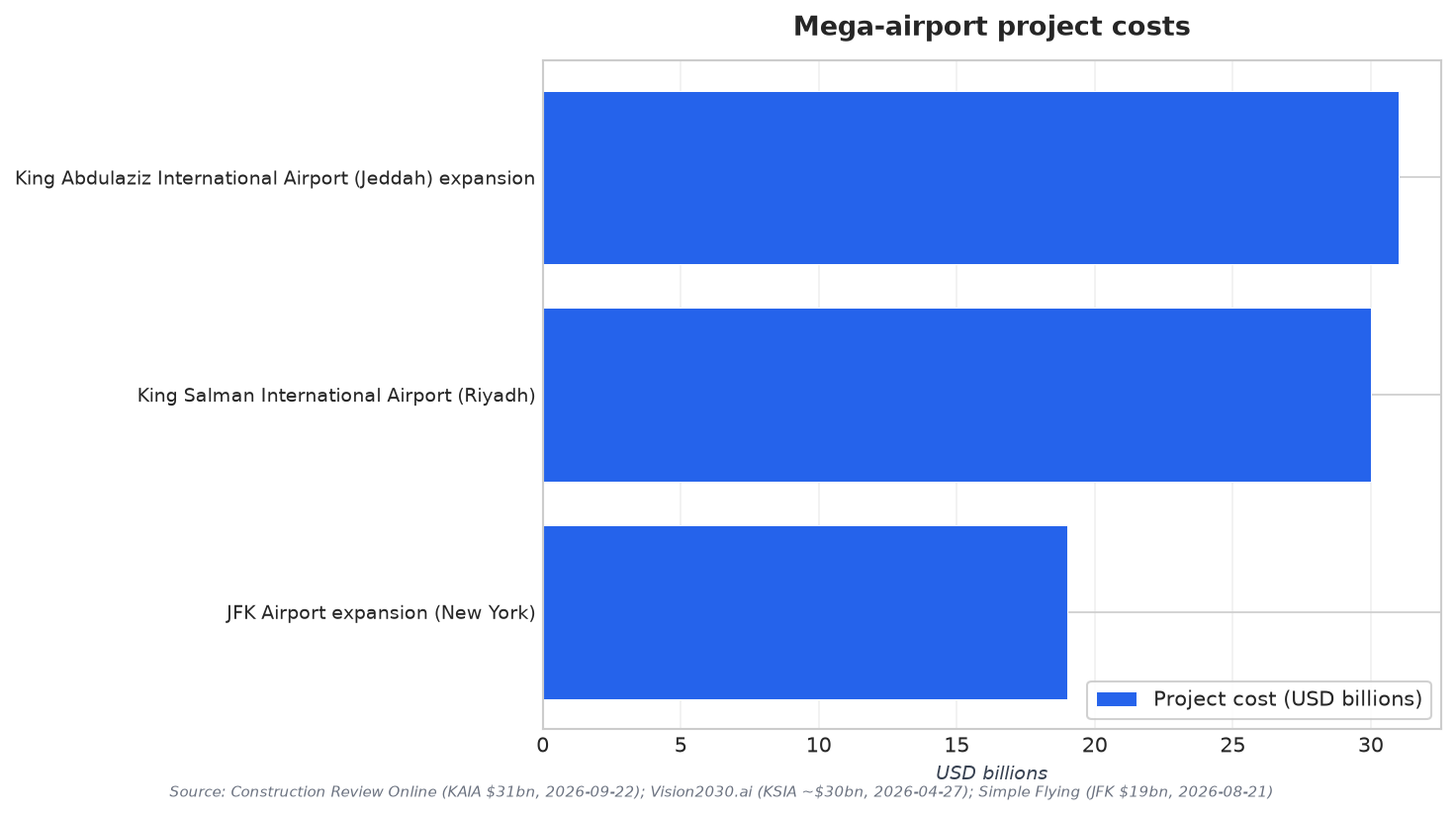
KAIA is also cited in regional reporting as being expanded with a $31 billion investment to handle 114 million passengers per year, with completion expected by 2031. The same reporting says a new Hajj and Umrah terminal at the Jeddah airport will handle 15 million passengers annually and is expected to be completed by 2025. Together, these figures show why procurement planning matters years before final delivery. They also frame why the six-package roadmap is being marketed globally: it creates multiple entry points for capital, delivery capacity, and specialized capability across the construction pipeline.
National performance indicators help explain the urgency behind such programs. In 2025, Saudi Arabia’s airports handled 140.9 million passengers, up 9.6% from 2024, with 75.8 million international passengers and 65.1 million domestic. Flight activity reached 979.8 thousand arriving and departing flights in 2025, an 8.3% increase from 2024. Separate aviation tracking notes international passenger growth of 18.7% in 2024 outpaced domestic growth of 11.5%. These demand signals sit alongside a national target of 330 million passengers annually by 2030 and an aviation investment strategy described as approximately $100 billion.
Regionally, airport expansion is not just a Saudi story, but Saudi Arabia is presented as the largest share of the Middle East and North Africa pipeline by value at 42.5%, followed by the UAE at 26.8%, with nearly 79% of airport project value in pre-execution or execution phases. In the UAE, Dubai World Central’s expansion is cited with a projected cost of Dh128 billion ($34.8 billion), five parallel runways, around 400 gates, and capacity for up to 260 million passengers annually. For bidders and suppliers, this wider environment raises the competitive bar. Jedco’s six-package plan positions KAIA to compete for contractor attention and execution bandwidth through clearer packaging and phased procurement.
When will Jedco bring the six KAIA expansion contracts to market?
What is the reported investment and capacity target for the KAIA expansion?
How large are the Jeddah airport expansion construction packages planned for 2026?
What recent passenger and flight activity figures show Saudi airport demand?
How does KAIA’s pipeline compare with the wider regional airport expansion push?
Talk to us for your needs in:
-
Sustainable Construction Solutions
-
Strategic Construction Planning
-
Customer-Centric Construction Services
-
Operational Excellence in Construction
-
Leadership and Change Management for Construction
-
Digital Transformation in Construction
-
Saudi Construction Market Research
-
In-Depth Market Study for Construction
-
Market Intelligence and Insights in Construction
-
Feasibility Study and Assessment in Construction
-
Saudi Construction Benchmarking