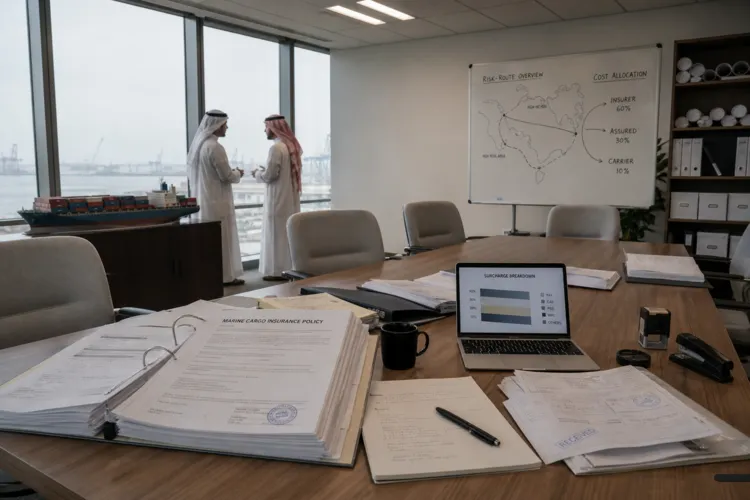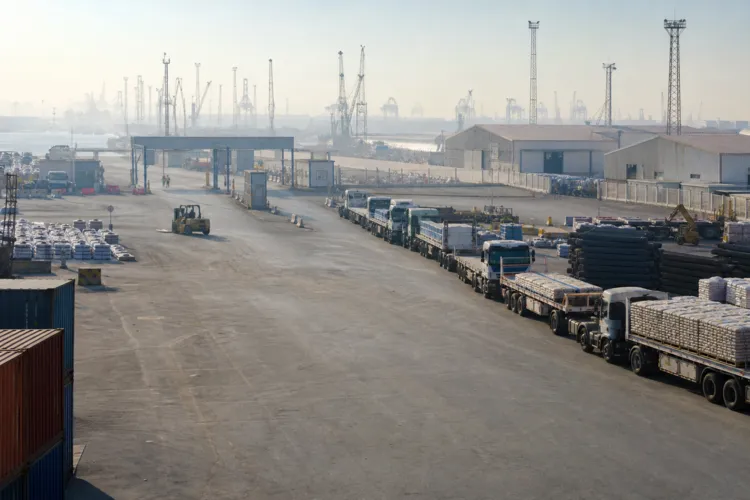
Saudi Arabia’s summer conditions create real operational pressure for outdoor projects. SmartQHSE notes that Riyadh and Dammam regularly exceed 48°C ambient between June and August, while Eastern Province coastal humidity can push WBGT readings above 35°C for hours each afternoon. Against that backdrop, the Ministry of Human Resources and Social Development (MHRSD) enforces a national restriction that prohibits outdoor work under direct sunlight from 12:00 to 15:00, from June 15 to September 15 each year. For planning teams, this is the pivot point for shifting the day’s most labor-intensive tasks into evenings and nights, while protecting workers and maintaining predictable daily handovers.
The compliance side is not optional. SmartQHSE summarizes Ministerial Decision 3337/1438H (June 2017, updated 2020) and states that MHRSD inspectors conduct unannounced site visits during the ban period, with SAR 10,000 fines per worker found working outdoors. It also warns repeat violations can trigger commercial registration penalties and may disqualify contractors from public-sector tenders. Saudi Gazette adds that the public can report violations via the unified call center at 19911 or through an app, increasing the likelihood that site controls are scrutinized. In practice, night planning must include clear boundary controls at midday, documented supervision, and task sequencing that eliminates any need to “finish a quick lift” under direct sun.
How to Make Night Shifts Work Without Creating New Risks
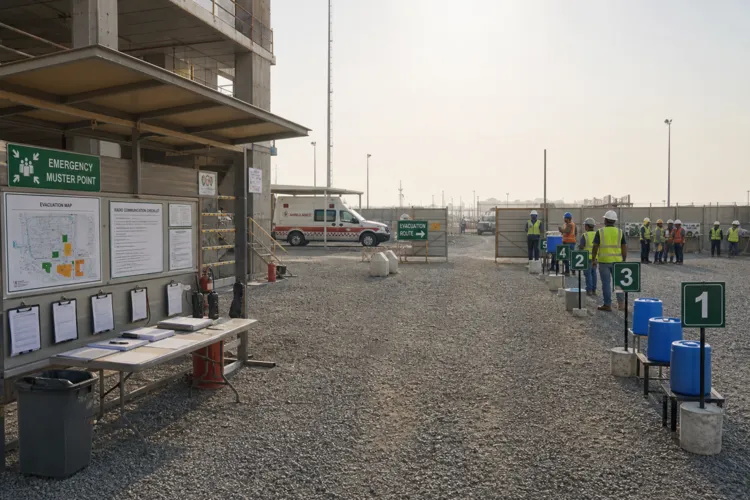
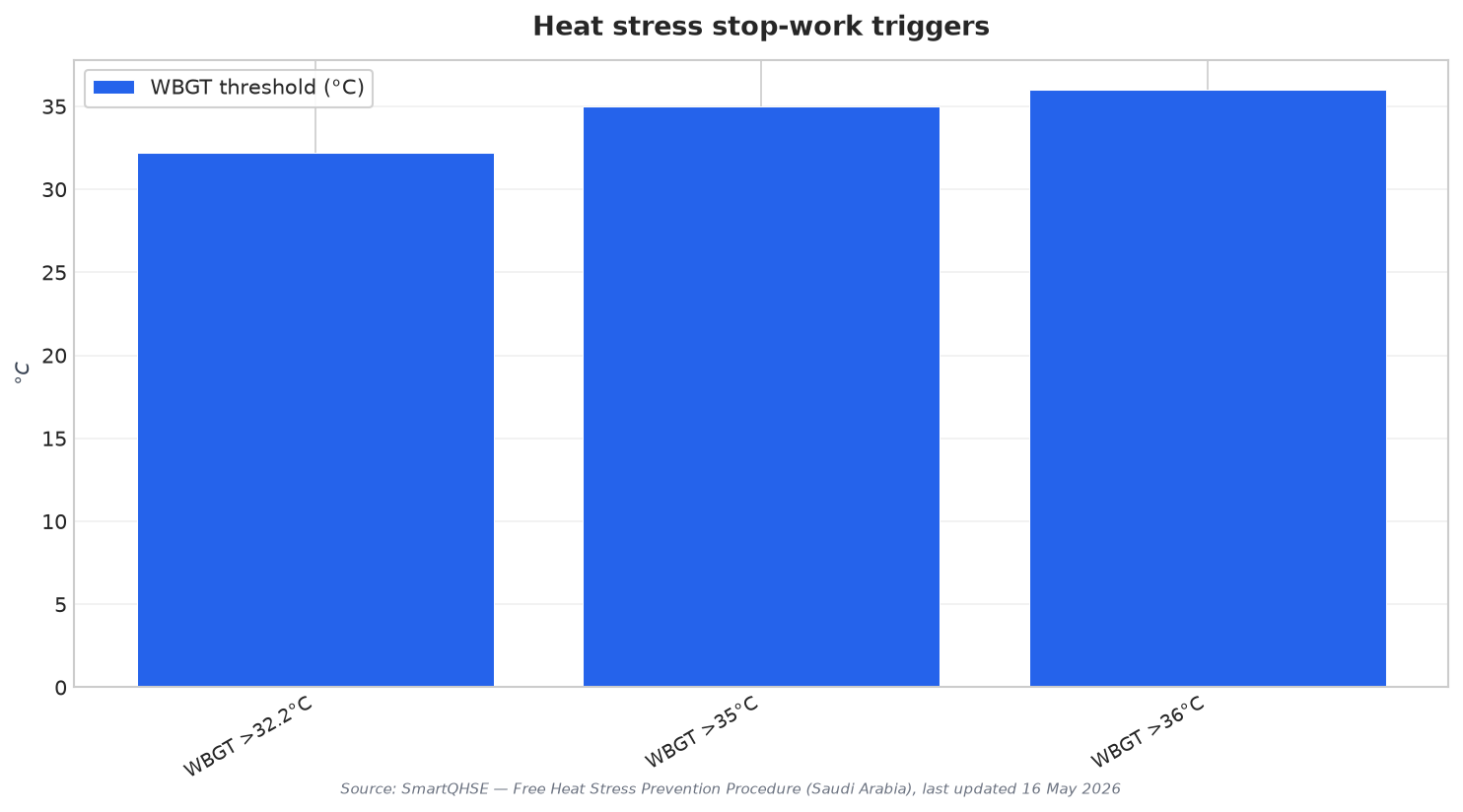
Moving work after dark does not remove the need for heat-stress management; it changes the risk profile and the controls. SmartQHSE outlines Aramco SHEMS-08 triggers that require action based on WBGT: above 32.2°C calls for extended rest cycles; above 35°C all heavy work stops; above 36°C a site-wide stop-work is required, and these triggers apply year-round, not only in summer. That matters for night work because coastal humidity can keep WBGT elevated even when the sun is down. A workable approach is to treat WBGT checks as a shift-start and mid-shift gate, and to schedule heavy work for the lowest-WBGT windows while reserving inspection, marking-out, and low-metabolic tasks for warmer periods.
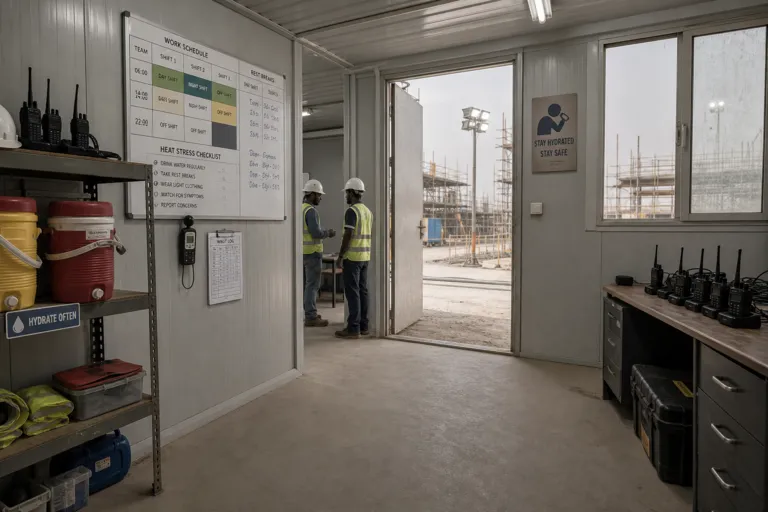
Worker readiness and welfare must be designed into the rota. SmartQHSE specifies a 14-day acclimatisation approach as part of a heat-stress procedure aligned to Saudi requirements, and it frames heat illness as a priority concern, particularly among the expatriate workforce in construction and oil and gas. The Saudi Times reports that employers are urged to provide drinking water, shaded rest areas, personal protective equipment, and awareness programs focused on preventing heat-related illness, and it cites official data that compliance reached 94% during 2025. For night shifts, these same measures must be available at night, with rest locations positioned close to workfronts and supervisors trained to spot heat exhaustion and heatstroke signals when crews are fatigued.
Finally, productivity goals need to reflect both the ban and the sector’s scale. Mordor Intelligence reports that infrastructure held 36.6% of Saudi Arabia’s construction market share in 2025, and that new construction captured 81.2% of the market in 2025 as giga-projects and housing drove greenfield sites. It also states that public bodies funded 71.5% of spending in 2025, with the Public Investment Fund directing USD 40 billion into NEOM, Red Sea, and Qiddiya between 2024 and 2026. With that volume of work, the “night shift construction summer heat ban Saudi” playbook should be formal: lock in compliant midday stoppages, plan night logistics and lighting under the site HSE plan, follow WBGT-based work-rest cycles, and keep evidence ready for inspections.
What are the exact hours and dates of Saudi Arabia’s midday heat ban for outdoor work?
What penalties can contractors face for violating the midday ban?
How can a site manage risk when shifting work to nights during the summer ban in Saudi Arabia?
What WBGT thresholds trigger work limits under Aramco SHEMS-08 as cited here?
How can the public report midday work ban violations?
Talk to us for your needs in:
-
Sustainable Construction Solutions
-
Strategic Construction Planning
-
Customer-Centric Construction Services
-
Operational Excellence in Construction
-
Leadership and Change Management for Construction
-
Digital Transformation in Construction
-
Saudi Construction Market Research
-
In-Depth Market Study for Construction
-
Market Intelligence and Insights in Construction
-
Feasibility Study and Assessment in Construction
-
Saudi Construction Benchmarking