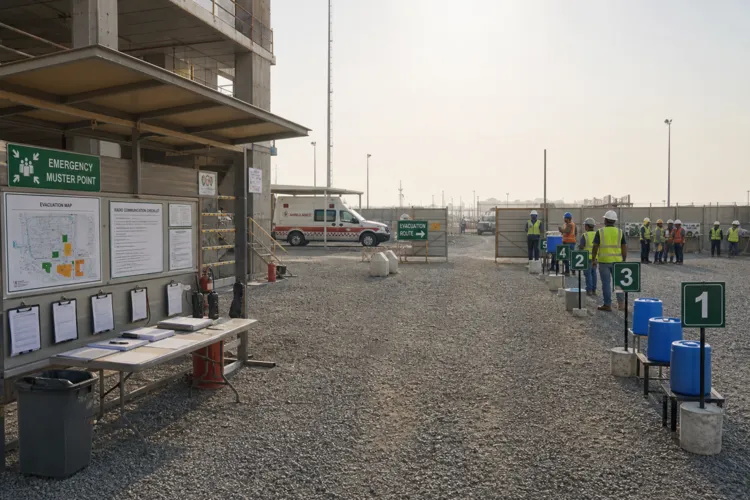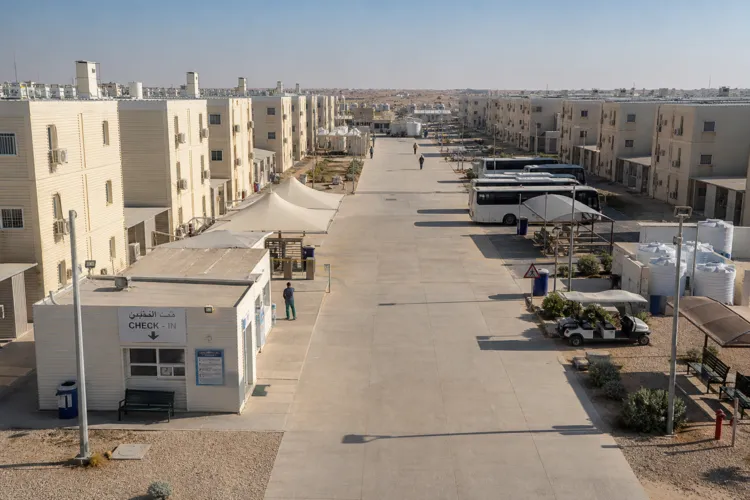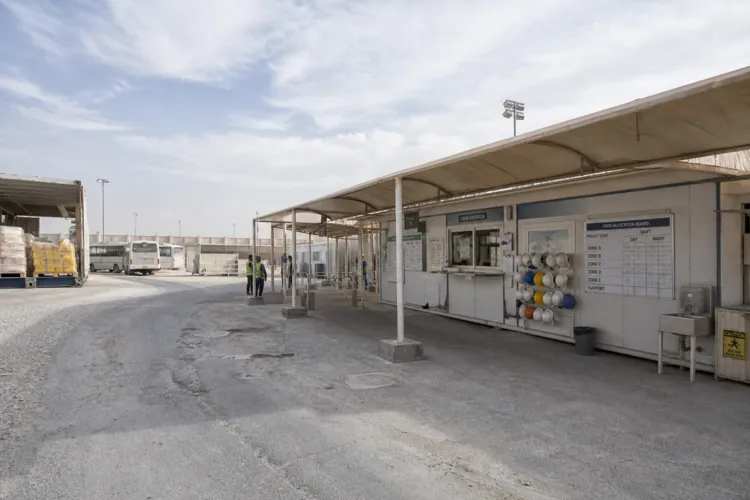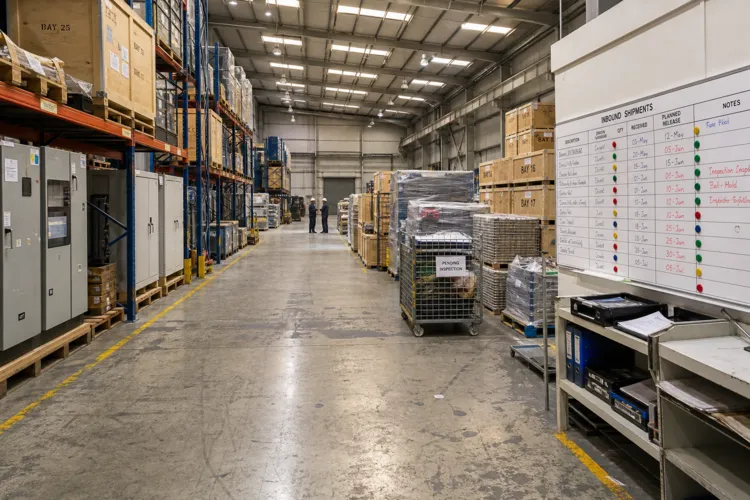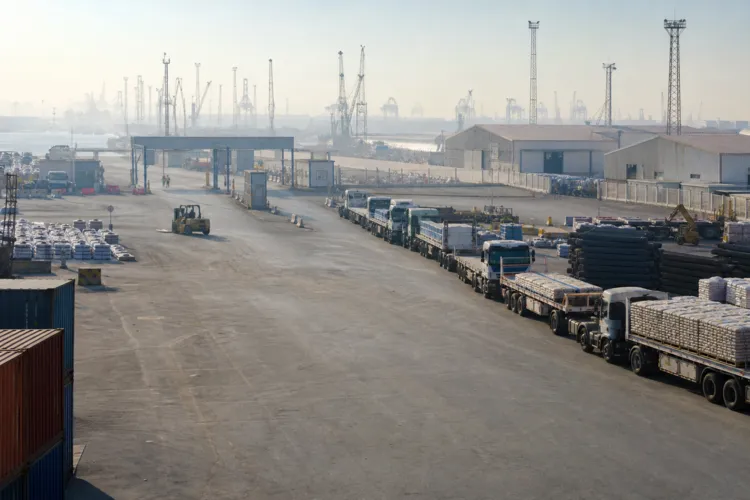
In 2026, construction occupational safety enforcement in Saudi Arabia is being shaped by both national injury data and a broader Vision 2030 push for safer work. The General Organization for Social Insurance (GOSI) processes around 40,000–50,000 work injury claims each year, but experts estimate actual work injuries may be 3–5 times higher because of underreporting. Within the compensated-claims picture, construction sits alongside manufacturing and transport as one of the three highest-injury sectors, and together those three sectors account for over 60% of all compensated injuries. That combination—scale, concentration, and reporting limits—helps explain why enforcement is becoming a central lever on sites that need to show visible control of risk.
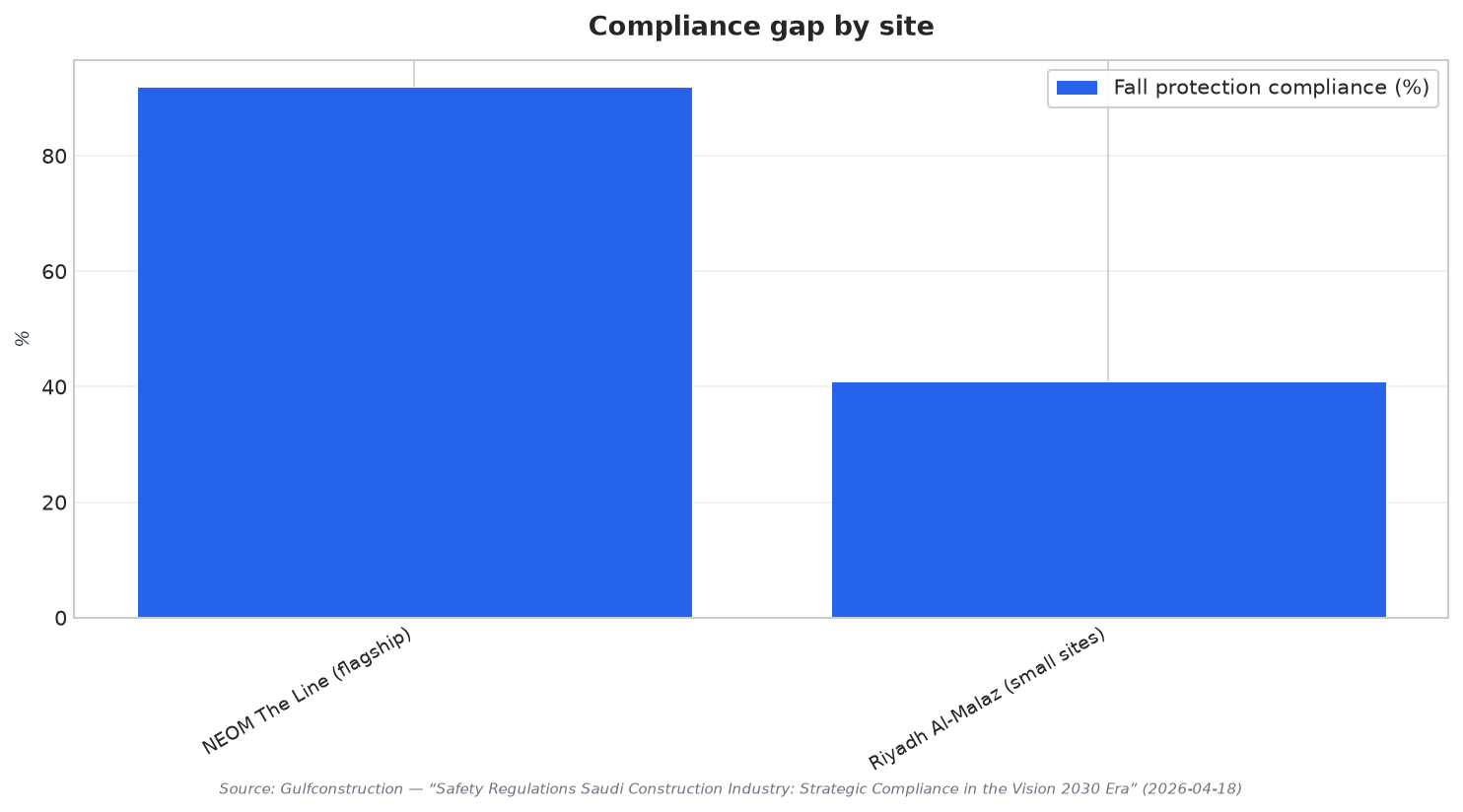
The compliance story is not uniform, and enforcement pressure does not land equally. Ministry of Municipal and Rural Affairs and Housing reports from April 2025, cited in a Gulfconstruction analysis, show 92% compliance with fall protection standards at NEOM’s The Line construction zone, while smaller residential developments in Riyadh’s Al-Malaz district sit at 41%. The same source says fines can reach SAR 50,000 per serious violation for small contractors, yet inspection coverage is still skewed: only 18% of safety officers deployed between January and March visited sites with under 50 workers. Those smaller sites were linked to 67% of reported accidents in 2025 so far, suggesting that the enforcement gap is as much about where oversight lands as it is about what the rulebook says.
Always-on Monitoring Turns Rules Into Real-Time Intervention
Technology is increasingly being used to make enforcement continuous rather than occasional. A Saudi construction consulting guide describes AI-powered monitoring that uses computer vision to scan live camera feeds and flag hazards in real time, such as missing PPE, restricted-zone entry, or unsafe machine operation. Alerts can reach supervisors and control centers within seconds, which changes enforcement from “documenting after” to “intervening during.” The same source describes an AI-based Safety Command Center connected to a Project Control Center that blends video analytics, edge computing, and IoT sensors to monitor worker locations, equipment operation, and environmental conditions, with some systems adding behavior recognition for context-driven risks such as edge work without a harness. It also argues edge AI matters on sites with weak connectivity because processing happens on site rather than relying on distant cloud computing.
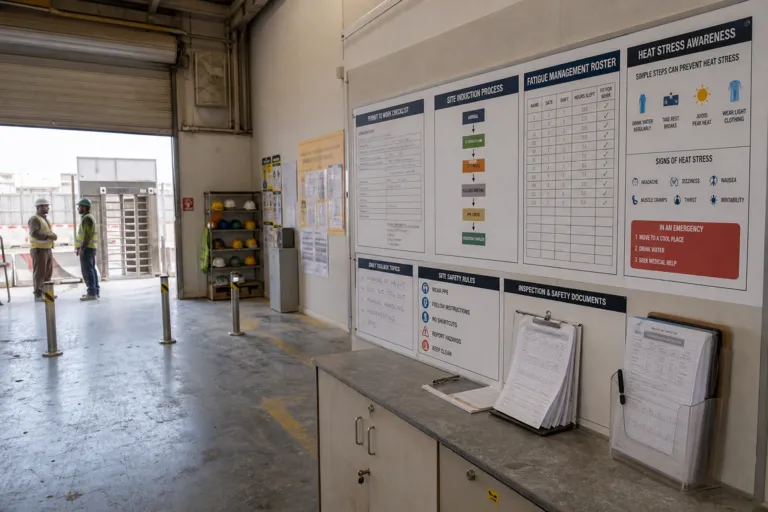
Enforcement is also colliding with operational choices that create fatigue and elevate incident risk. Gulfconstruction reports that workers operating 12-hour shifts for three consecutive months showed a 300% higher incident rate than workers on 8-hour rotations, based on its cross-referencing of safety reports from major projects. It also cites April 2025 GOSI data indicating that projects maintaining mandatory rest periods—described as full 24-hour rest cycles, not just breaks—reduced hand injuries by 44%. These figures reinforce a practical theme for 2026: enforcement is no longer just PPE and signage. It increasingly reaches scheduling discipline and proof of rest structures, because those controls can be measured and audited in ways that align with “zero-harm” expectations.
In parallel, the compliance ecosystem is expanding through procurement rules and market signals. MarkWide Research describes tightening qualification thresholds through Saudi Building Code and National Housing Company standards, while also pointing to the Saudi Standards, Metrology and Quality Organization enforcing product conformity assessments for imported construction inputs, with SFDA oversight extending to construction chemicals and admixtures. On the demand side, IMARC links Saudi Arabia’s construction safety equipment market outlook to stricter regulations and greater focus on worker safety, projecting the market to reach USD 445.7 million by 2034 with a 6.29% CAGR during 2026–2034. Put together, 2026 looks like a year where enforcement moves beyond episodic inspections into a system of requirements that touch staffing, hours, monitoring, and what projects are allowed to buy and use—especially for contractors trying to win and keep high-visibility work.
What is driving stricter construction occupational safety enforcement in Saudi Arabia in 2026?
How different is safety compliance between mega-projects and smaller sites?
What role does AI monitoring play on Saudi construction sites?
What does the data say about fatigue and incident risk on projects?
How is the safety equipment market reflecting tighter rules?
Talk to us for your needs in:
-
Sustainable Construction Solutions
-
Strategic Construction Planning
-
Customer-Centric Construction Services
-
Operational Excellence in Construction
-
Leadership and Change Management for Construction
-
Digital Transformation in Construction
-
Saudi Construction Market Research
-
In-Depth Market Study for Construction
-
Market Intelligence and Insights in Construction
-
Feasibility Study and Assessment in Construction
-
Saudi Construction Benchmarking