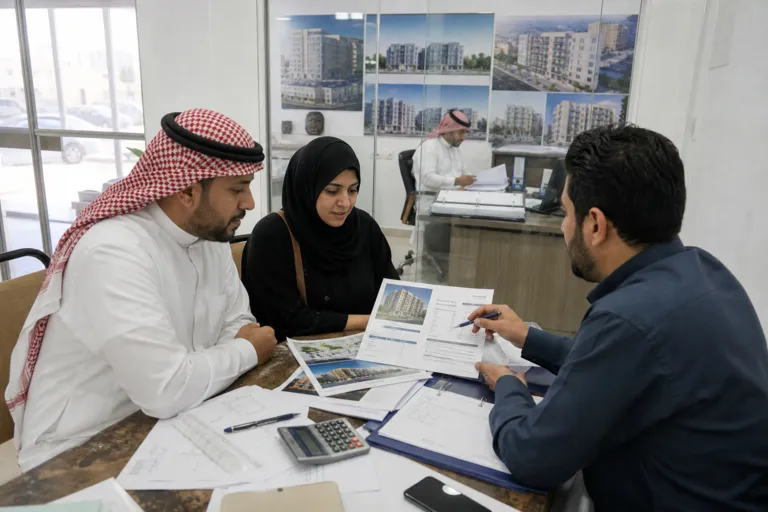
WAFI is Saudi Arabia’s government-backed system for selling or leasing units before construction is complete, based on approved plans and designs. It was launched in 2016 and is supervised by the Real Estate General Authority, with the program implemented through Cabinet Resolution No. 536 and updated under a new system issued on 25/9/2023. For developers, the attraction is clear: off-plan sales can create direct project financing from buyer installments, rather than relying only on bank funding. But under WAFI, that cash does not behave like unrestricted revenue, because payments are routed through controls designed to protect buyers and investors.
The first cashflow gate is licensing. Developers cannot market any real estate unit without obtaining a WAFI license, which is positioned as an execution guarantee that the project is serious. Beyond licensing, WAFI requires escrow discipline: buyer payments must be deposited into a dedicated escrow account linked to the project, and funds are released in stages tied to verified construction progress. Sources describe independent engineering and financial supervision, plus the authority to halt releases if a project falls behind schedule or does not meet quality standards. In practice, this means sales momentum can build collections, but construction draws depend on milestone verification and approvals.
Project Registration and Escrow Mechanics That Drive Construction Draws
WAFI also adds a transparency layer through project registration. Every licensed project must be recorded in a Project Registry with details such as the developer’s information, project location, total area, and the assigned escrow account. Sources also note that each project must have a unified escrow account number referenced in all sales contracts. For developer finance teams, this project-by-project structure reduces the ability to pool buyer receipts across multiple developments. It pushes cash management toward precise budgeting inside each registered project, with withdrawals aligned to documented progress and oversight, rather than the developer’s broader corporate cash priorities.
Several operational rules directly influence land and early-stage funding. One source notes recent changes that allow developers to access escrow funds for land payments in two installments: 30% when collection reaches 30% of sales, with additional amounts based on construction progress milestones. Escrow trustees—typically a licensed Saudi bank—are described as submitting quarterly reports to the WAFI committee and releasing funds only with prior committee approval. WAFI also conducts regular audits of licensed developers, typically quarterly, with extra inspections triggered by construction milestones or compliance concerns. This cadence can make draw scheduling more predictable, but it also increases the need for milestone-ready documentation.
Market activity figures show why these controls matter for liquidity planning. A guide on off-plan sales in Saudi Arabia states that in October 2025 alone, 55 projects were licensed, comprising over 20,000 units with an estimated value exceeding 32 billion riyals, and that financial operations in escrow accounts exceeded 8 billion riyals; it also states total licensed units exceeded 200,000 housing units. Another source reports that in 2023, WAFI authorized the sale of over 101,942 housing units across 434 licensed projects, and it references a 63% increase in small and medium project licenses. For developers navigating off-plan sales, WAFI escrow in Saudi Arabia can support trust and demand, but it requires aligning internal cash forecasts to regulated releases, inspections, and registry-based project separation.
How do WAFI escrow rules affect developer cashflow and construction draws in Saudi Arabia?
Can a developer market units before obtaining a WAFI license?
What does WAFI project registration add to the off-plan process?
When can escrow funds be used for land payments under recent WAFI changes?
How often are audits and escrow reports described under WAFI oversight?
Talk to us for your needs in:
-
Sustainable Construction Solutions
-
Strategic Construction Planning
-
Customer-Centric Construction Services
-
Operational Excellence in Construction
-
Leadership and Change Management for Construction
-
Digital Transformation in Construction
-
Saudi Construction Market Research
-
In-Depth Market Study for Construction
-
Market Intelligence and Insights in Construction
-
Feasibility Study and Assessment in Construction
-
Saudi Construction Benchmarking