The rent-versus-buy decision in Saudi Arabia is being reshaped by pace, project variety, and how fast equipment can be moved between sites. Mega developments under Vision 2030 are cited across multiple sources as key demand accelerators, including NEOM, the Red Sea Project, Qiddiya, and The Line. IMARC Group data cited in two sources puts the Saudi construction equipment rental market at USD 1.3 billion in 2025, with an expectation of USD 2.3 billion by 2034 and a 6.34% CAGR over 2026–2034. That growth narrative reinforces why many contractors prefer access over ownership, especially when equipment requirements change across phases.
Cost signals also matter when deciding whether to buy plant or keep it off-balance-sheet. GASTAT data referenced for January 2026 shows rental costs for equipment used in residential construction rose 1.9% year-over-year, driven mainly by a 2.4% increase in equipment-and-operator rental costs. That points to rising demand for supported rentals where the supplier provides both the machine and the operator. At the same time, the broader equipment landscape is scaling: Mordor Intelligence forecasts the Saudi construction equipment market (sales and ownership, not rentals) to grow from USD 1.78 billion in 2025 to USD 1.89 billion in 2026, reaching USD 2.55 billion by 2031 at a 6.2% CAGR (2026–2031). Together, these trends make utilization the central question: idle plant can erode ROI quickly, while rental converts uncertainty into a defined project cost.
Idle Plant Pressure: Why Utilization Is the Real Battleground
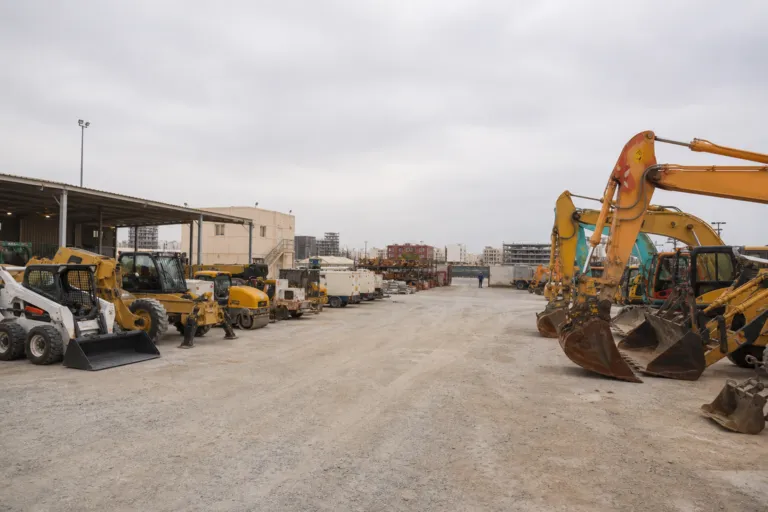
When equipment is idle, the economic logic shifts toward reallocating assets to where demand is immediate. IMARC’s press release notes AI-powered fleet management can track equipment across multiple sites and redistribute idle machinery to higher-demand locations, reducing downtime. Market structure affects how quickly that happens. One source states more than 10 companies serve the rental space, while the top five hold around 30% market share, signaling fragmentation and room for responsive local operators. Consolidation is also visible: a February 2026 development cited was GFH’s majority-stake acquisition of Byrne Equipment Rental, described as having roughly 16,000 units and a depot network including a flagship Jubail operations hub. That kind of scale can intensify competition by making more equipment available and movable, which can influence rent-versus-buy calculations on active projects.
Equipment mix shapes both availability and pricing power. In Saudi rental demand, one source attributes roughly 65% of rental market share to earthmoving equipment, with roads and highway projects accounting for about 35% of demand. In the equipment market more broadly, Mordor Intelligence reports earth-moving equipment held 46.35% share in 2025, with excavators projected to post an 8.30% CAGR through 2031. These overlaps matter because roads, highways, and early-stage site works tend to require bursts of heavy utilization followed by tapering demand. Renting helps contractors match these peaks and troughs without carrying depreciation risk. Meanwhile, the same Mordor source notes diesel had a 78.95% share in 2025, while battery-electric equipment is forecast to grow at a 20.10% CAGR to 2031, reinforcing the appeal of renting to keep technology current without repeated capital purchases.
Budgeted infrastructure spending adds another layer to the rent-or-buy equation. The FY 2026 Budget allocated SAR 35 billion to the Transportation and Infrastructure Sector, a category that typically flows through phased programs where equipment needs change by stage. Contractors chasing multiple tenders may also prefer rental to scale quickly as schedules shift. Private activity is another driver: the Investment Ministry reported 3,800 construction licenses issued in 2024, which supports the view that more small and mid-sized contractors may enter the market without the balance sheet to buy and maintain full fleets. Put together, the construction equipment rental market Saudi Arabia is being pulled by project scale and pushed by utilization pressure, making flexible fleet access a strategic choice rather than a stopgap.
What do current forecasts say about Saudi Arabia’s construction equipment rental market size?
What cost trend is visible in early 2026 for equipment rentals used in housing projects?
How concentrated is the rental industry in Saudi Arabia?
Which equipment categories dominate rental demand in Saudi Arabia?
What factors are shaping the construction equipment rental market topic in Saudi Arabia right now?
Talk to us for your needs in:
-
Sustainable Construction Solutions
-
Strategic Construction Planning
-
Customer-Centric Construction Services
-
Operational Excellence in Construction
-
Leadership and Change Management for Construction
-
Digital Transformation in Construction
-
Saudi Construction Market Research
-
In-Depth Market Study for Construction
-
Market Intelligence and Insights in Construction
-
Feasibility Study and Assessment in Construction
-
Saudi Construction Benchmarking