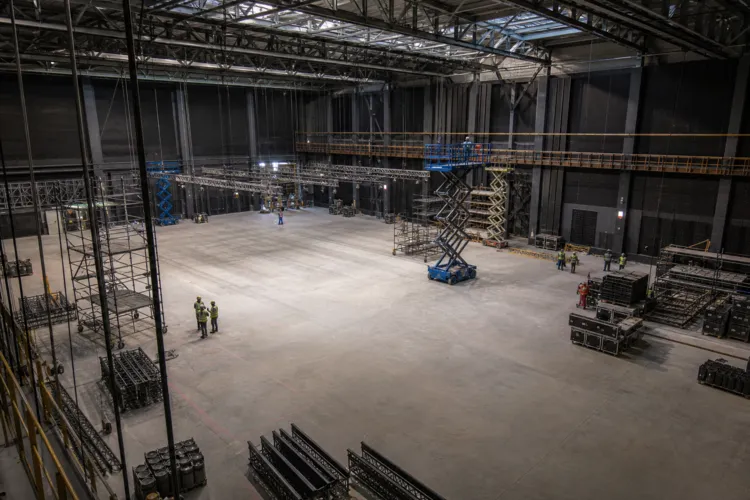
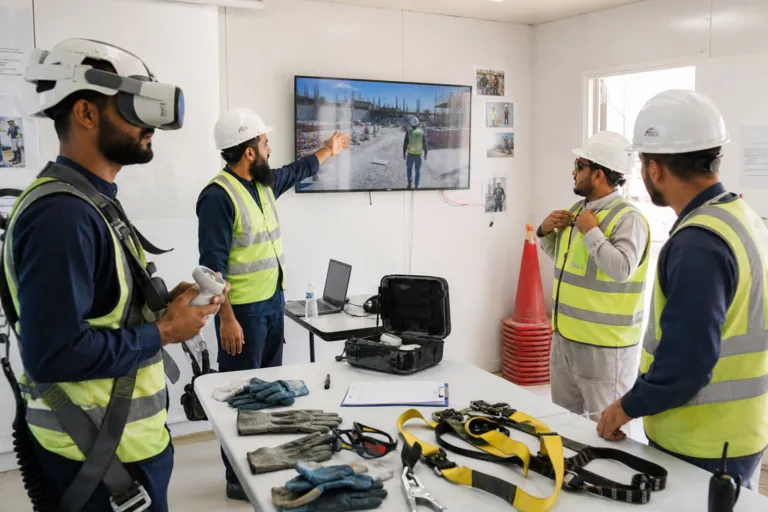
Giga-project sites in Saudi Arabia need training that scales. They also need training that sticks. Across industries, immersive learning is being used to simulate complex, real-world scenarios without leaving the training environment. VR can fully immerse trainees in a safe and controlled setting, where they can repeat tasks until they reach proficiency. AR can overlay guidance onto the real environment, supporting on-the-job training and real-time support. This combination fits construction, where the cost of mistakes is high and where crews need time and space to practice new equipment and digital workflows in a low-risk setting.
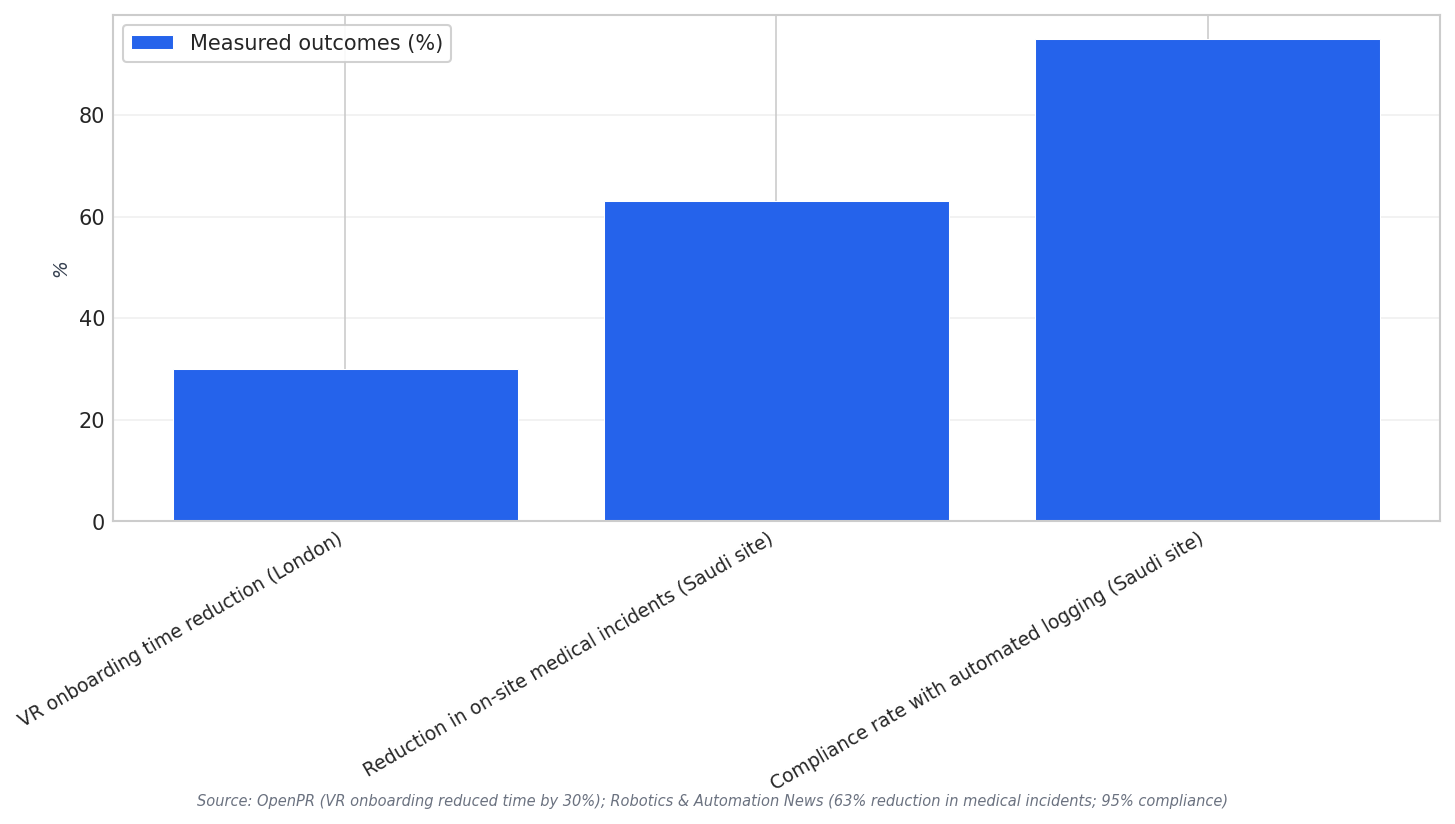
Evidence on onboarding speed is emerging from other sectors. In London, VR modules used for healthcare and finance training reduced onboarding time by 30%. That is not a construction number. It is still useful as a directional benchmark for what immersive modules can do when they are built into formal onboarding. In parallel, ports are building full programmes around simulation for recruiting, assessment, onboarding, cross-skilling, and ongoing upskilling, with the explicit goals to cut training times and improve efficiency and safety. Construction firms can borrow this program-first approach, then tailor scenarios to their jobsite risks.
How AR and VR Fit the Reality of Saudi Giga-Projects
Construction leaders often adopt new tools fast, but teams still need structured practice to make change stick. For Construction Pros notes that if a team is adopting new equipment, a digital platform, or an AI-based process, they need time and space to practice. That can mean a mock jobsite setup, a VR simulation, or even a short-term pause in regular work so teams can test tools in a low-risk setting. VR’s “fail-safe” nature supports repeated practice without real-world risks, while AR supports real-time, step-by-step guidance in the field of view, reducing dependence on printed manuals and minimising the potential for errors.
Saudi sites also face safety and compliance pressure. On a construction site in Saudi Arabia, viAct combined AI video analytics with IoT smart watches to manage large numbers of workers under extreme desert conditions. The connected worker-safety technology provided real-time heat stress alerts and resulted in a 63% reduction in on-site medical incidents. The same deployment achieved 95% compliance rates through automatic logging of hydration breaks and PPE compliance. These outcomes matter for onboarding because they show how digital systems can create documented, real-time safety behaviors that new workers can learn and supervisors can verify.
Training design is also shifting toward methods that improve retention and application. In Saudi Arabia, discussions highlighted that modern training design should engage multiple senses, encourage social interaction, and create positive emotional experiences that enhance learning effectiveness, strengthen memory retention, and ensure knowledge is retained and applied in real learning environments. This maps well to immersive training. VR can deliver panoramic context and narrative integration, while AR reinforces sensory realism and detailed perception on site. Together, AR and VR can support a two-layer pathway from “how it looks and feels” to “why it matters and how to act,” which is valuable when onboarding diverse roles on complex, fast-moving projects.
What is “AR VR training Saudi construction workers” in practice?
Is there proof VR can reduce onboarding time?
How can immersive training support safety on Saudi construction sites?
Why use AR instead of only classroom learning?
Talk to us for your needs in:
-
Sustainable Construction Solutions
-
Strategic Construction Planning
-
Customer-Centric Construction Services
-
Operational Excellence in Construction
-
Leadership and Change Management for Construction
-
Digital Transformation in Construction
-
Saudi Construction Market Research
-
In-Depth Market Study for Construction
-
Market Intelligence and Insights in Construction
-
Feasibility Study and Assessment in Construction
-
Saudi Construction Benchmarking