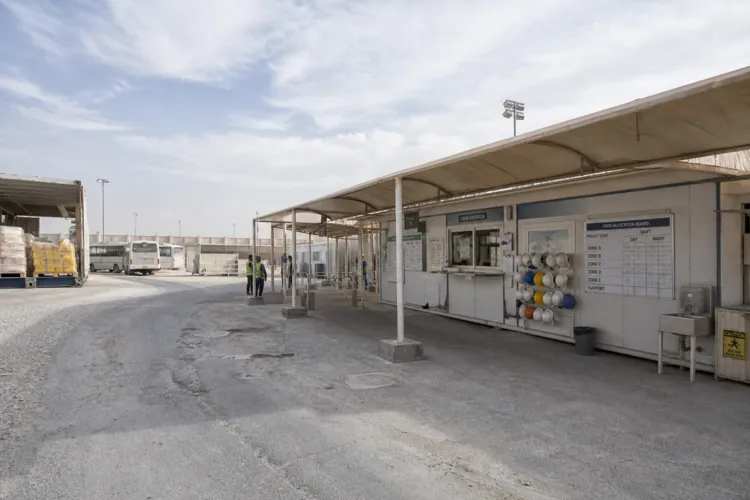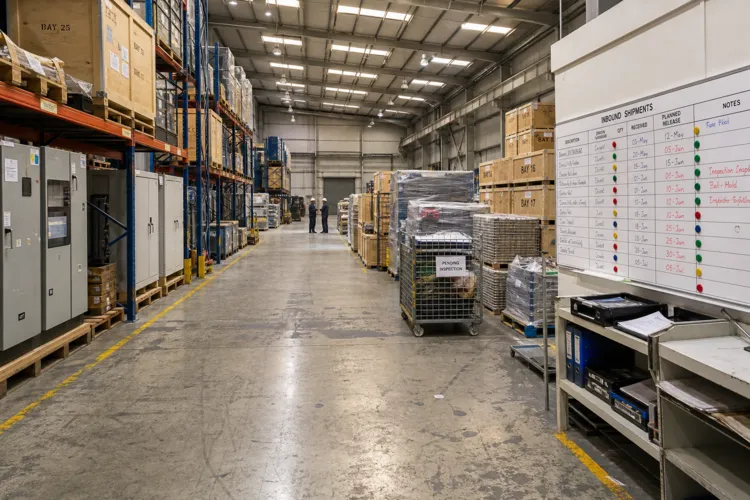
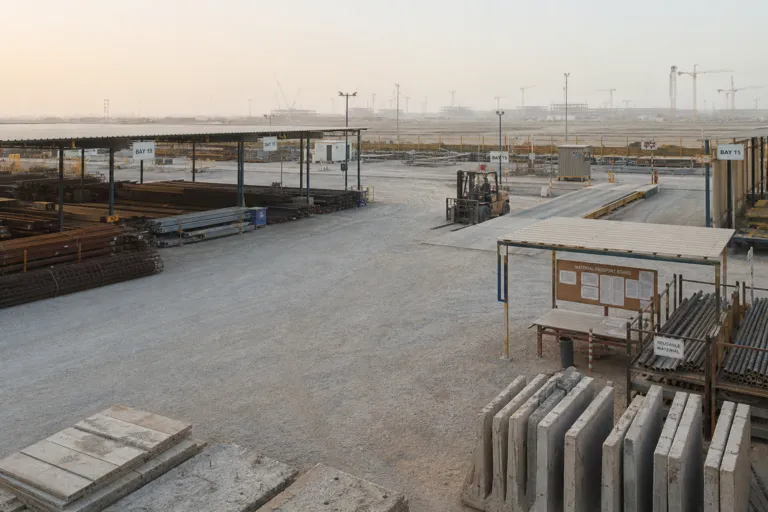
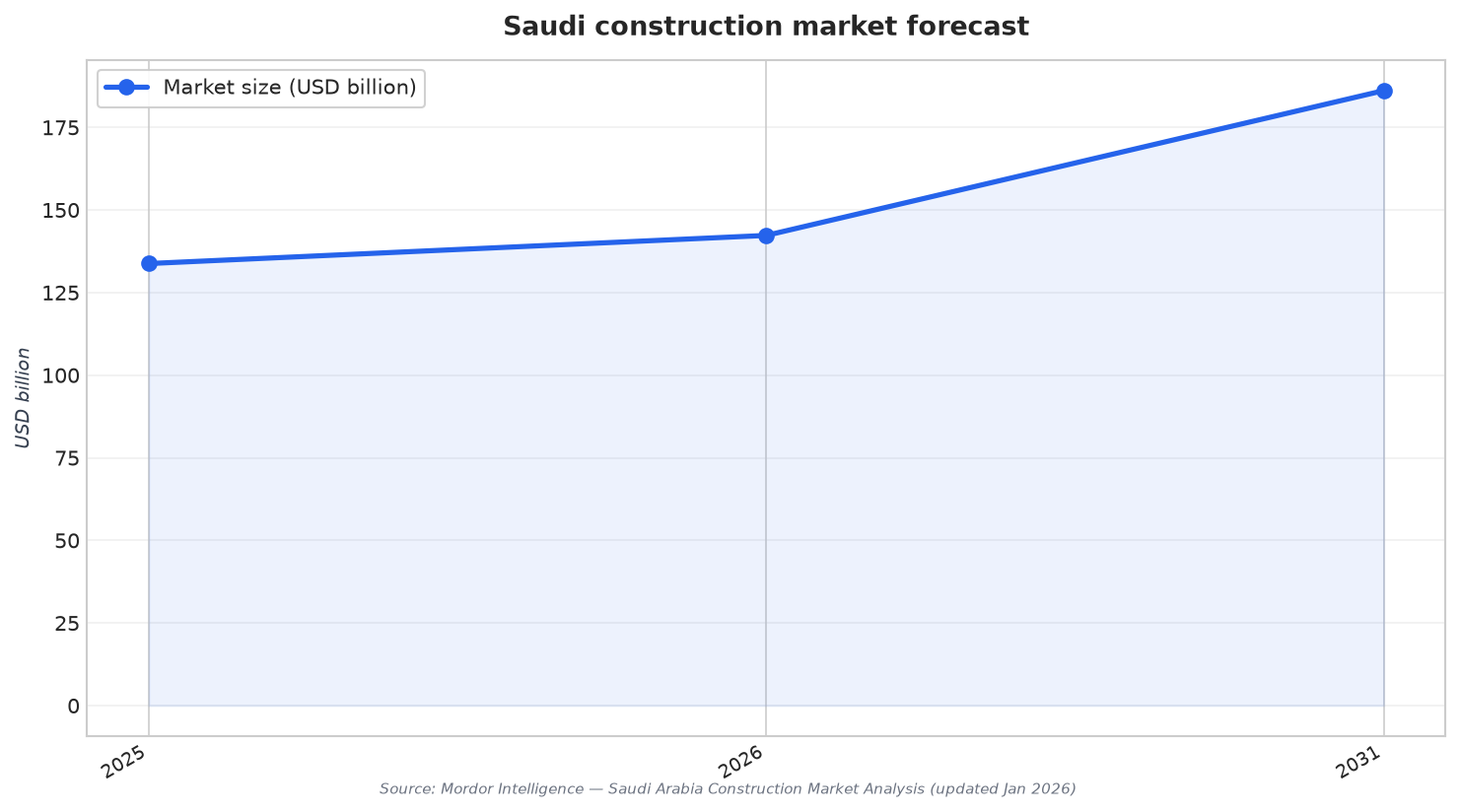
Saudi Arabia’s construction activity in 2026 sits at the intersection of big pipelines and tighter delivery realities. Mordor Intelligence projects the Saudi Arabia construction market at USD 142.30 billion in 2026, rising from USD 133.79 billion in 2025, and reaching USD 186.13 billion by 2031, with a 5.52% CAGR from 2026 to 2031. In 2025, infrastructure led with 36.6% of revenue, new construction held an 81.2% share, and conventional on-site methods represented 89.6% of value—signals that scale still comes from major builds. In parallel, commentary on 2026 flags elevated or rising costs for steel, concrete, lumber, and key mechanical and electrical components, tied to tariffs and supply volatility, which makes better material intelligence and reuse planning more attractive to project leaders.
This is where the keyword topic—material passports, circular construction, and Saudi Arabia—becomes less abstract and more operational. A systematic review in Sustainability argues that circular economy adoption in the AEC industry is hampered by data scarcity, and positions Material Passports (MPs) as crucial for bridging that gap. The same review warns that remaining uncertainties and the lack of industry-wide consensus on MPs risk fragmented adoption. Another 2026 bibliometric and thematic analysis adds that early studies focused on implementing MPs in new construction, stakeholder decision support, and reusability assessments, while ensuing research filled gaps in marketing existing building materials, data security, and disassembly sequencing. For giga-project delivery teams, those gaps map directly to real questions: what is available, what can be safely reused, and how disassembly should be planned without losing traceability.
Why 2026 Giga-Project Delivery Conditions Favor Reuse Pilots
Several giga- and mega-projects continue to anchor multi-year demand under Vision 2030, including NEOM, Red Sea, Diriyah, and Qiddiya, according to Mordor Intelligence. The same source notes NEOM’s green-hydrogen plant reached 80% completion in 2025 and requires four gigawatts of dedicated renewables, while Red Sea Global awarded USD 3.9 billion in early 2026 for 16 island resorts using modular hotel blocks. Diriyah Gate attracted USD 2.7 billion in 2025 bids that must conform to UNESCO protocols, and Qiddiya is developing a 320,000-square-meter indoor venue alongside a Six Flags park. At the same time, a 2026 Saudi construction outlook describes a “leaner-feeling pipeline” in parts of the giga-project landscape and says NEOM is undergoing revisions due to escalating costs and economic considerations, with expectations that timelines may lengthen even if projects are not canceled. Reuse pilots supported by MPs can fit this environment, because they are a controllable scope within a broader program that is balancing cost, pace, and governance requirements.
Practical adoption depends on treating passports as living, project-ready datasets, not static PDFs. npj Materials Sustainability recommends viewing materials passports as live documents that can be expanded or simplified to match circular economy requirements. It also highlights a specific delivery challenge: a time gap between design and construction, where reused materials available at design stage may not be available at construction, and storage costs of salvaged materials need to be reduced. The article recommends that, to prioritize reuse, every project should include a proposed MP database at the design stage and allow specification flexibility. Those recommendations align with 2026 construction management guidance that emphasizes tighter scope documentation and the use of BIM, drones, data analytics, and artificial intelligence to control costs and mitigate disputes in an environment where elevated material costs can drive higher bids and more change orders. In short, the same digital controls used to manage risk can also carry MP data that supports disassembly sequencing and reuse decisions.
Saudi market momentum provides both urgency and opportunity for these pilots. GlobalData expects the construction industry in Saudi Arabia to grow by 3.6% in real terms in 2026, and reports that GaStat recorded a net FDI inflow of SAR72.3 billion ($19.3 billion) in the first nine months of 2025, up 32.7% year on year versus the same period of 2024. Mordor Intelligence also notes that public spending accounted for 71.5% of 2025 activity, while private capital is expected to grow at a 7.10% CAGR during 2026–2031, suggesting multiple funding models may coexist in the same delivery ecosystem. Against that backdrop, MPs can be used as a governance tool to reduce data scarcity, coordinate stakeholders, and avoid fragmented adoption, especially as renovation is forecast to advance at a 6.91% CAGR over 2026–2031 and modern methods of construction expand at a 7.55% CAGR. Circular construction, anchored in credible material data, becomes a way to make reuse procurement and design flexibility easier to defend in fast-moving programs.
What makes material passports useful for circular construction in Saudi Arabia in 2026?
What 2026 market signals increase interest in building-material reuse?
Which giga-project examples in Saudi Arabia are cited as ongoing 2025–2026 anchors?
What are two practical challenges to enabling reuse with materials passports?
What do 2026 sources say about consensus and standards for material passports?
Talk to us for your needs in:
-
Sustainable Construction Solutions
-
Strategic Construction Planning
-
Customer-Centric Construction Services
-
Operational Excellence in Construction
-
Leadership and Change Management for Construction
-
Digital Transformation in Construction
-
Saudi Construction Market Research
-
In-Depth Market Study for Construction
-
Market Intelligence and Insights in Construction
-
Feasibility Study and Assessment in Construction
-
Saudi Construction Benchmarking