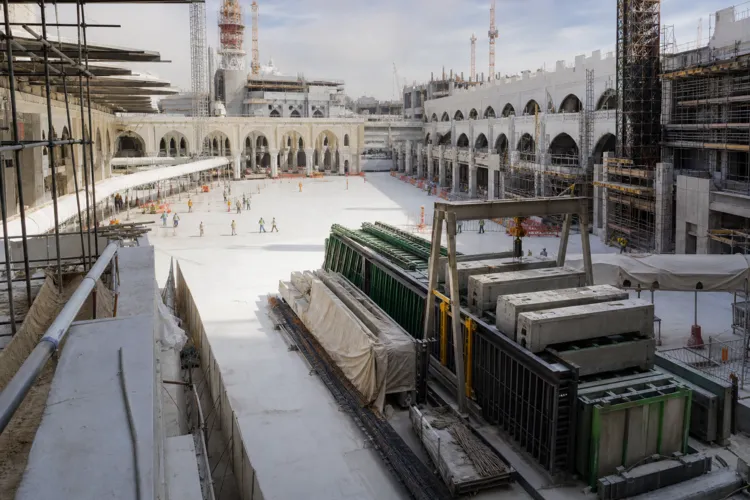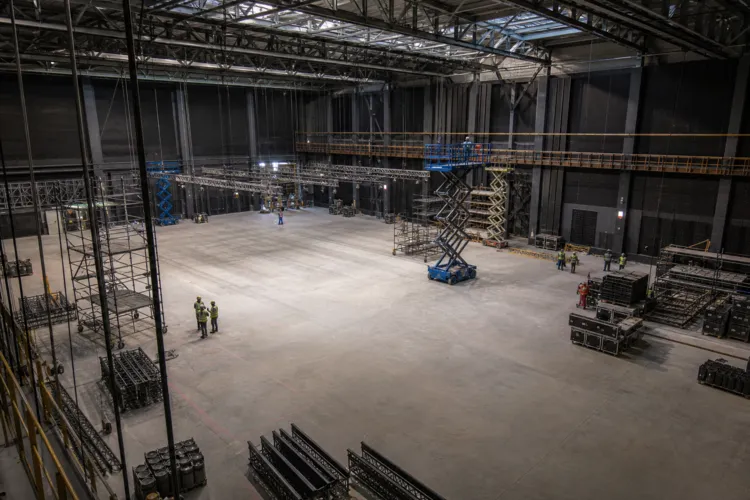
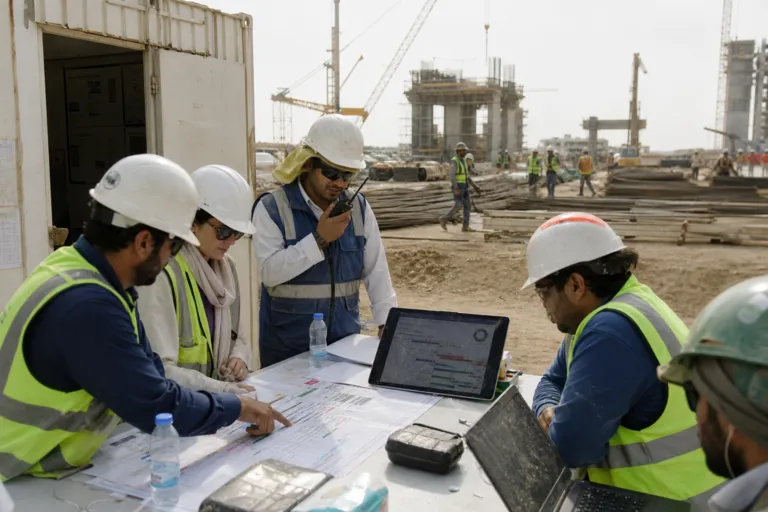
Saudi giga-project sites are already deep into BIM, but the next leap is operational. The focus is shifting from static models to AI that continuously explores the schedule and flags delivery risk early. This is where AI construction scheduling Saudi Arabia conversations are heading: using AI to evaluate sequences, resources, and site constraints as variables, not assumptions. The result is not just a better plan on day one. It is a living schedule strategy that can be stress-tested as conditions change and decisions ripple across trades, zones, and dates.
Generative scheduling is becoming a practical way to move beyond manual what-if planning. McKinsey and ALICE Technologies describe an approach that can analyze BIM models alongside Oracle P6 schedules and generate millions of possible execution paths. In that model, labor, equipment, materials, space, and sequence are treated as adjustable variables. Teams can stress-test alternatives and compare choices between cost, speed, and risk. The firms also report that the technology has been introduced to more than 35 clients across infrastructure, data centers, energy, and manufacturing, achieving schedule acceleration of up to 20%.
From Progress Tracking to Risk Forecasting on Active Sites
Schedule optimization only works if progress reality keeps feeding the plan. One view of the near future is that a delay in slab pour sequencing could be detected automatically, mitigated through an AI-driven recommendation, and supported by robotically captured progress validation before it hits the critical path. That same shift changes how people collaborate. When superintendents, project managers, and field engineers work from a shared, continuously updating view of site conditions, decision-making becomes proactive instead of reactive. Meetings become shorter, alignment becomes tighter, and teams stay ahead of challenges rather than scrambling after the fact.
On Saudi giga-project programs, the foundation for AI-driven control is often connected digital delivery. Gulf Business Solution (GBS) says it is providing essential digital infrastructure powering the Kingdom’s giga-projects, including Digital Twin technologies and advanced BIM workflows. It highlights the implementation of Autodesk Construction Cloud (ACC) and connected BIM workflows across Revit, AutoCAD, and Navisworks to enable data-driven performance gains. GBS also says it is training and certifying hundreds of professionals in advanced digital workflows. That matters because AI-ready planning depends on consistent data, consistent process, and a workforce that can operate the tools correctly.
Risk forecasting also needs governance, not hype. One construction AI concern is that tools can produce authoritative answers from flawed context, such as retrieving an older revision of a report and omitting conditional detail. That can drift decisions from engineering judgment toward automated optimism. Another risk sits in security and supply chain exposure, including silent AI features switched on by default in trusted platforms and tampered schedules or spreadsheets that compromise downstream systems. A pragmatic approach is to start with specific use cases, build securely, set clear data-handling boundaries, and add third-party assurance from day one, then expand once ROI is proven.
Beyond BIM, the opportunity for Saudi giga-project sites is a tight loop: connected BIM and controls data, AI that generates and tests execution paths, and progress intelligence that keeps forecasts honest. AI-assisted modeling and real-time cost and schedule intelligence are described as becoming essential for faster iteration and smarter decisions earlier in the process. But the operating model is the differentiator. AI should accelerate preparation so professionals can certify reality, with strong project controls, robust inputs, and teams trained to understand data provenance, audit trails, and failure modes. That combination is how AI scheduling becomes trustworthy delivery discipline, not just a new dashboard.
What does AI construction scheduling Saudi Arabia mean in practice?
How does generative scheduling differ from traditional scheduling?
What benefits have been reported from AI-driven schedule optimization?
How do connected BIM workflows support AI on giga-project sites?
What are key risks to manage when deploying AI for forecasting and scheduling?
Talk to us for your needs in:
-
Sustainable Construction Solutions
-
Strategic Construction Planning
-
Customer-Centric Construction Services
-
Operational Excellence in Construction
-
Leadership and Change Management for Construction
-
Digital Transformation in Construction
-
Saudi Construction Market Research
-
In-Depth Market Study for Construction
-
Market Intelligence and Insights in Construction
-
Feasibility Study and Assessment in Construction
-
Saudi Construction Benchmarking