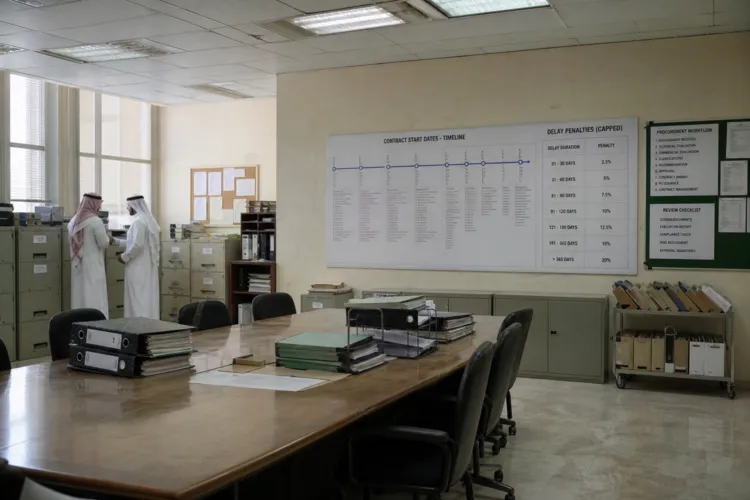
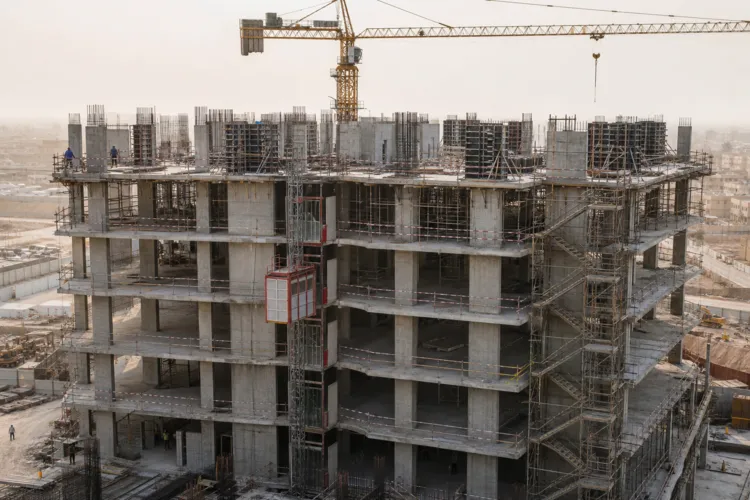
The Saudi construction market is one of the world's largest, with nearly US$1 trillion invested in construction and infrastructure since 2016, according to the CEO Guide to KSA. Giga projects and public-private partnerships create openings for contractors and engineering firms, but talent shortages, Saudization, costs and timelines make careful project selection essential.
Eurogroup Consulting's The CEO Guide to KSA: Saudi Arabia Reimagined, Are You Ready?, published in March 2024, examines construction as one of the sectors supporting Saudi Arabia's economic diversification, highlighting major investment ambitions, international contractor participation, and practical operating considerations.
How Big Is the Saudi Construction Market?
Saudi Arabia's construction development agenda extends across transportation, industrial infrastructure, residential property, tourism destinations, and urban development.
The CEO Guide reports that nearly US$1 trillion had been invested in construction and infrastructure since 2016, according to the information available during its research period. This historical estimate reflects the scale of development activity described in 2024, rather than an independently verified cumulative investment total for 2026.
However, construction opportunities vary considerably between project types. Transport infrastructure involves different procurement arrangements, engineering capabilities, and delivery risks from hospitality developments or industrial facilities.
Contractors must also distinguish announced budgets from awarded contracts, work under execution, and completed expenditure. These categories represent different commercial opportunities and levels of certainty.
Which Giga Projects Are Shaping Construction Demand?
The CEO Guide highlights NEOM, the Red Sea Project, Qiddiya, and AlUla as major initiatives intended to support economic diversification.
NEOM is described in the publication with an announced development budget of US$500 billion, encompassing several planned developments, including The Line, Oxagon, Trojena, and Sindalah. This budget should not be interpreted as spending already completed or as a guarantee that all originally announced components will be delivered on their initial schedules.
The Red Sea Project emphasizes high-end tourism infrastructure, while Qiddiya focuses on entertainment and leisure. AlUla combines cultural heritage development with hospitality and infrastructure investment.
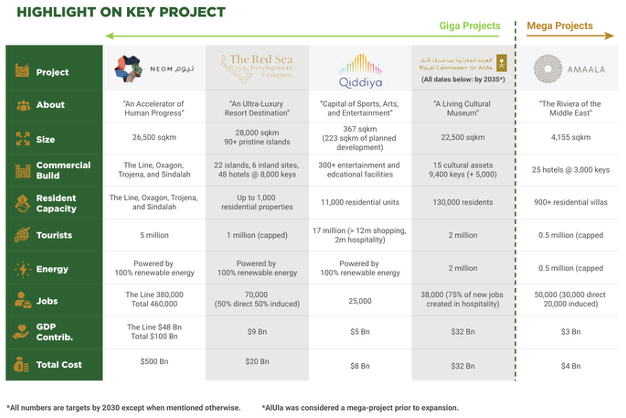
Figure 1: Highlight on Key Giga and Mega Projects (targets by 2030 unless stated otherwise). Source: The CEO Guide to KSA, Eurogroup Consulting (p. 17).
The diversity of these developments creates potential demand for civil engineering, construction management, mechanical and electrical systems, building materials, and specialized technical services. However, developers may adjust project phases, prioritize particular assets, or revise delivery schedules. Contractors should therefore evaluate current tender opportunities and implementation readiness independently of the original project announcements.
How Do PPPs Work in Saudi Infrastructure?
Public-private partnerships (PPPs) provide an important mechanism for delivering infrastructure through cooperation between government entities and private companies.
The CEO Guide highlights the Riyadh Metro as an example of substantial infrastructure investment involving international firms. The project is described as a US$22.5 billion development, with participation from companies including Vinci, Siemens, and Alstom. The guide also discusses the Sakaka solar project as a renewable energy development involving private-sector participation.
Another example is the Sharaan Resort development in AlUla. Designed by architect Jean Nouvel, the project involves Bouygues Construction working with Saudi contractor Almabani, illustrating how international expertise and local implementation capabilities can be combined in technically demanding developments.
For companies entering Saudi Arabia, partnerships may provide operational advantages, including knowledge of procurement practices, local supply chains, and workforce requirements. However, partnership structures must establish clear responsibilities, commercial objectives, and risk allocation.
Talent, Localization and Cost Pressures: The Execution Challenge
The CEO Guide identifies strong competition for engineering and project-management talent as an important operating consideration. Large development programs can create simultaneous demand for experienced professionals, specialized equipment, and construction materials.
Saudization requirements introduce another consideration. Companies must understand applicable employment obligations and develop recruitment and training strategies suited to their operating activities. These requirements can vary by sector and organization, making current regulatory verification essential.
Material costs, procurement lead times, and changes in project schedules can also affect financial performance. Read more about the importance of workforce flexibility in From Cancellations to Peaks: Smart Crew Shifts Across Saudi Giga Projects in 2026.
As Guillaume Rebiere, Administrative Manager and Chief of Staff at the Saudi French Business Council, observed in the CEO Guide:
"Many Giga projects should be finalized by 2030."
The statement reflects expectations during the guide's research period rather than a verified current delivery schedule.
A More Selective Approach to Construction Opportunities
Four strategic considerations are particularly important:
- Project qualification: Evaluate the developer, financing, procurement process, and implementation status.
- Commercial risk: Assess contract terms, payment arrangements, material costs, and schedule exposure.
- Local delivery capacity: Identify suitable subcontractors, suppliers, and workforce arrangements.
- Strategic positioning: Focus on projects where the company's technical capabilities provide a clear competitive advantage.
The CEO Guide to KSA examines these issues alongside market-entry models and investment considerations. For business leaders, a selective approach can help distinguish commercially viable opportunities from developments that remain at an early planning stage.
For tailored support, explore our construction consulting services or contact our team to discuss your requirements.
Frequently Asked Questions
How big is the Saudi construction market?
According to Eurogroup Consulting's CEO Guide to KSA, nearly US$1 trillion had been invested in construction and infrastructure in Saudi Arabia since 2016. This historical estimate reflects the scale of activity described in the March 2024 guide. Opportunities span transport, industrial facilities, housing, tourism destinations and urban development under Vision 2030.
What are Saudi Arabia's major giga projects?
The CEO Guide highlights NEOM, the Red Sea Project, Qiddiya and AlUla as Saudi Arabia's major giga projects. NEOM alone has an announced budget of US$500 billion, covering The Line, Oxagon, Trojena and Sindalah. These budgets are announced plans, not completed spending, and project phases and schedules may change over time.
Does Saudi Arabia use public-private partnerships for infrastructure?
Yes. The CEO Guide presents public-private partnerships (PPPs) as an important delivery model for Saudi infrastructure. Key examples include the US$22.5 billion Riyadh Metro, which involved international firms such as Vinci, Siemens and Alstom, and the Sakaka solar project, Saudi Arabia's first utility-scale renewable energy development with private-sector participation.
What challenges do international construction contractors face?
According to the CEO Guide, contractors face strong competition for engineers and project managers, Saudization requirements, rising raw material costs and tight timelines linked to the 2030 deadline. Payment terms, procurement processes and changing project priorities also create risk. Companies should conduct project-specific commercial and operational assessments before committing to major contracts.
Do foreign contractors need a local partner?
Often, depending on the project and sector. Partnerships can provide knowledge of procurement practices, local supply chains and workforce requirements. The CEO Guide cites Sharaan Resort in AlUla, designed by Jean Nouvel and built by Bouygues Construction with Saudi contractor Almabani, as an example of combining international expertise with local delivery capability.
Position Your Business for Saudi Arabia's Infrastructure Opportunities
For executives evaluating construction, infrastructure, and market-entry opportunities, Eurogroup Consulting's CEO Guide provides further analysis of the Kingdom's economic environment, regulatory considerations, and strategic investment pathways.
Talk to us for your needs in:
-
Sustainable Construction Solutions
-
Strategic Construction Planning
-
Customer-Centric Construction Services
-
Operational Excellence in Construction
-
Leadership and Change Management for Construction
-
Digital Transformation in Construction
-
Saudi Construction Market Research
-
In-Depth Market Study for Construction
-
Market Intelligence and Insights in Construction
-
Feasibility Study and Assessment in Construction
-
Saudi Construction Benchmarking