Vision 2030 has changed what workforce participation looks like in Saudi Arabia, and the implications reach construction as well as other sectors. A Vision 2030 progress analysis reports that women’s participation rose from about 17% in 2016 to 36.2% by Q1 2025, citing GASTAT reporting. The same analysis also states that by 2018 female participation stood at roughly 22% and that by 2021 it had crossed 30%. These figures matter for the construction labor pipeline because large projects depend on a steady inflow of people across planning, delivery, and operations, not only on-site roles.
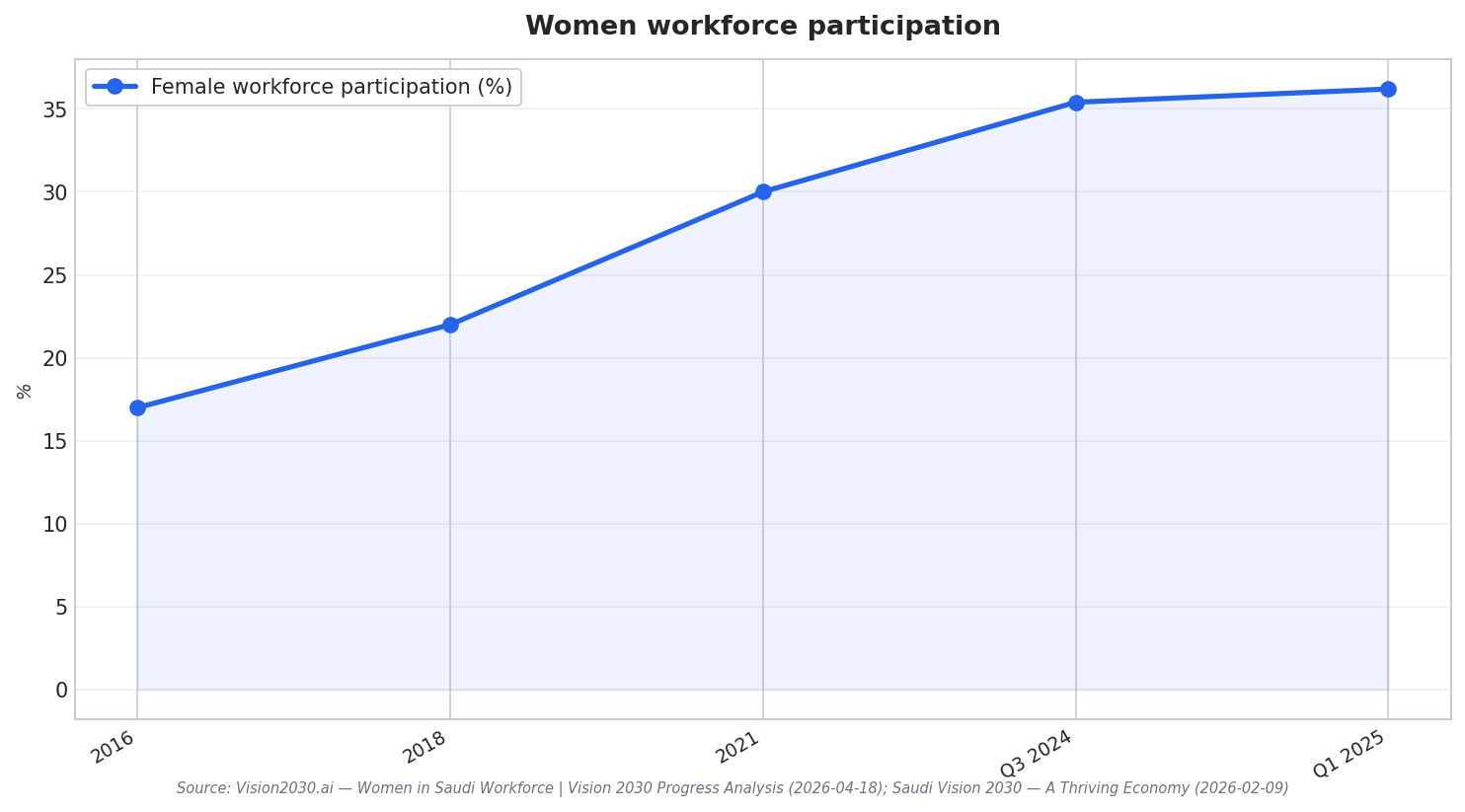
Official Vision 2030 reporting also frames the rise as a core economic indicator. The Vision 2030 “A Thriving Economy” overview states that Saudi women’s participation in the workforce rose from 17% in 2017 to 35.4% in Q3 of 2024. While these are economy-wide numbers rather than construction-only metrics, they set the context for what companies and project owners can now plan for: a larger and more diverse talent pool. Arab News similarly summarizes official data as moving from around 17% in 2017 to roughly 35% in recent years, linking the trend to reforms and the demand created by major projects.
From Policy Shifts to Project Demand: Why Construction Is Pulling More Women In
Multiple sources describe the change as being driven by both policy and demand, which is particularly relevant to the women in construction workforce Saudi Arabia conversation. Arab News attributes momentum to the Kingdom’s transformation under Vision 2030 and says that major projects have expanded opportunities for women across sectors including construction and engineering. In the same reporting, a key point is that large-scale projects require broader and more diverse talent pools. A Vision 2030 progress analysis adds detail on timing, noting that the largest single-year jumps in women’s participation align with policy “shocks,” including the 2018 driving reform, the 2019–2020 guardianship liberalisation, and the post-pandemic formalisation of remote work.
The labor-market shift also includes changes in who can access work and how. The Vision 2030 progress analysis states that more than one million Saudi women entered the labour force in the three years following the 2018 driving reform alone. It also reports that female unemployment fell to 10.5% by Q1 2025, and that the youth (15–24) female participation rate climbed to 18.4% in that same Q1 2025 reporting. For construction employers, these measures are not a direct count of site-based jobs, but they indicate growing availability of early-career talent that can feed into design, engineering, and project delivery roles.
What comes next is not only about entry into the sector, but progression beyond narrow job categories. Arab News quotes the view that the role of women in shaping the built environment is evolving beyond participation into influence, pointing to the connection between design intent and the construction that executes it. The Vision 2030 progress analysis also notes that behind headline participation rates are questions of job quality, wage parity, career progression, and sectoral concentration. It adds that Saudi Arabia revised its medium-term ambition upward to 40% female participation by the end of the decade, as disclosed in late 2024 by Finance Minister Mohammed Al-Jadaan, signaling that the country is setting a higher bar for integrating women across the economy.
How has women’s workforce participation changed in Saudi Arabia under Vision 2030?
What official figures link reforms to a larger women’s labor supply?
What is driving more women into construction and engineering roles in Saudi Arabia?
What does Q1 2025 reporting say about young women entering the workforce?
What issues remain beyond headline gains for women in the construction workforce in Saudi Arabia?
Talk to us for your needs in:
-
Sustainable Construction Solutions
-
Strategic Construction Planning
-
Customer-Centric Construction Services
-
Operational Excellence in Construction
-
Leadership and Change Management for Construction
-
Digital Transformation in Construction
-
Saudi Construction Market Research
-
In-Depth Market Study for Construction
-
Market Intelligence and Insights in Construction
-
Feasibility Study and Assessment in Construction
-
Saudi Construction Benchmarking