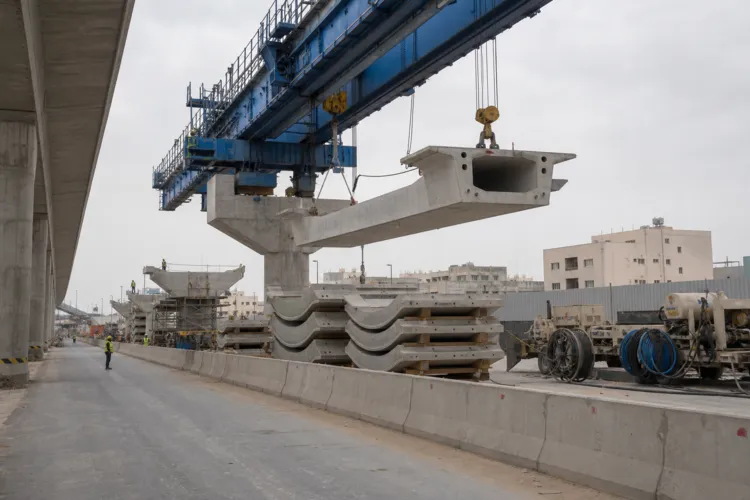
Saudi Arabia’s construction market is scaling fast, and labour quality is becoming a procurement issue, not just an HR concern. Mordor Intelligence projects market size at USD 133.79 billion in 2025 and USD 142.30 billion in 2026, reaching USD 186.13 billion by 2031. IMARC also frames the market at USD 101.4 billion in 2025, with a projection to USD 140.4 billion by 2034. As project volume expands across infrastructure, residential, utilities, and giga-project scopes, site execution risk rises. That is why skills accreditation and verification programs are increasingly central to how contractors, clients, and labour suppliers think about build quality and predictable delivery.
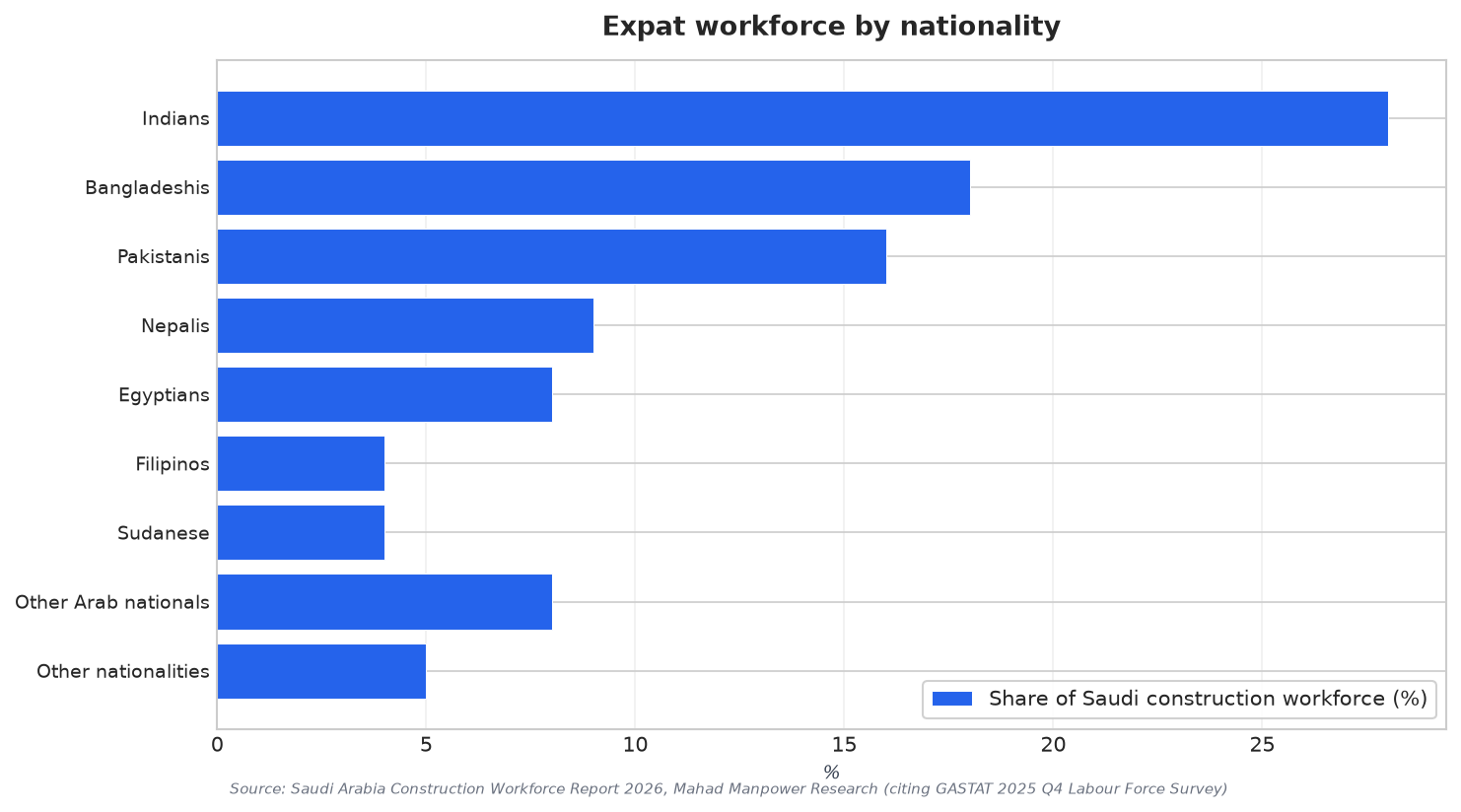
The workforce context explains the urgency. Mahad Manpower Research cites GASTAT’s 2025 Q4 Labour Force Survey recording approximately 3.4 million workers in Saudi construction, with 92% non-Saudi expatriates. The same source lists nationality shares across the sector, including Indians (28%), Bangladeshis (18%), Pakistanis (16%), Nepalis (9%), Egyptians (8%), Filipinos (4%), Sudanese (4%), other Arab nationals (8%), and other nationalities (5%). It also notes that Indian workers dominate the skilled-trade segment in particular, stating that within 6G-certified welder, HVAC technician, and electrician categories, Indians constitute over 40% of the workforce. In this environment, consistent skill proof becomes a practical tool for controlling output, safety, and rework risk.
How Verification and Accreditation Are Changing Hiring Decisions
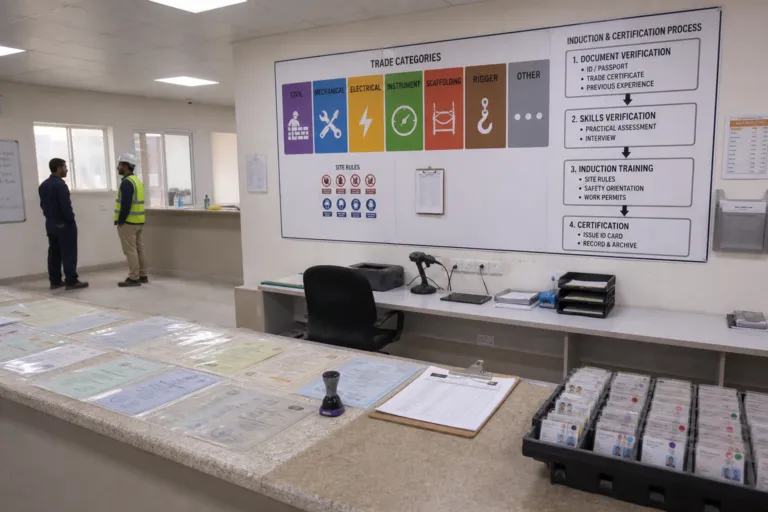
Saudi policy and contractor incentives are pushing the same direction. The Ministry of Human Resources and Social Development describes a professional accreditation program and an electronic platform for professional verification for expatriate workers, designed to verify that expatriate professionals possess necessary skills and to register and document educational levels, specializations, and experiences. Separately, Qureos explains that Saudi Arabia’s Skills Verification Program (SVP) ensures foreign technical workers meet required competency standards before entering or renewing employment. Qureos adds that the program covers more than 1,000 professions across 23 sectors, and that it uses both a theoretical exam (including safety, regulations, and technical knowledge) and a practical exam assessing on-site skills, delivered through authorized testing centers recognized by SASO.
Market behaviour reinforces the policy direction. Mahad Manpower Research reports that contractors prefer high-skilled, high-output expatriate hires whose productivity justifies higher block visa cost, which pushes demand toward certified skilled trades. The same source says Saudization quotas are met largely in white-collar, supervisory, and HSE functions, leaving most skilled and unskilled trade headcount open to expatriate recruitment. It also highlights that contractors with poor Saudization compliance can face visa freezes that interrupt project schedules, increasing the value of labour suppliers that plan compliant workforce ratios. In practice, construction craft trade certification in Saudi Arabia is becoming linked to both productivity expectations and continuity of mobilization.
The result is a measurable shift toward formal credentials in the expatriate trades base. Mahad Manpower Research forecasts that by 2029, 68–73% of the Saudi expatriate construction workforce will hold formal trade certification, compared with 51% in 2025. This pairs with a broader tightening of technical compliance across the build ecosystem. MarkWide Research notes that contractors must submit material test reports from SASO-accredited laboratories before mobilization and that Saudi Building Code 2018 amendments and National Housing Company technical specifications enforce thermal performance testing and seismic load calculations on public housing tenders. Together, skills verification and accredited testing signal the same message: documented competence is becoming the default expectation across people, processes, and materials.
What is driving demand for certified skilled trades on Saudi construction sites?
How large is Saudi Arabia’s construction workforce, and who makes up most of it?
How does the Skills Verification Program assess foreign technical workers?
What is the forecast for formal trade certification among expatriate construction workers?
What does construction craft trade certification in Saudi Arabia mean in practice for hiring?
Talk to us for your needs in:
-
Sustainable Construction Solutions
-
Strategic Construction Planning
-
Customer-Centric Construction Services
-
Operational Excellence in Construction
-
Leadership and Change Management for Construction
-
Digital Transformation in Construction
-
Saudi Construction Market Research
-
In-Depth Market Study for Construction
-
Market Intelligence and Insights in Construction
-
Feasibility Study and Assessment in Construction
-
Saudi Construction Benchmarking