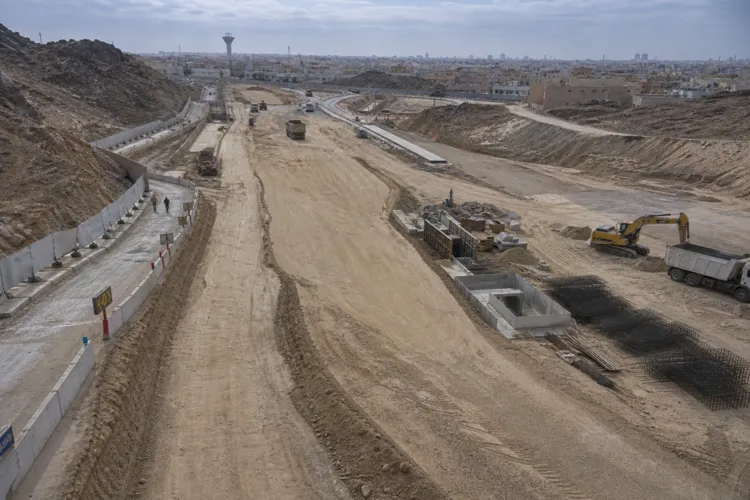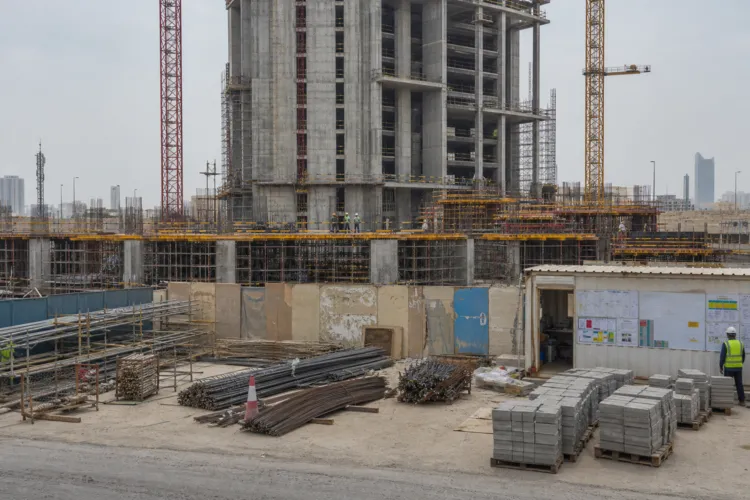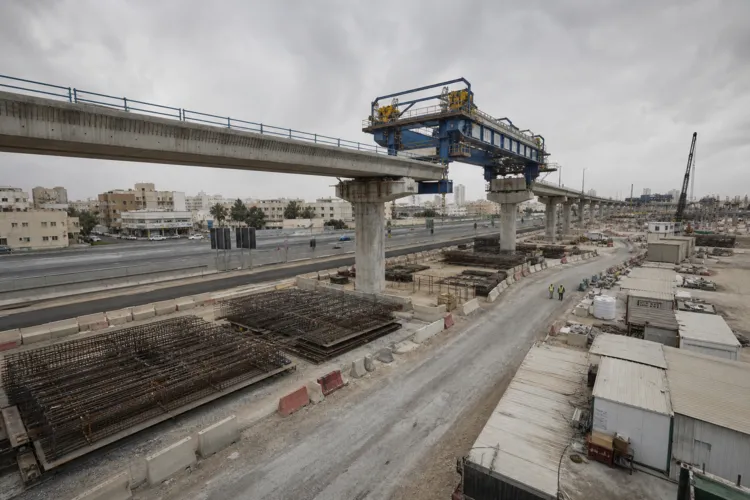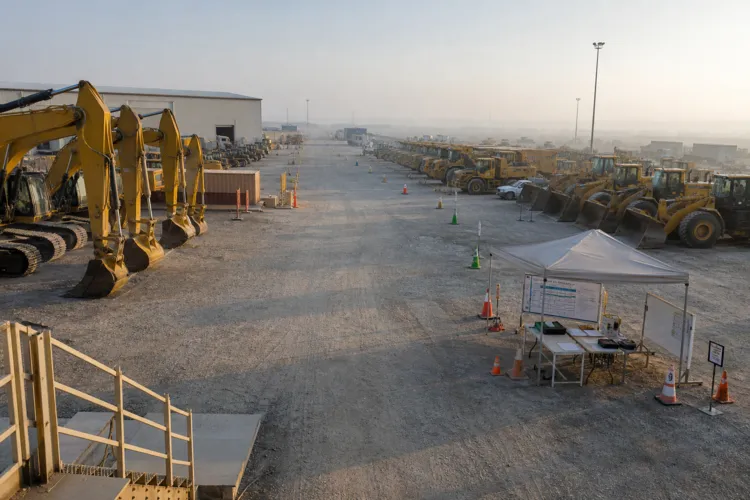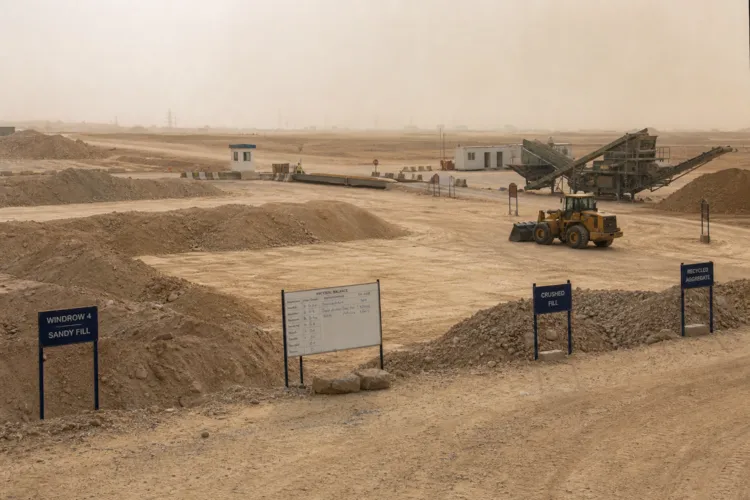
NEOM’s recalibration is no longer an abstract risk for delivery teams. It is a scope reset with quantified consequences for mobilized contractors in Tabuk Province. An Invest Riyadh intelligence brief describes estimated USD 8 billion in write-downs and contract restructurings tied to the reduction, while also stressing that the program is not “a cancellation” but a phased approach. The biggest visible change is The Line: the first phase was reduced from 170 kilometers to approximately 2.4 kilometers, and the 2030 population target cited in the same brief was cut from 1.5 million to 300,000. For firms that staffed, leased, and stocked for the original pace, the operational question becomes immediate: keep a heavy on-site base in Tabuk, or redeploy to where near-term awards are concentrating.
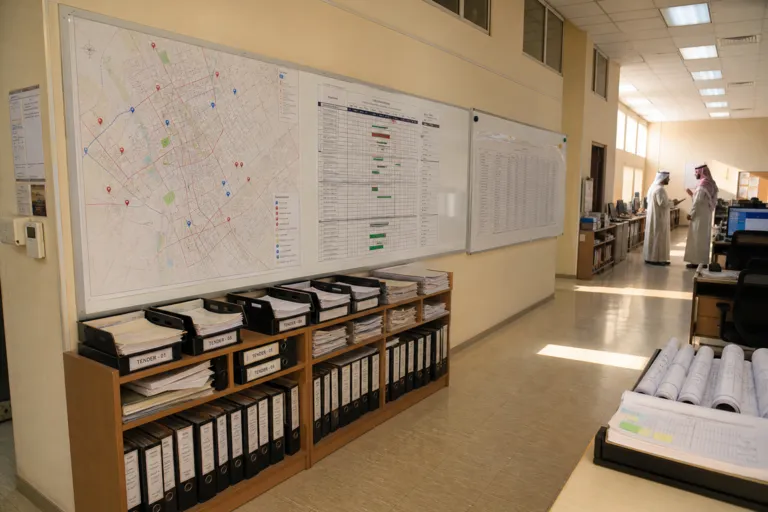
Multiple signals point to a physical shift of people and decision-making toward Riyadh. A NEOM status update reported that job postings fell by around 75% through 2025 and that over a thousand staff were relocated from the remote site to offices in Riyadh. Another industry briefing said construction on The Line was suspended in September 2025 and described a roughly USD 8 billion write-down, alongside comments that some NEOM budgets were reduced by as much as 60%. For contractors, this is the lived reality behind any Tabuk construction market downturn contractor strategy: smaller packages, longer pauses between awards, and procurement conversations increasingly happening in the capital rather than at the site compound.
Why Re-Basing to Riyadh Is Becoming the Default Move
The awards data explains the logic. MEED figures cited by EnterpriseAM show Saudi Arabia awarded USD 76 billion in contracts so far in 2026, versus USD 102 billion at the same point in 2025, with expectations for a run of awards to carry the full-year figure to USD 100 billion. Yet sentiment is weaker: 70% of webinar attendees said conditions had gotten worse, and a separate poll found 94% had seen disruption from regional conflict, with 30% severely disrupted. Within that environment, Riyadh-linked priorities are repeatedly identified as where spending concentrates. Skift’s summary of the same MEED webinar explicitly says Tabuk province, home to NEOM, was hit hardest, while Riyadh still took the bulk of spending, with Qiddiya and Diriyah drawing most giga-project awards this year.
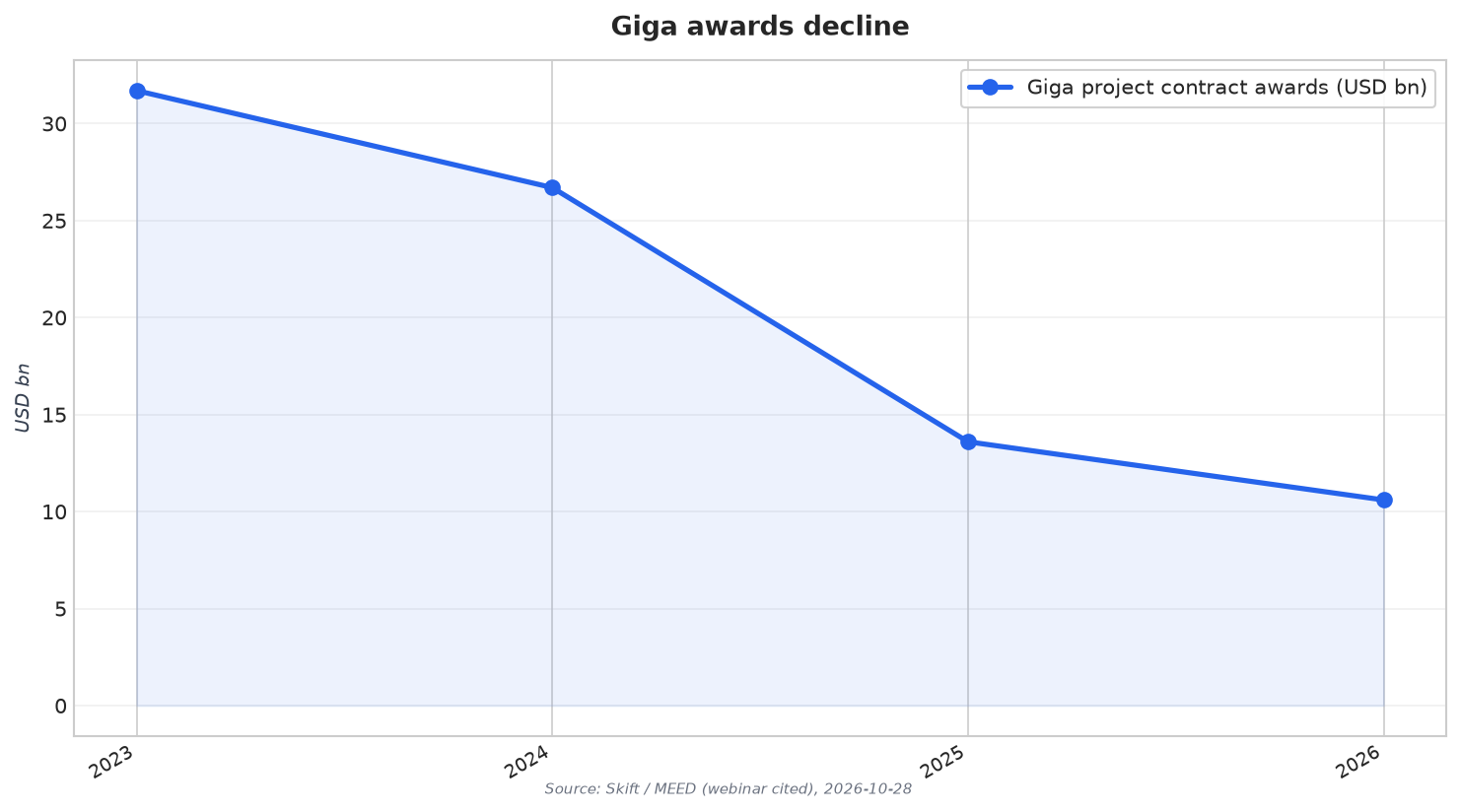
Even inside the giga-project program, the direction of travel matters for office location and bid strategy. MEED data reported by Skift shows giga-project awards falling to USD 10.6 billion so far this year from a 2023 peak of USD 31.7 billion, after USD 26.7 billion in 2024 and USD 13.6 billion in 2025. The decline is attributed mainly to NEOM, including the postponement of The Line and Trojena. Meanwhile, EnterpriseAM notes Qiddiya and Diriyah are “full steam ahead,” and that Roshn and the Expo build-out are going strong. Separately, a People & Products briefing states construction commitments were cut from USD 71 billion to USD 30 billion and that PIF capital expenditure is expected to fall by around 15% this year, framing a shift toward private-sector participation and return focus. Re-basing becomes less about preference and more about proximity to active clients, approvals, and tender windows.
Contractor re-basing is also a defensive move against margin volatility and stop-start work. EnterpriseAM highlights that much of the Kingdom’s work is let on lump-sum terms with no cost-escalation clause, leaving contractors exposed when prices move, with increases of up to 70% in extreme cases tied to the conflict and local prices for rebar, copper wiring, steel, and aluminum up 4–6%. At the same time, sector awards are uneven: power awards were down 77% year-on-year to USD 4.9 billion and water down 66% to USD 3.7 billion, while construction awards had already hit USD 32 billion with two months left and were expected to beat last year’s USD 33 billion. In this mix, a Riyadh base supports faster pursuit of construction-heavy packages and fixed-deadline work, while keeping a lighter Tabuk footprint for NEOM’s phased delivery rather than the original simultaneous build-out.
What changed in NEOM that most affects contractors in Tabuk?
Why are contractors shifting their base from Tabuk to Riyadh?
How severe has the slowdown in giga-project awards been?
How does cost inflation shape contractor decisions in 2026?
What does a practical contractor strategy look like during a Tabuk construction market downturn?
Talk to us for your needs in:
-
Sustainable Construction Solutions
-
Strategic Construction Planning
-
Customer-Centric Construction Services
-
Operational Excellence in Construction
-
Leadership and Change Management for Construction
-
Digital Transformation in Construction
-
Saudi Construction Market Research
-
In-Depth Market Study for Construction
-
Market Intelligence and Insights in Construction
-
Feasibility Study and Assessment in Construction
-
Saudi Construction Benchmarking