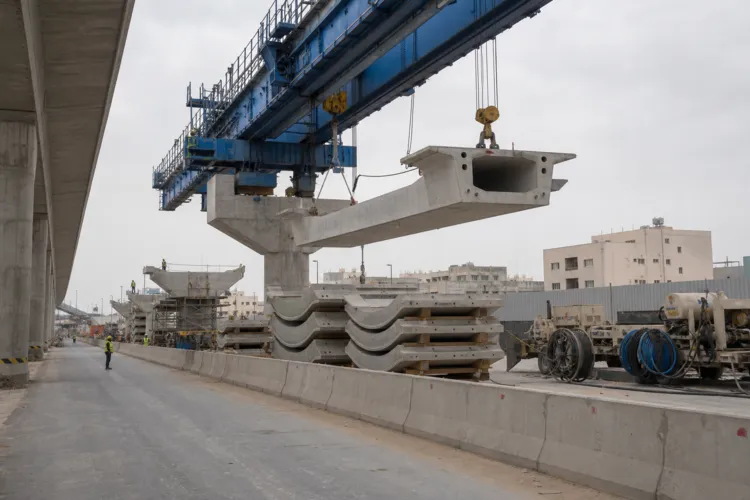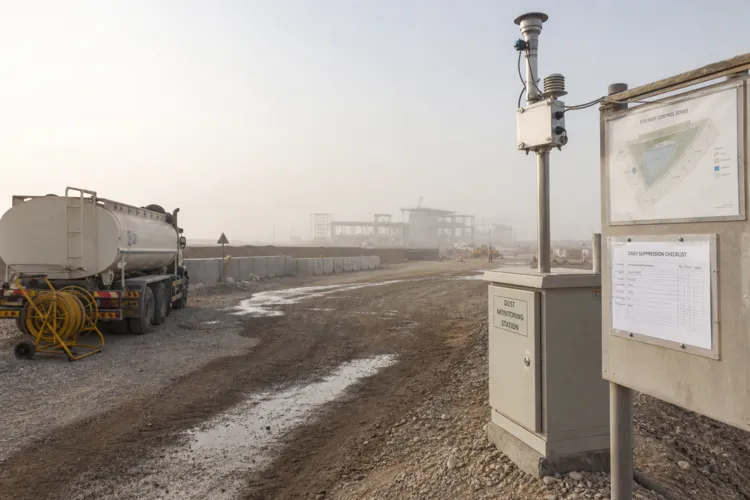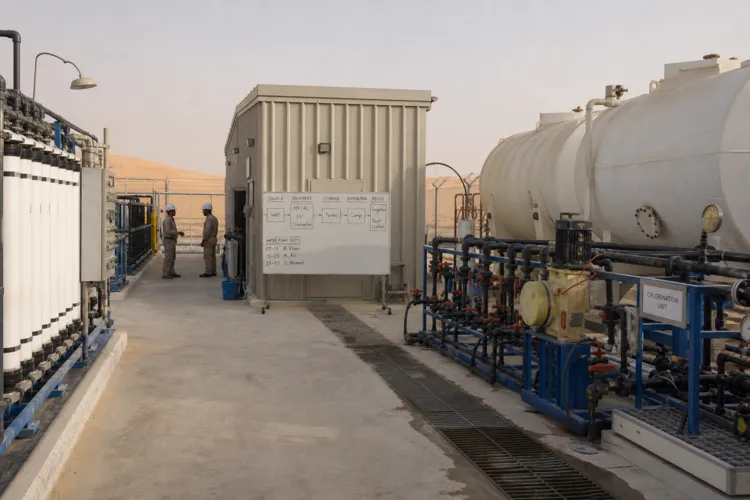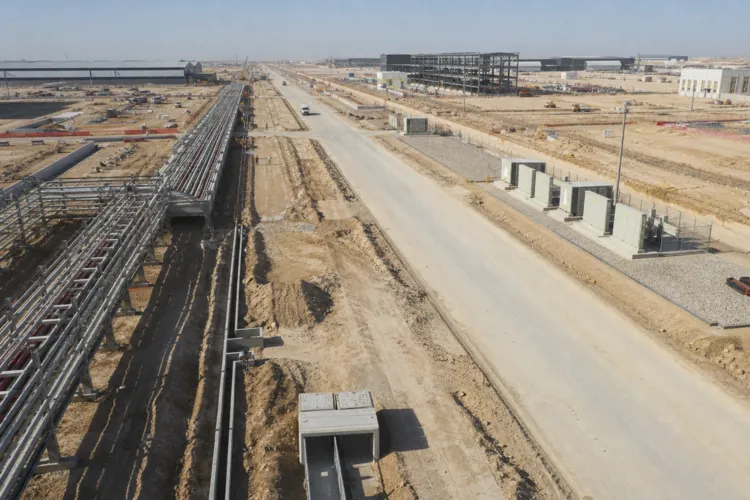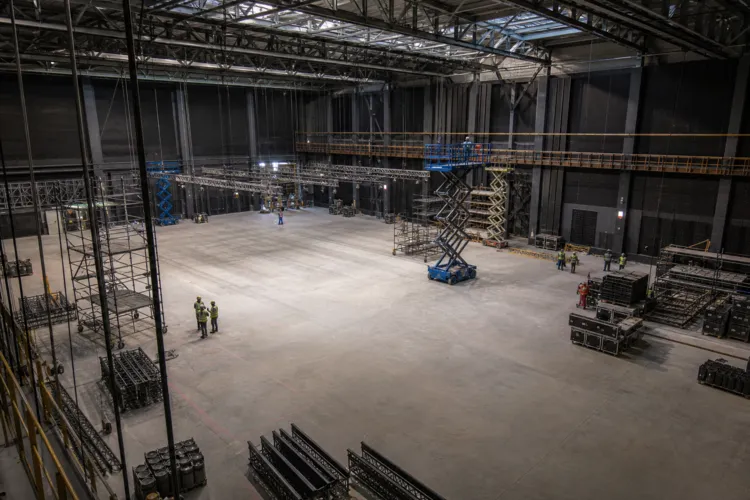

Saudi Arabia’s push toward connected operations is reshaping how worksites can run. Multiple reports describe private 5G being deployed across industrial parks, oil and gas facilities, and manufacturing hubs to enhance safety, efficiency, and productivity, with Vision 2030 helping accelerate investment in industrial infrastructure. While construction is not always named as a primary vertical in the sources, the same on-site realities apply: large, dynamic environments, moving assets, and safety-critical tasks. A dedicated network approach can support remote operations, worker safety, and real-time analytics, which Grand View Research links to government frameworks that encourage advanced wireless systems for exactly these outcomes.
Market signals also show why site owners and contractors are evaluating private wireless as standard infrastructure. MarketsandMarkets values the Saudi Arabia private 5G market at USD 33.4 million in 2025 and projects it will reach USD 114.0 million by 2030, representing a 27.9% CAGR. Ken Research separately places the Saudi Arabia private LTE/5G network market at approximately USD 30 million, and ties growth to high-speed connectivity demand, IoT applications, and secure, reliable communications across industries. The same Ken Research source also cites Vision 2030 investments of USD 25 billion in digital infrastructure, framing the broader environment in which enterprises can justify on-site connectivity upgrades.
What “Connected by Default” Looks Like on a Worksite
On construction sites, “connected by default” means safety and productivity tools behave like always-on utilities rather than isolated pilots. Polaris Market Research describes enterprises using private 5G to power interconnected machines, real-time analytics, and smart manufacturing systems, integrating IoT, AI, and robotics with massive device connectivity and deterministic performance, while maintaining robust data security in controlled environments. Mobility Foresights adds that private 5G deployments in Saudi Arabia are expanding across manufacturing, logistics, mining, and energy campuses, supporting wireless automation, autonomous guided vehicle systems, and real-time process control. These are transferable patterns for construction: connected equipment, continuous monitoring, and consistent coverage in challenging environments.
Safety use cases become more practical when the network is designed for the site, not shared best-effort connectivity. In a non-Saudi example, Polaris Market Research notes that in June 2023 Samsung and NAVER Cloud expanded their partnership to deploy Korea’s first private 5G network for Hoban Construction, citing drone monitoring, IoT concrete sensors, smart safety jackets, and real-time CCTV analytics to enhance worksite safety and efficiency. For Saudi construction stakeholders, that example acts as a reference architecture rather than a local claim. Regionally, Grand View Research highlights that Saudi frameworks encourage advanced wireless systems for remote operations, worker safety, and real-time analytics, aligning directly with the operational needs of large job sites.
Delivery depends on ecosystem readiness, not just radios. The Futurism source notes that modern 5G cores let operators customize networks for different industries, including public safety, and that transport networks connect radio access sites to core systems via fiber optics, microwave links, and high-capacity backhaul. It also reports that in January 2025 Nokia and Zain KSA signed an agreement to enhance indoor mobile coverage and enterprise connectivity, reinforcing 5G infrastructure momentum. Mobility Foresights notes competition from alternative enterprise wireless technologies in Saudi Arabia, including Wi-Fi 6, Wi-Fi 7, private LTE, and emerging low-power wide-area network standards. For construction leaders, the takeaway is to map safety and productivity requirements first, then match them to a dedicated private 5G design where deterministic performance and controlled security matter most.
Why are private 5G networks getting attention for Saudi worksites?
What is the forecast for Saudi Arabia’s private 5G market?
What kinds of safety tools can a private 5G-enabled construction site support?
How do government initiatives connect to private 5G adoption in Saudi Arabia?
How should teams approach private 5G network construction sites in Saudi Arabia without overcommitting?
Talk to us for your needs in:
-
Sustainable Construction Solutions
-
Strategic Construction Planning
-
Customer-Centric Construction Services
-
Operational Excellence in Construction
-
Leadership and Change Management for Construction
-
Digital Transformation in Construction
-
Saudi Construction Market Research
-
In-Depth Market Study for Construction
-
Market Intelligence and Insights in Construction
-
Feasibility Study and Assessment in Construction
-
Saudi Construction Benchmarking