
For contractors, the core issue in construction material imports tariffs Saudi Arabia is not one line item. It is compounding uncertainty. Sources describing recent tariff regimes show how fast duties can change, and how quickly prices can react when metals sit inside many building inputs. In the US, steel and aluminum tariffs were increased from 25% to 50%, and the resulting pressure was described as a risk to projects already on shaky financial ground. Separate reporting also notes that contractors can adapt to rates if they understand the “playing field,” but a “yo-yo effect” creates chaos for long-term planning.
Metal exposure is a practical pricing risk because duties can attach in different ways. An adjusted Section 232 approach raised duties to as high as 50% on goods made almost entirely of steel, aluminum or copper, while derivative goods “substantially made” of those metals incur a 25% levy. Reuters reporting, relayed by an industrial trade outlet, also described a change where select manufacturers would see a 25% tariff on the entire product, rather than a previous 50% duty on just its metal content. For contractors buying assemblies, not raw metal, these distinctions can change delivered pricing and the timing of supplier revisions.
Energy and Conflict Risks Can Amplify Tariff-Driven Volatility
Tariffs rarely move alone. Construction supply chains can be hit by higher energy costs, disrupted routes, shipping delays, and rising freight and insurance premiums, according to construction-sector commentary on war and procurement disruption. Construction-focused reporting also linked higher energy costs to the Middle East crisis, framing it as another cost hurdle alongside raised tariffs on imported steel. Other coverage warned that the Iran war could amplify pricing pressures because the region is critical for aluminum and sulfur used in nickel production, which may introduce renewed volatility for these materials.
Energy pricing signals in the region add another layer for contractors attempting to hold budgets. A Financial Times report said Saudi Aramco would charge customers in Asia $19.50 on top of the Oman-Dubai benchmark for a barrel of Arab Light crude in May, and noted that over the past 26 years that premium had never exceeded $10 a barrel. The same report said customers in Europe would need to pay $24-$30 a barrel over the Brent benchmark, which was trading at around $108 a barrel, and described flows being redirected due to the Iranian threat to shipping through the Strait of Hormuz.
Inside Saudi industry, cost pass-through becomes a key theme when energy reforms accelerate. A market note highlighted a “35% spike in diesel and HFO costs” and said the cement sector was under significant pressure, with the spike likely forcing companies to raise retail prices and potentially cooling demand in the construction sector. The same source also framed 2026 adjustments as including a “35% jump in diesel prices.” For contractors, the takeaway is straightforward: even without a project-specific tariff line, energy-linked inputs and local supplier pricing can tighten margins and complicate bid validity windows.
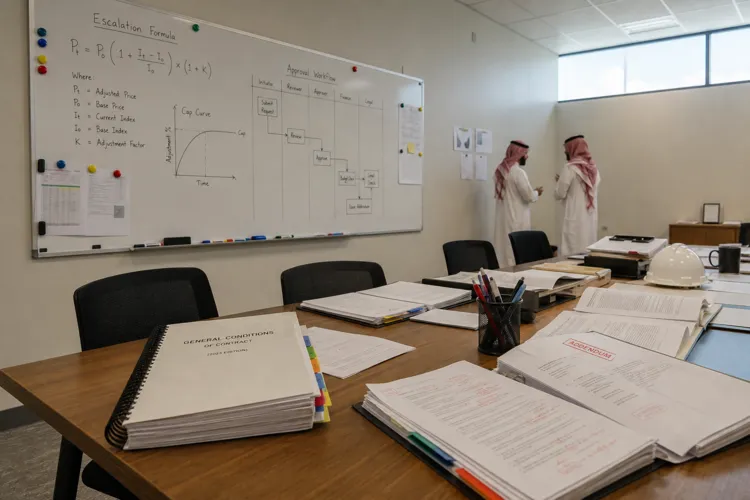
Contract strategy matters because relief is not automatic when policy shifts. After a Supreme Court ruling struck down most reciprocal tariffs in a 6-3 decision, one construction economist expected a “modest but meaningful reduction in materials price escalation” for specialty equipment, HVAC and electrical systems and fixtures, while materials-specific tariffs on lumber, steel, aluminum and copper products were noted as remaining in place. That same reporting emphasized that whether money flows back depends on how the contract was written, and that builders were told not to “hold their breath” waiting for refunds. For Saudi-bound procurement, that reinforces the need to define escalation, substitutions, and timing risks clearly.
What does “construction material imports tariffs Saudi Arabia” mean for contractor pricing risk?
Why do tariff rules on “derivative goods” matter for construction purchases?
How can the Iran war affect construction material costs beyond tariffs?
What energy-related signals should contractors watch when budgeting?
Do tariff rollbacks guarantee refunds or lower project costs?
Talk to us for your needs in:
-
Sustainable Construction Solutions
-
Strategic Construction Planning
-
Customer-Centric Construction Services
-
Operational Excellence in Construction
-
Leadership and Change Management for Construction
-
Digital Transformation in Construction
-
Saudi Construction Market Research
-
In-Depth Market Study for Construction
-
Market Intelligence and Insights in Construction
-
Feasibility Study and Assessment in Construction
-
Saudi Construction Benchmarking