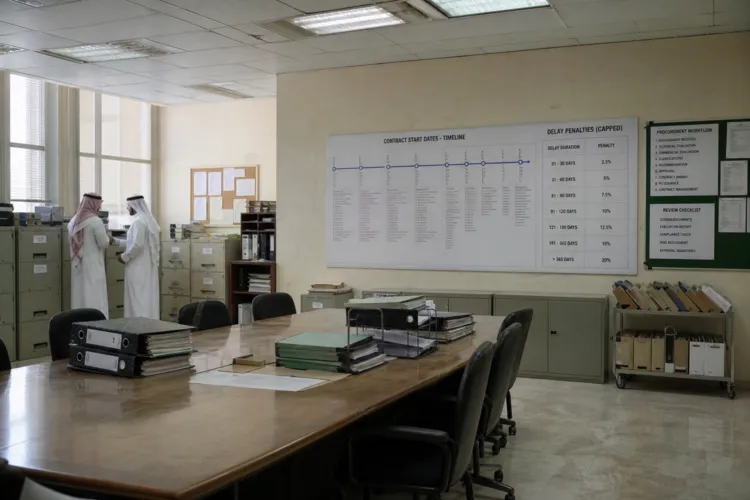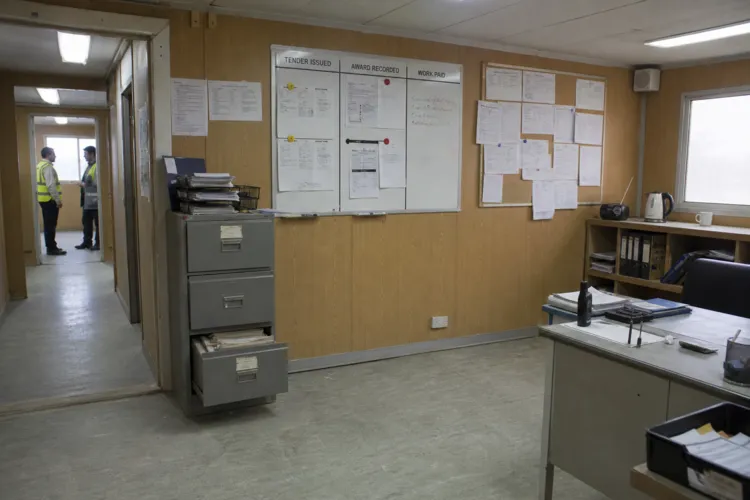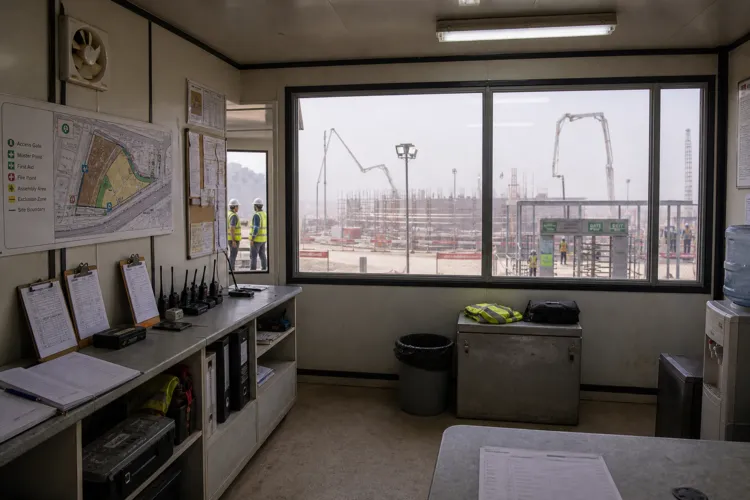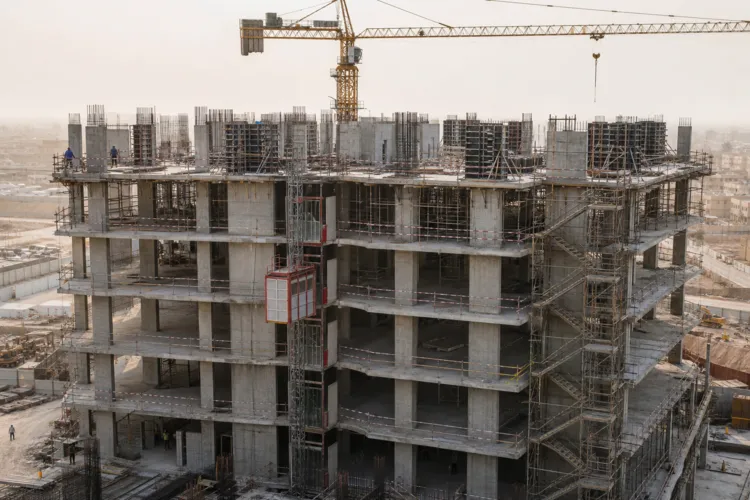
In the Kingdom, contractors often sign “FIDIC-based” contracts that look familiar but operate differently once Particular Conditions are applied. Pinsent Masons notes a long-standing preference for FIDIC forms, including a Public Works Contract approved for Saudi government authorities since 1988 that was largely based on FIDIC’s 1977 3rd edition. At the same time, most FIDIC contracts used in Saudi Arabia are amended versions, and some are amended more than others. That matters because risk can move quietly through wording layered on top of the standard clauses, alongside requirements under Saudi law. The commercial result is that a contractor can think it is pricing and managing a known model while the Particular Conditions change the actual risk allocation.
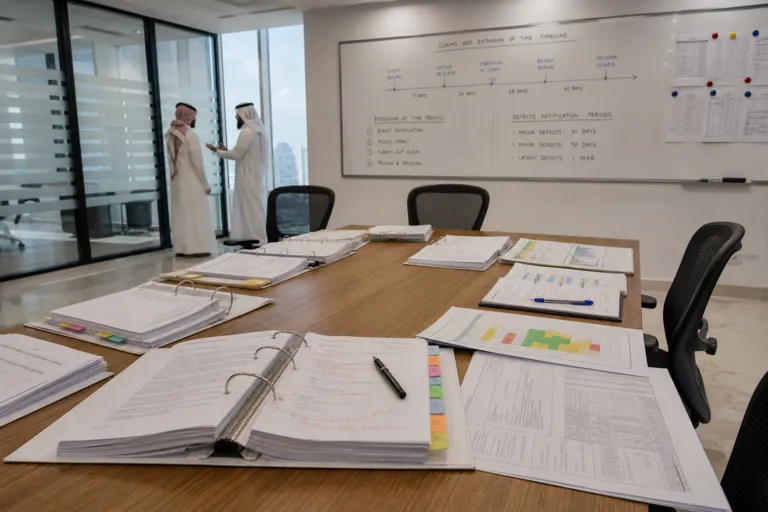
Although many Saudi projects still use the 1999 suite, the 2017 Second Editions have introduced tighter “contractual discipline” through more prescriptive procedure and timelines. Lexilio describes the 2017 suite as the most significant rewrite in FIDIC’s history and says FIDIC increased the word count of the core conditions by nearly fifty percent. That drafting style supports stricter timelines, more “deemed” outcomes, and more obligations that can lead to a total loss of entitlement if missed. Burford Capital highlights that notice provisions, including under Clause 20.2 (2017), impose time-based conditions on recovery and that failure to comply can bar or reduce entitlement. In practice, Particular Conditions that shorten, harden, or add extra notice steps can shift delay and change risk onto contractors even when the underlying event is not their fault.
Which Saudi Particular Conditions Commonly Shift Contractor Risk?
Dispute resolution drafting is one of the most visible levers. Pinsent Masons says most, but not all, Saudi FIDIC-based contracts seen in recent years remove the Dispute Adjudication Board (DAB) drafting and provide for a final dispute resolution stage of arbitration under the Saudi Center for Commercial Arbitration (SCCA) in Riyadh. Aceris Law explains the DAB was designed to ensure prompt resolution of disputes and timely payment to contractors, and that the 2017 editions modernised this into a Dispute Avoidance/Adjudication Board (DAAB) to emphasize preventing disputes. If Particular Conditions strip out that standing board mechanism, contractors may lose a pathway intended to keep projects moving and payments flowing, and they may face a longer route to a final outcome under arbitration even where the contract otherwise followed FIDIC structure.
Defects and latent defects drafting can also be unusually onerous in Saudi amendments. Pinsent Masons reports that most FIDIC-based contracts in the Kingdom include a provision attempting to replicate decennial liability requirements under article 29 of the Saudi Building Code Implementing Regulations. It says the designer or engineer supervising execution and the contractor become jointly liable for a period of 10 years from completion, compensating the owner for total or partial demolition of constructed buildings or facilities and any hidden defect that threatens durability and safety. The same source adds that contracts often include a bespoke latent defects provision that can be even longer than 10 years, with “latent defects” sometimes undefined, and where defined meaning defects that could not have been discovered during the standard defects notification period. Pinsent Masons calls this onerous because contractual latent defects can apply to any defects, depending on drafting, while decennial liability under law attaches in respect of serious defects only.
Finally, Particular Conditions can amplify the already contractor-heavy profile of certain FIDIC forms and administration mechanisms. Aceris Law states the Silver Book uses a fixed lump sum structure with limited grounds for price adjustment and shifts virtually all financial risk to the contractor, giving employers cost certainty. Burford Capital adds that determination mechanisms under Clause 3 give significant discretion to the Engineer or Employer’s Representative, and that program certainty is often prioritized where deadlines are immovable and political visibility is high. In the Saudi context, Lexilio also notes that megaprojects under Vision 2030 are increasingly mandating the 2017 editions and that owners are embracing the 2017 Silver Book to ensure tighter control over cost and schedule. Contractors negotiating Saudi Particular Conditions should treat notice compliance, defects duration, and dispute architecture as core pricing items, not legal fine print.
How do FIDIC 2017 Saudi particular conditions shift risk onto contractors?
What dispute resolution amendment is commonly seen in Saudi FIDIC-based contracts?
What is the decennial-style liability period described for Saudi construction amendments?
Why do notice provisions matter so much on Saudi mega-projects using FIDIC mechanisms?
Which FIDIC form is described as shifting the greatest share of risk to the contractor?
Talk to us for your needs in:
-
Sustainable Construction Solutions
-
Strategic Construction Planning
-
Customer-Centric Construction Services
-
Operational Excellence in Construction
-
Leadership and Change Management for Construction
-
Digital Transformation in Construction
-
Saudi Construction Market Research
-
In-Depth Market Study for Construction
-
Market Intelligence and Insights in Construction
-
Feasibility Study and Assessment in Construction
-
Saudi Construction Benchmarking