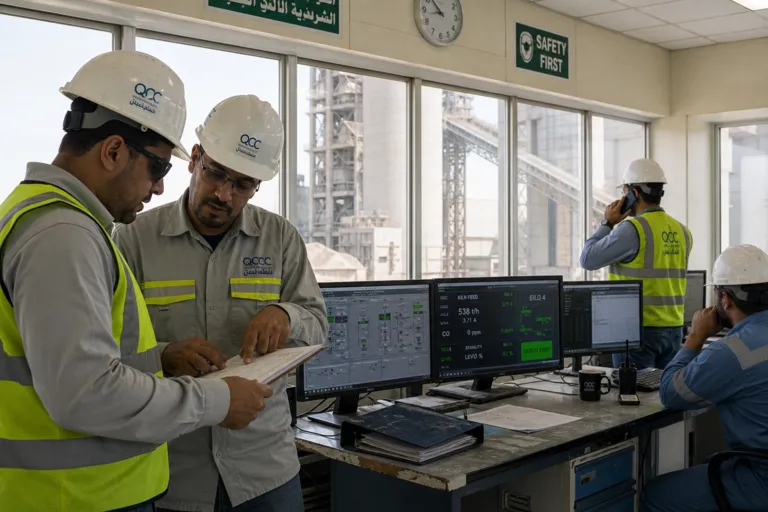
The Saudi cement market 2026 story is about growth, but also about discipline. Research and Markets expects Saudi Arabia’s cement market to grow by 6.7% year on year to reach SAR 16.08 billion in 2026. It also notes the market recorded strong growth during 2021-2025, with a 5.4% CAGR. At the same time, many producers are shifting away from speculative expansion and toward efficiency and sustainability.
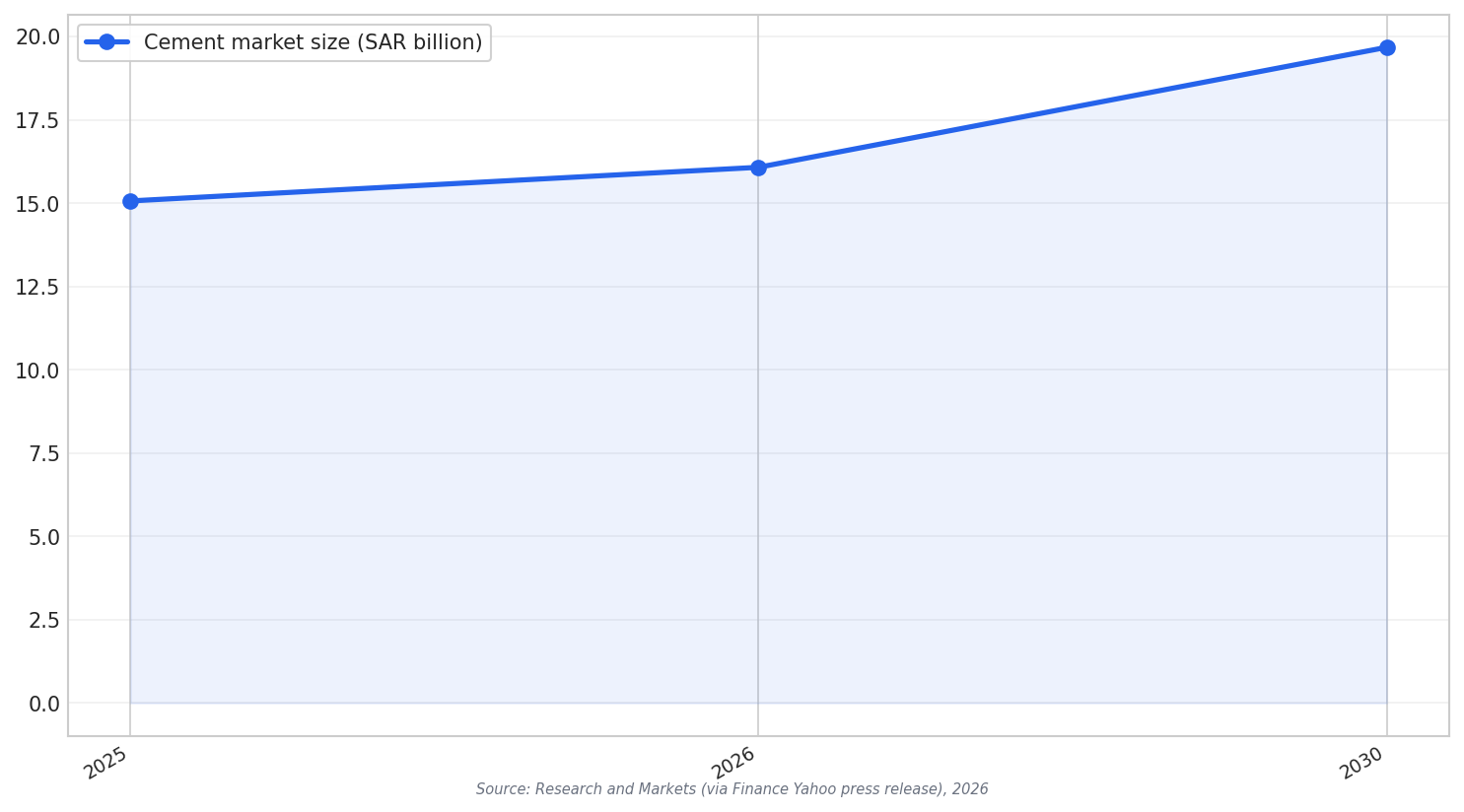
Several forecasts show the direction of travel. Research and Markets projects the market will expand at a 5.2% CAGR during 2026-2030, reaching about SAR 19.68 billion by the end of 2030 from a 2025 value of SAR 15.07 billion. Technavio also expects the Saudi Arabia cement market size to increase by USD 2.57 billion at a CAGR of 6.4% from 2025 to 2030. These are different methodologies and currencies, but both point to continued demand growth linked to project delivery cycles.
Key stated market figures include SAR 15.07 billion (2025), SAR 16.08 billion (2026), and about SAR 19.68 billion (2030), all from Research and Markets. These values show a steady upward path across the period.
Demand Forecast Drivers: Projects, Housing, and Higher-Value Cement
Demand support is closely tied to Vision 2030 execution. A Research and Markets update states the market focus is “project-aligned growth,” with emphasis on efficiency and sustainability rather than expansion. A separate Research and Markets-linked release also says public sector projects will anchor volume through 2026, and demand will be sustained by project execution cycles for transport, health, and energy infrastructure. Technavio adds that Vision 2030 giga-projects will drive the market, including the need for specialized products such as sulfate-resistant cement and self-compacting cement for advanced engineering standards.
Residential construction is another key layer. Technavio reports the residential segment was valued at USD 4.14 billion in 2024. It also describes residential demand as foundational, tied to national housing programs aiming to achieve 70% homeownership. In the GCC view, Mordor Intelligence reports the residential segment captured 64.12% share in 2025 and is projected to expand at a 4.89% CAGR between 2026 and 2031. These signals matter because steady housing demand can help smooth the peaks and troughs of mega-project schedules.
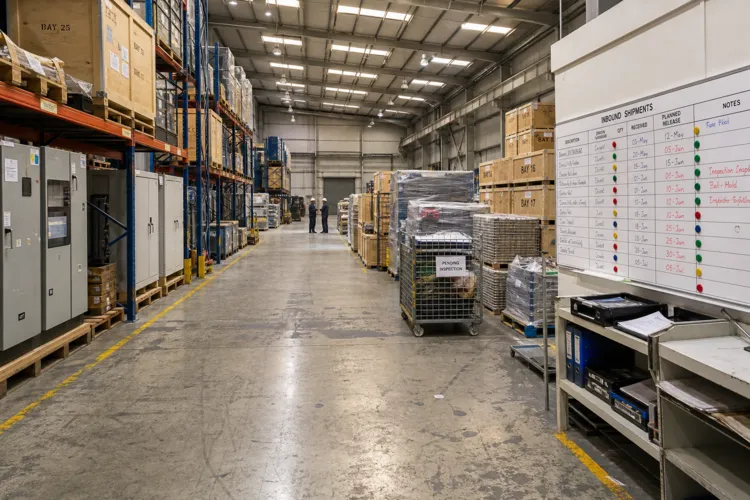
Export corridors and M&A interest both connect to the same issue: balancing domestic pull with any exportable surplus. IndexBox says the pace and scale of domestic Vision 2030 projects will remain the primary determinant of exportable surplus, creating tension between keeping material for local mega-projects and fulfilling export commitments or finding new foreign opportunities. Research and Markets also points to “export diversification” as an opportunity amid evolving regulatory landscapes. On market structure, the sources do not quantify Saudi M&A deal counts, but they do describe conditions that often trigger consolidation: high competitive intensity, cost pressure, and the shift from capacity additions to production optimization.
What is the Saudi cement market 2026 forecast size?
What is driving cement demand in Saudi Arabia through 2026?
How important is residential demand for cement?
What will shape Saudi cement exports in this outlook?
Talk to us for your needs in:
-
Sustainable Construction Solutions
-
Strategic Construction Planning
-
Customer-Centric Construction Services
-
Operational Excellence in Construction
-
Leadership and Change Management for Construction
-
Digital Transformation in Construction
-
Saudi Construction Market Research
-
In-Depth Market Study for Construction
-
Market Intelligence and Insights in Construction
-
Feasibility Study and Assessment in Construction
-
Saudi Construction Benchmarking