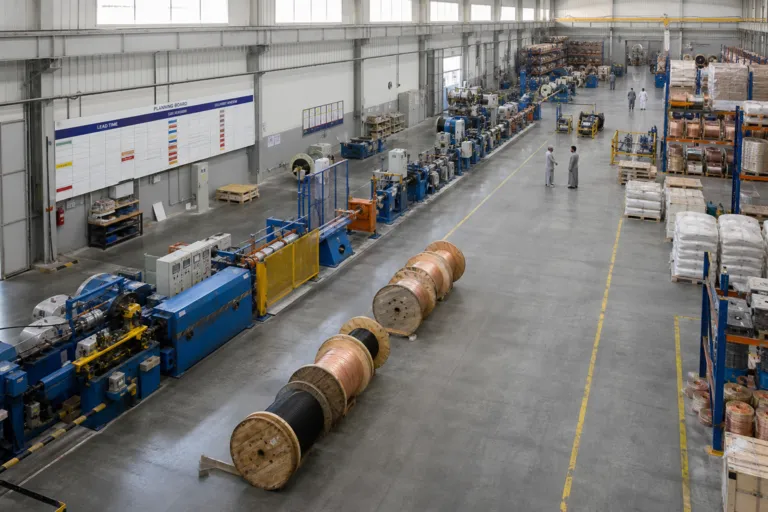
Saudi Arabia’s commercial wire and cable market is being pulled in two directions at once. IndexBox describes a mature base tied to traditional commercial construction and oil and gas facilities, alongside “explosive growth” in hyperscale data centers, renewable energy, and smart-city infrastructure. In 2026, the Saudi commercial wire and cable market is estimated at USD 1.8–2.2 billion at end-user pricing. The same source forecasts 6–8% CAGR growth between 2026 and 2035, reaching USD 3.0–3.8 billion by 2035, while volume growth is expected at 4–6% CAGR as the mix shifts toward higher-value, more technically specified cables.
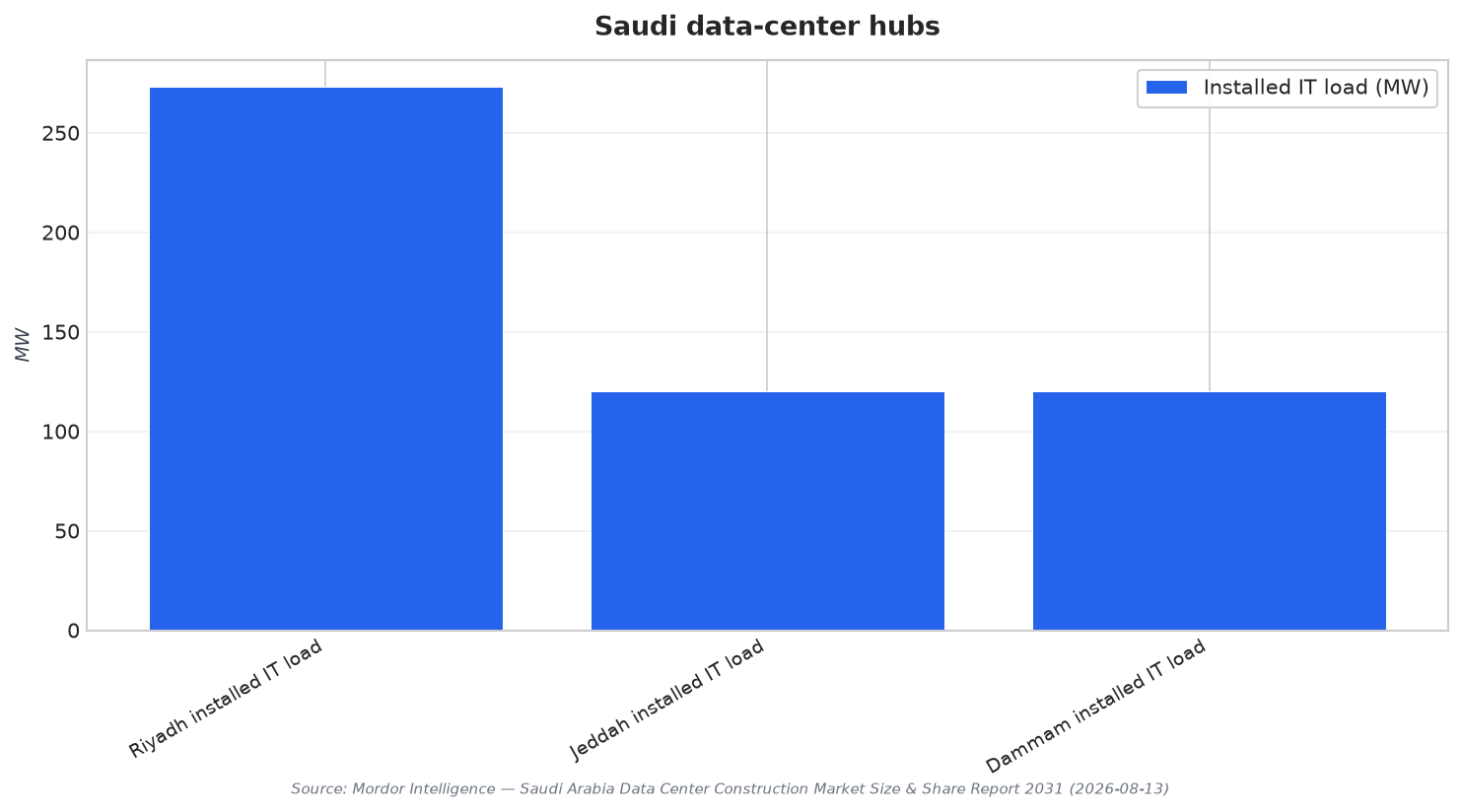
Within that demand mix, data centers stand out because they pull copper through multiple layers of a project. Grand View Research notes that copper demand in data centers rises with electrical wiring, networking cables, and backup power infrastructure, and that the MEA market is supported by investments in smart cities and cloud expansion, with Saudi Arabia cited among the emerging markets. Mordor Intelligence adds Saudi-specific construction signals: Riyadh concentrates roughly 273 MW of installed IT load, while Jeddah and Dammam each host more than 120 MW. Colocation accounted for 56.40% of 2025 spend, but self-build projects are rising 31.75% per year, with self-build campuses projected to exceed USD 3.35 billion by 2031.
Why BESS and Import-Dependent Hardware Make Cable Bottlenecks Worse
Battery energy storage systems add another demand layer that competes for similar installation windows, contractor attention, and supporting cable-management hardware. IndexBox’s cable managers report says the Saudi market is structurally import-dependent, with 85–90% of supply sourced from overseas manufacturers in China, Europe, and the United States. It also finds that over 60% of cable manager purchases are tied to grid-scale renewable integration projects, data-center buildouts, and industrial backup systems. For fast-track schedules, this matters because the same report cites 8–14 week lead times for imported cable managers, plus conformity and fire-resistance testing that can add 4–6 weeks and 5–10% to total landed cost for some products.
Cost pressure intensifies when copper prices swing, because refined copper is a primary input across power distribution and networking systems. Mordor Intelligence reports that copper peaked at USD 10,845 per tonne in May 2024 before sliding 15%, and that this compressed transformer and cable margins by up to 12 percentage points. In parallel, project schedules can be constrained by upstream equipment timing; the same Saudi industrial electrical components coverage points to transformer lead times of up to 210 weeks. Taken together, these factors help explain why EPC teams increasingly treat procurement strategy as a core schedule risk, not a back-office function, when the market experiences a copper cable supply shortage in Saudi construction programs.
Global context makes the squeeze easier to understand, but it should be kept separate from Saudi-specific numbers. Tom’s Hardware reports that data centers are currently around 4% to 5% of total insulated wire and cable demand, citing CRU’s wire and cable analyst Egest Balla, and that estimates put annual data-center copper needs at about 1.1 million tonnes by 2030, close to 3% of global demand. For Saudi project teams, the practical takeaway is that data-center demand can be relatively inelastic, while local supply chains for adjacent components are still import-heavy and exposed to certification delays. That combination can tighten procurement windows even when overall project pipelines remain strong.
What is driving the copper squeeze on Saudi cable procurement?
How do BESS projects add pressure to electrical supply chains?
How did copper price moves affect suppliers serving Saudi projects?
Why can certification and compliance slow down project schedules?
What does the copper cable supply shortage in Saudi construction mean for planning?
Talk to us for your needs in:
-
Sustainable Construction Solutions
-
Strategic Construction Planning
-
Customer-Centric Construction Services
-
Operational Excellence in Construction
-
Leadership and Change Management for Construction
-
Digital Transformation in Construction
-
Saudi Construction Market Research
-
In-Depth Market Study for Construction
-
Market Intelligence and Insights in Construction
-
Feasibility Study and Assessment in Construction
-
Saudi Construction Benchmarking