Saudi Arabia’s infrastructure pipeline is getting a new kind of catalyst in 2026: transport-focused public-private partnerships that move beyond traditional utility-style PPPs and into road concessions. Mordor Intelligence values the Saudi Arabia infrastructure construction market at USD 65.14 billion in 2025 and estimates growth from USD 68.47 billion in 2026 to USD 87.89 billion by 2031, at a 5.12% CAGR for 2026–2031. Within that total, transportation captured 46.3% of market share in 2025. The same report also notes a practical reason PPPs are becoming more attractive: inflation in steel, cement, and labor is squeezing margins, making risk-sharing models more appealing for both domestic and international builders.
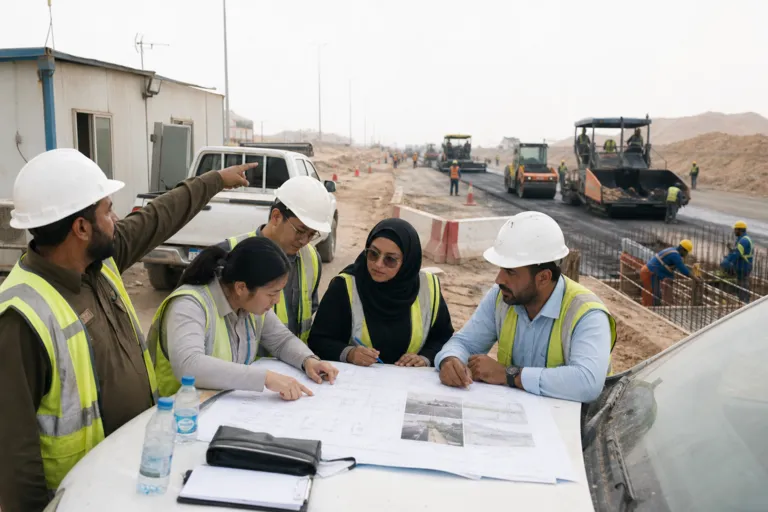
That shift is showing up in policy and project design. AGBI reports that Saudi Arabia is widening the PPP scope to meet infrastructure demands, expanding from earlier emphasis on utilities into sectors such as healthcare and transport. For road builders and civil-works specialists, the headline example is the Aseer-Jazan highway: a 135km, three-lane motorway that requires 57 bridges and 11 tunnels to cross Saudi Arabia’s southern hills. AGBI describes it as set to be the first full-concession contract of its kind in the GCC. For firms tracking highway PPP road construction in Saudi Arabia, this is not just another road package; it signals a concession structure that can shift how enabling works, structures, and long-term performance obligations are planned and priced.
Why 2026 Looks Like a Concession Turning Point
Market indicators suggest the PPP channel is expected to grow even as public funding remains dominant. Mordor Intelligence states that public funding held 69.1% of spending in 2025, while private capital routed through PPPs is projected to grow at a 6.81% CAGR between 2026 and 2031. IMARC data, cited by Futurism, adds a second signal from the broader construction landscape: Saudi Arabia’s construction market reached USD 101.4 billion in 2025 and is projected to reach USD 140.4 billion by 2034, at a 3.6% CAGR during 2026–2034. Futurism also reports that nearly 200 PPP opportunities across 17 sectors have been launched with standardized guidelines and improved investor protections, reinforcing that PPP is being positioned as a repeatable delivery method, not an exception.
For contractors and investors, the practical implications are about volume, phasing, and operational accountability. In 2025, new construction accounted for 76.7% of the Saudi Arabia infrastructure construction market, according to Mordor Intelligence, while renovation is advancing at a 6.44% CAGR through 2031. That profile supports fresh earthworks, structures, and corridor delivery—exactly the types of scope that road concessions can bundle, then sustain with maintenance and lifecycle obligations. Technology narratives are also converging with this model. Futurism’s transportation infrastructure piece describes smart sensors embedded in highway projects across Riyadh and Jeddah for real-time asset monitoring and predictive maintenance, and notes that intelligent transportation systems can reduce congestion by up to 30% in major cities through real-time data analysis. In concession frameworks, these capabilities can translate into measurable performance and long-term asset value.
The near-term takeaway for 2026 is that the civil-works pipeline is being shaped by two forces at once: large infrastructure forecasts and an expanded PPP structure that invites more private capital into transport. Metastat Insights values Saudi Arabia’s infrastructure market at USD 81.6 billion in 2025 and projects a 7.8% CAGR during 2026–2033; it also estimates the construction segment at USD 68.2 billion in 2026, projected to reach USD 107.0 billion by 2033 at a 6.7% CAGR. These forward views do not replace project-specific due diligence, but they align with what concession-style highways demand: deep delivery capacity now, and long-duration maintenance discipline later. With a full-concession highway positioned as a regional first, 2026 may become the year road PPPs move from “pilot” to pipeline.
Why are highway concessions gaining attention in Saudi Arabia in 2026?
What makes the Aseer-Jazan highway PPP notable?
How big is transportation within Saudi Arabia’s infrastructure construction market?
How does technology connect to road concession performance?
What does the 2026 outlook suggest for highway PPP road construction in Saudi Arabia?
Talk to us for your needs in:
-
Sustainable Construction Solutions
-
Strategic Construction Planning
-
Customer-Centric Construction Services
-
Operational Excellence in Construction
-
Leadership and Change Management for Construction
-
Digital Transformation in Construction
-
Saudi Construction Market Research
-
In-Depth Market Study for Construction
-
Market Intelligence and Insights in Construction
-
Feasibility Study and Assessment in Construction
-
Saudi Construction Benchmarking