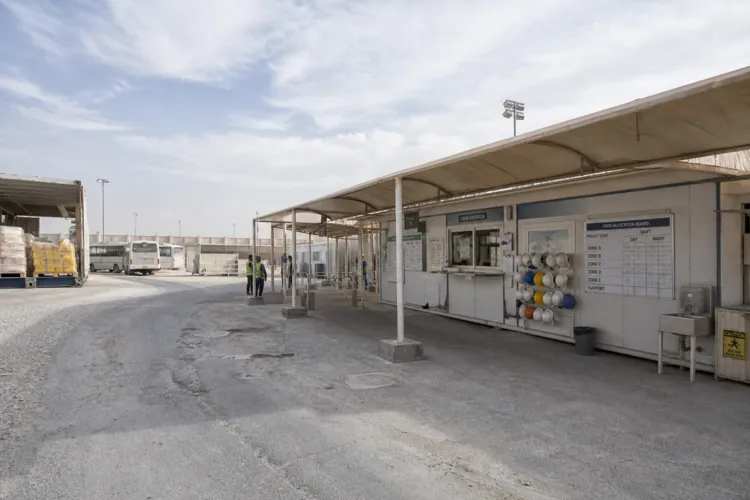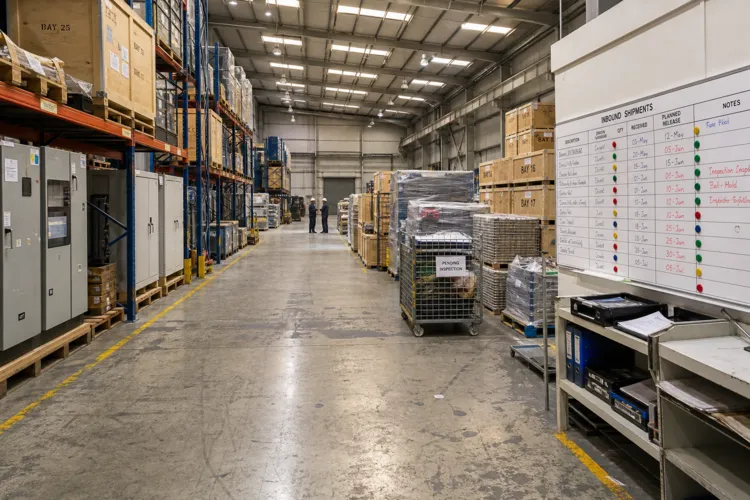
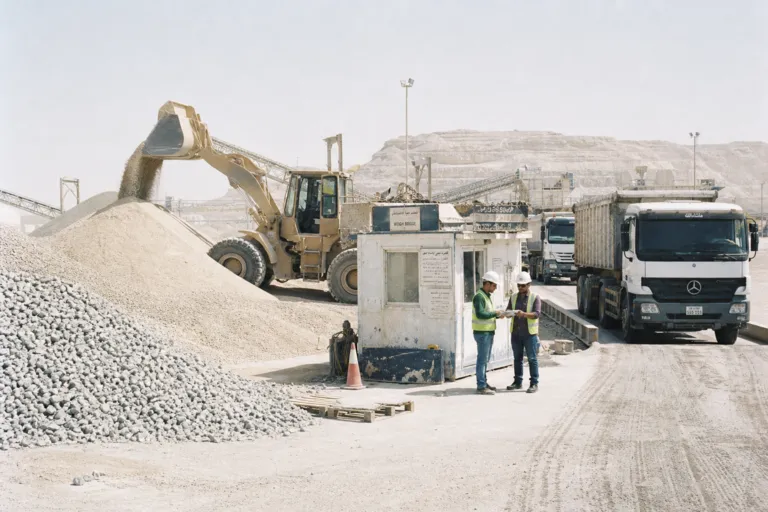
Saudi Arabia’s Vision 2030 buildout has created a sand paradox. The Kingdom is surrounded by desert, yet construction-grade sand and consistent crushed-stone volumes still require managed sourcing, processing, and logistics. One market estimate cited by Ken Research suggests that over 300 million tons of aggregates will be needed annually to support these projects. At the same time, the same source frames infrastructure investment under Vision 2030 as exceeding USD 500 billion, which helps explain why fine and coarse aggregate procurement is now a strategic issue—not just a commodity purchase.
Supply security is not only about how much material exists, but where it is and how it moves. IndexBox describes Saudi Arabia’s natural construction aggregates market as historically dominated by domestic production, with local sources satisfying the vast majority of consumption requirements. Yet it also notes that demand is concentrated around major urban centers and giga-project sites, while quarries can be located at a distance—making logistics a key cost component. That distance challenge becomes more visible as project pipelines create “concentrated pockets” of intense demand, requiring suppliers to balance quarry licensing, environmental standards, and transportation logistics under regulatory oversight.
Where the Supply Chain Breaks: Price Volatility, Distance, and Specs
Multiple sources highlight stress points that can disrupt construction aggregates and sand supply in Saudi Arabia. Ken Research flags a direct market challenge: fluctuating raw material prices driven by global supply-and-demand dynamics. IndexBox adds that the sand market faces logistics optimization and cost management challenges amid volatile energy inputs, alongside environmental compliance. On the specification side, IndexBox distinguishes between desert sand, natural silica sand, and manufactured sand (crushed aggregate fines), noting manufactured sand is gaining traction for structural concrete because its grading and shape characteristics are superior to fine desert sand.
Demand is also being pulled by adjacent infrastructure programs. Ken Research states the Saudi government plans to invest USD 50 billion in renewable energy projects in the future, which will require crushed stone and sand for infrastructure development. Separately, an IMARC press release notes that Saudi Arabia’s construction aggregates market growth is tied to Vision 2030 mega-projects, and it cites February 2025 announcements by the Royal Commission for Riyadh City of eight major road initiatives to enhance the capital’s transportation network—work that typically drives sustained aggregate demand for asphalt and road base applications.
Securing supply means expanding options, not relying on a single material pathway. IndexBox describes a “complex supply landscape” that balances natural and manufactured sources, and it points to an increasing emphasis on sustainable sourcing practices and supply chain efficiency through 2035. The same IMARC release references a January 2025 Memorandum of Understanding involving SIKA, ClimateCrete, NEOM, the Saudi Investment Recycling Company, and the Public Investment Fund to establish the NovusCrete Consortium, focused on sustainable concrete manufacturing methods incorporating recycled aggregates and eco-friendly materials. For ready-mix concrete, IndexBox notes aggregates are sourced domestically for the most part, but the geographical shift of demand toward giga-project sites is testing the flexibility and reach of existing supply networks and may require new quarries or long-haul transportation of crushed stone.
Why is Saudi Arabia’s aggregates and sand supply becoming a strategic issue now?
What are the main risks to construction aggregates and sand supply in Saudi Arabia?
How is manufactured sand changing the market?
How do renewable energy and roads affect aggregate demand in the Kingdom?
What does the topic of construction aggregates sand supply in Saudi Arabia imply for ready-mix concrete networks?
Talk to us for your needs in:
-
Sustainable Construction Solutions
-
Strategic Construction Planning
-
Customer-Centric Construction Services
-
Operational Excellence in Construction
-
Leadership and Change Management for Construction
-
Digital Transformation in Construction
-
Saudi Construction Market Research
-
In-Depth Market Study for Construction
-
Market Intelligence and Insights in Construction
-
Feasibility Study and Assessment in Construction
-
Saudi Construction Benchmarking