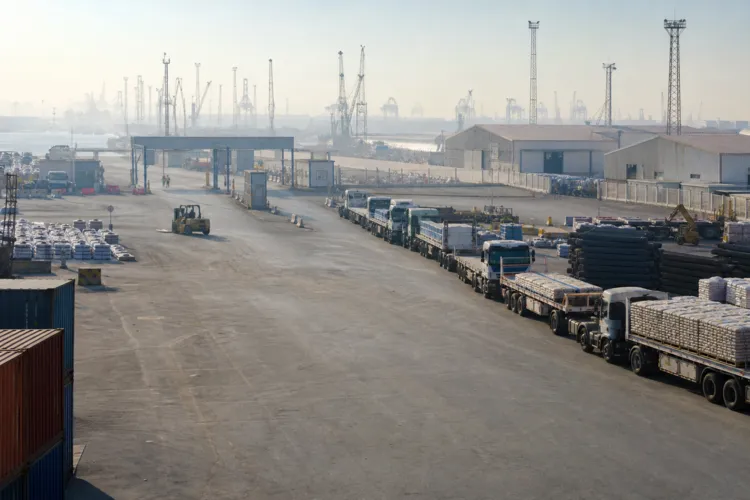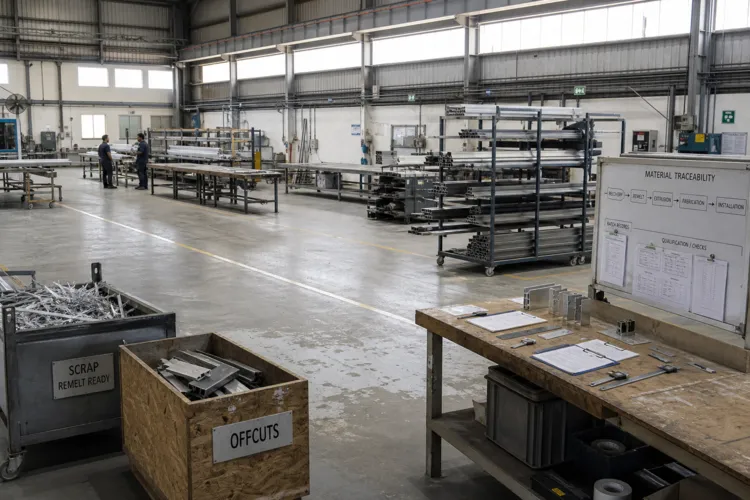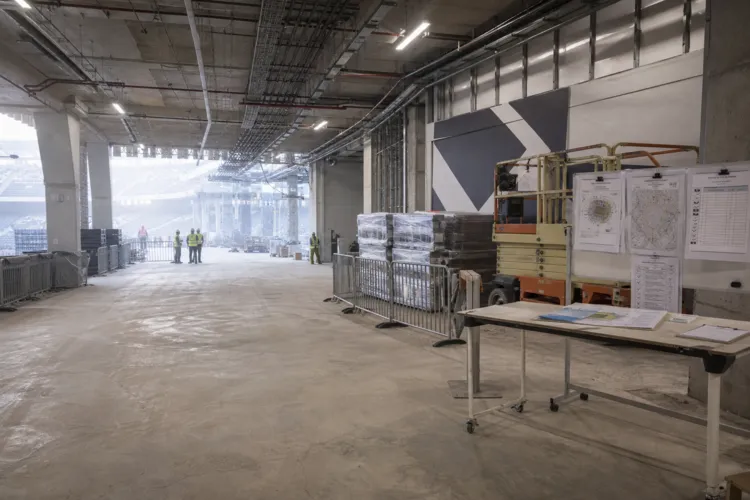
Rerouting is now part of daily logistics planning in Saudi Arabia. When cargo shifts between gateways and modes, construction teams feel it first because delays ripple into crews, equipment schedules, and staged materials. The Saudi Arabia logistics market was valued at USD 55.29 billion in 2025 and is expected to reach USD 83.41 billion at a CAGR of 4.67% from 2026-2034, according to IMARC Group. In a market of that scale, “where is my shipment?” is not a simple status question. It is a visibility gap that can trigger disputes, rework, and last-minute expediting across suppliers, carriers, and sites.
Construction demand adds pressure. Mordor Intelligence values the Saudi Arabia construction market at USD 82.80 billion in 2026 and forecasts growth at a CAGR of 4.22% to reach USD 101.83 billion by 2031. Infrastructure held 60.13% of the Saudi Arabian construction market share in 2025, which signals high volumes of time-sensitive materials. At the same time, market dynamics encourage more lane changes and coordination complexity. Mordor Intelligence notes regulatory liberalization that permits international operators to serve domestic line-haul lanes, and it connects this to diversion traffic that rewards agile operators able to reroute via Gulf gateways. In this environment, material tracking must survive handoffs, not just departure and arrival.
RFID Plus Real-Time Events: Build a Trackable Chain-of-Custody
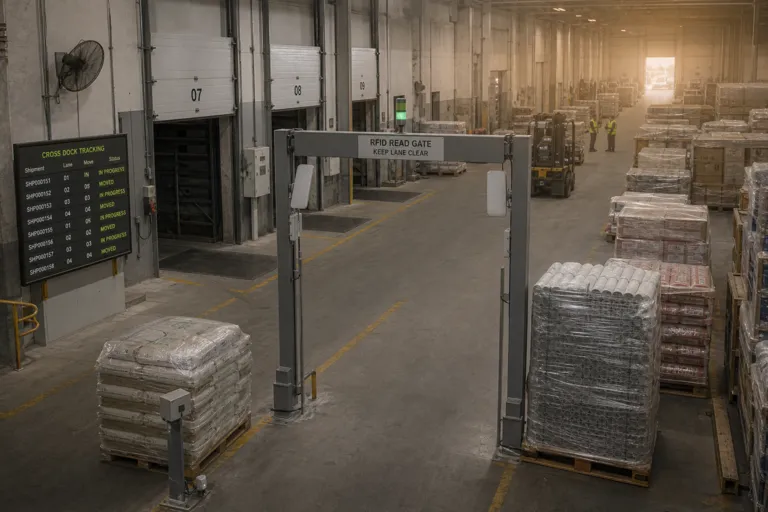
RFID works best when it is implemented as an event system, not a tag purchase. TimeTech emphasizes that tags alone do not create value and that events must update systems of record. Practical design starts with master data hygiene—SKU, location, and unit of measure—then defining read points such as receive, put-away, pick, and ship. TimeTech also recommends exception workflows for unknown or duplicate reads and piloting one aisle or one inbound lane before scaling once exception rates stabilize. For construction logistics, this approach helps keep inventory movements automatic instead of optional paperwork, especially when loads are split, cross-docked, or temporarily held in bonded or customs-adjacent areas.
RFID is stronger when paired with broader real-time shipment visibility. IMARC Group describes IoT-enabled containers, GPS trackers, and temperature sensors providing end-to-end visibility across multimodal shipments, and it highlights blockchain platforms that enable tamper-proof documentation for customs, proof-of-delivery, and multi-party coordination. Palm Horizon frames the risk clearly in Saudi Arabia’s SAR 385 billion logistics sector, where blind spots in shipment visibility inflate costs and erode trust. Its point is operational: moving from phone calls, email chains, and manual spreadsheets to digital tracking can be measured in days, not months, when the partner combines port and customs capability with integrated tracking technology. That matters when reroutes change the “last known location” several times in one week.
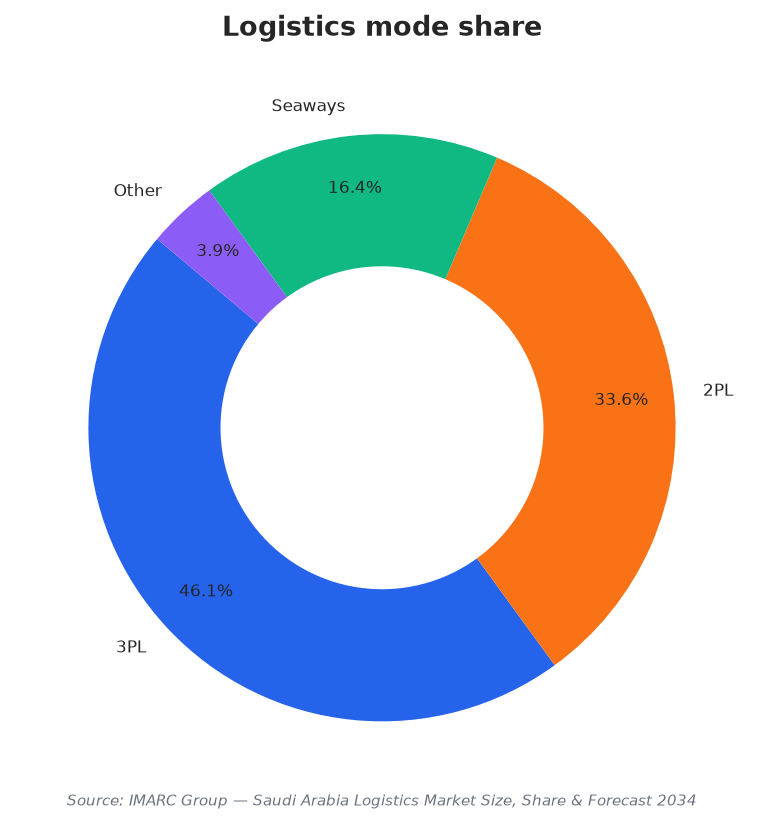
Finally, align RFID material tracking with who runs the flow. IMARC Group reports that 3PL holds a 46.12% share in 2025, reflecting demand for integrated transportation, warehousing, and last-mile solutions. Meanwhile, 2PL holds 33.58% in 2025 and is described as more point-to-point, prioritizing reliability and cost for flows that include construction materials. For shippers managing rerouted Saudi construction supply chains, the governance lesson is simple: specify data ownership, read-point coverage, and exception handling in the contract, whether a 2PL is moving bulk loads or a 3PL is orchestrating multimodal handoffs. That is how RFID material tracking for construction logistics in Saudi Arabia becomes a predictable operating system, not another dashboard.
Why do reroutes make shipment visibility harder for Saudi construction deliveries?
What is the first step to make RFID tracking usable in a warehouse workflow?
How should teams pilot RFID before scaling across multiple sites?
How big are Saudi Arabia’s logistics and construction markets in the sources?
How does RFID material tracking for construction logistics in Saudi Arabia fit with real-time tracking tools?
Talk to us for your needs in:
-
Sustainable Construction Solutions
-
Strategic Construction Planning
-
Customer-Centric Construction Services
-
Operational Excellence in Construction
-
Leadership and Change Management for Construction
-
Digital Transformation in Construction
-
Saudi Construction Market Research
-
In-Depth Market Study for Construction
-
Market Intelligence and Insights in Construction
-
Feasibility Study and Assessment in Construction
-
Saudi Construction Benchmarking