On water-stressed project sites, “use once and dump” water practices create avoidable cost and risk. In Saudi Arabia, water reclamation and reuse is framed as a strategic supply lever, not a marginal environmental add-on. Gulf State Analytics notes that the real cost to obtain one cubic meter of desalinated water runs about USD 6.00, while the full cost to repurpose treated wastewater is less than USD 2.97 per cubic meter, and treated wastewater is not potable and is used only for specific purposes tied to industry and irrigation of public lands. For contractors, that gap is a practical signal: if non-potable site needs can be met with reclaimed sources, the business case strengthens while helping conserve freshwater.
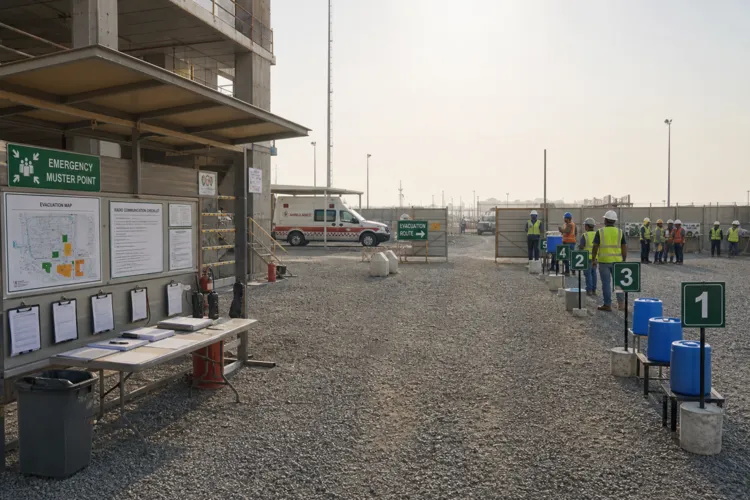
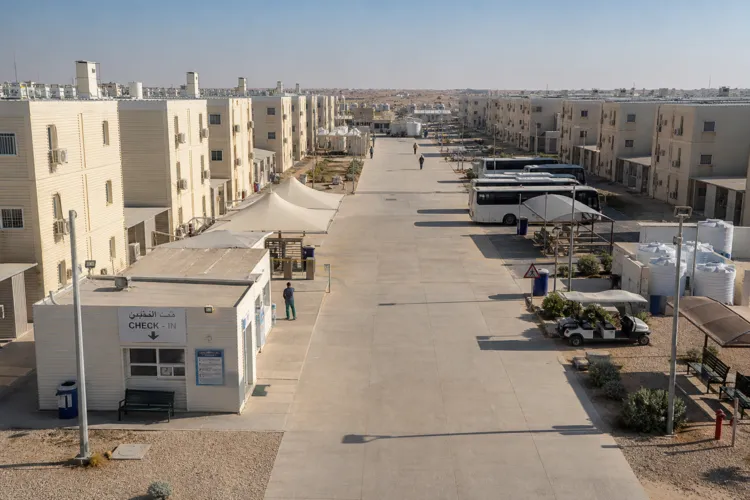
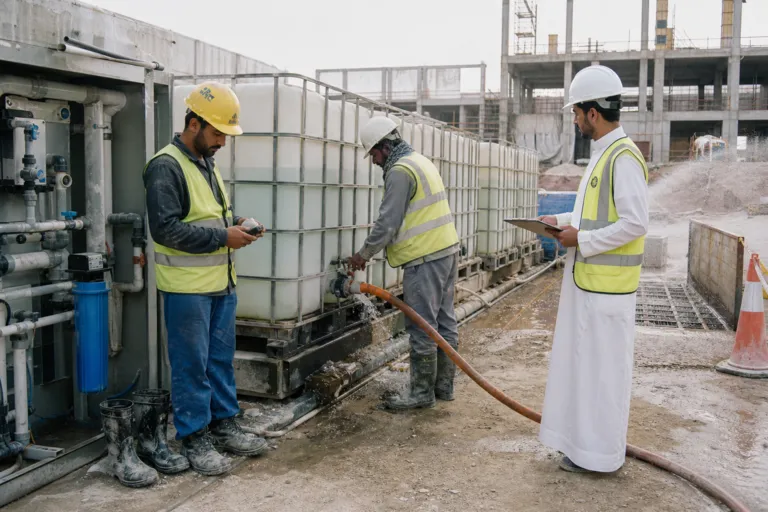
Construction teams can translate that national direction into site execution through water mapping and reuse loops. The water recycle and reuse market narrative described by Fortune Business Insights emphasizes decentralized treatment systems and building-level greywater reuse, including dual plumbing in drought-prone and high-density urban environments. That logic applies to temporary facilities too. Greywater recycling systems are designed to capture, treat, and reuse greywater generated from bathing, laundry, and dishwashing, according to Verified Market Reports. On a Saudi site, this points to welfare units, worker camps, and site kitchens as practical points to intercept greywater before it becomes a waste stream and to route it back for secondary, non-potable use where permitted by project controls and requirements.
Greywater and Reuse Systems: Scale, Policy, and Why Sites Should Care
Saudi Arabia’s wider reuse push is measurable, and construction stakeholders operate inside that system. The U.S. International Trade Administration notes that Saudi Arabia has set a goal to achieve 100% reuse of treated urban wastewater by 2025. The same source states that, based on 2018 data, Saudi Arabia has approximately 5.6 million m3/day of wastewater treatment capacity with 3.2 million m3/day under construction and 0.4 million m3/day planned for decommissioning. To achieve 2030 treatment targets, it adds that a total of 8.4 million m3/day of capacity addition is required. Gulf State Analytics also suggests treated wastewater has the potential to fulfill 26% of urban water needs in the kingdom. For sites, these figures matter because they indicate both a policy direction and an expanding treatment base that can support more non-potable reuse pathways over time.
There is also a market ecosystem in Saudi Arabia that can support contractors looking for equipment, integration, and operations help. Ken Research values the Saudi Arabia water recycle reuse market at approximately USD 200 million and segments it across municipal wastewater treatment, industrial wastewater treatment, agricultural reuse, desalination integration, greywater recycling, stormwater management, decentralized treatment systems, and advanced membrane technologies. It also lists suppliers and developers active in the country, including Veolia Water Technologies Saudi Arabia, SUEZ Water Technologies & Solutions Saudi Arabia, Metito Saudi Limited, Saudi Water Partnership Company (SWPC), ACWA Power, and others. For project delivery, this matters because construction site water planning is rarely only about tanks and hoses; it often requires treatment selection, storage and conveyance, monitoring, and clear responsibility for operation and maintenance.
Greywater recycling also sits within a broader global adoption curve, which can shape product availability and solution maturity. Verified Market Reports estimates the global greywater recycling system market at USD 6.8 billion in 2024 and projects USD 12.3 billion by 2033, with a CAGR of 8.1% from 2026–2033. This global context is not Saudi-specific, but it supports a practical takeaway for Saudi projects: more standardization of components, integration services, and operating know-how tends to follow growing markets. At the same time, SNS Insider highlights that differing treatment requirements across countries can make standardization harder and can drive up costs and administration for businesses. For Saudi construction sites, this reinforces the need to align any site reuse plan with the specific end-use (non-potable) and the project’s compliance expectations.
How can construction site water recycling in Saudi Arabia use greywater safely for non-potable needs?
What cost comparison do sources give for desalinated water versus repurposed treated wastewater in Saudi Arabia?
What wastewater treatment capacity figures are cited for Saudi Arabia?
What is Saudi Arabia’s stated goal for reusing treated urban wastewater?
How large is the global greywater recycling system market according to the provided sources?
Talk to us for your needs in:
-
Sustainable Construction Solutions
-
Strategic Construction Planning
-
Customer-Centric Construction Services
-
Operational Excellence in Construction
-
Leadership and Change Management for Construction
-
Digital Transformation in Construction
-
Saudi Construction Market Research
-
In-Depth Market Study for Construction
-
Market Intelligence and Insights in Construction
-
Feasibility Study and Assessment in Construction
-
Saudi Construction Benchmarking