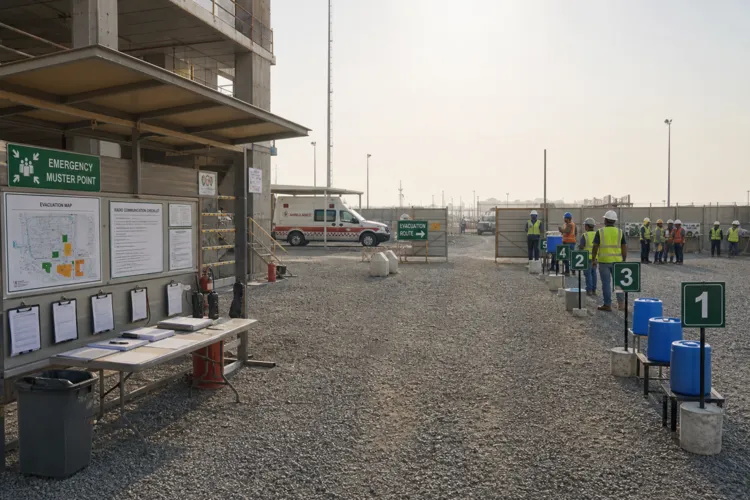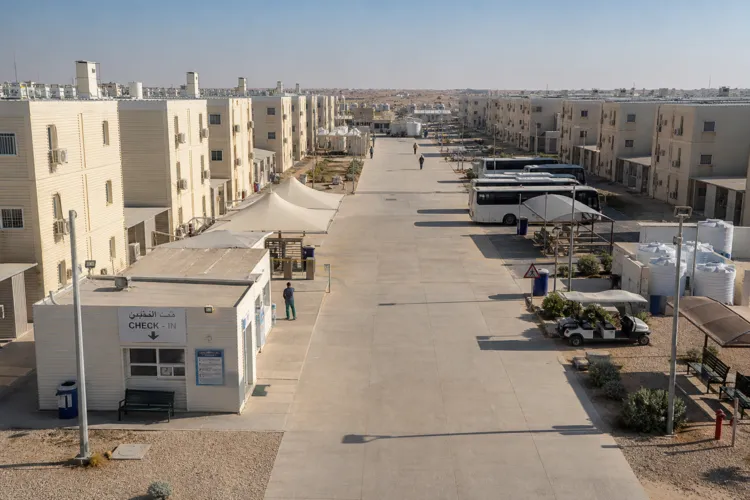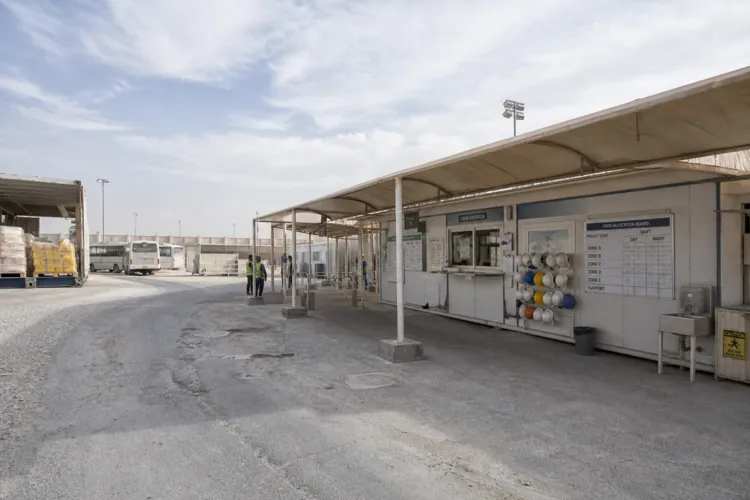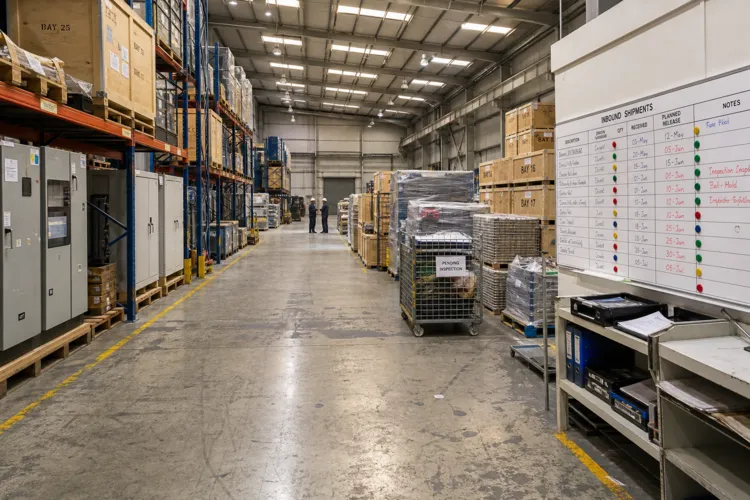
Saudi Arabia’s giga-project portfolio is moving into a transition phase where handover discipline matters as much as construction speed. Public evidence cited in a Vision 2030 delivery-status map shows some assets open or partly open, including Red Sea resorts, Sindalah, Sports Boulevard phases, and Diriyah visitor assets, while NEOM and The Line require special caution because official comments and contractor disclosures indicate reprioritization and schedule risk. At the same time, a programme-level signal appears in the official 2025 Vision 2030 annual report, which says 93% of measured indicators were achieved or near annual target and 90% of initiatives were completed or on track. Those claims do not validate every asset, but they frame why commissioning, acceptance testing, and operational mobilization need to be treated as a portfolio-wide capability, not an afterthought.
The scale and variability across projects amplifies the need for structured readiness plans. One analysis describing ambition versus reality says combined announced commitments across the giga-project portfolio still exceed $1 trillion, while also citing shifting priorities such as PIF formally cutting construction commitments from $71 billion to $30 billion. The same source cites an internal audit pegging full NEOM completion at $8.8 trillion, and notes that after roughly $50 billion of confirmed Saudi state spending on NEOM alone, visible output is described as 2.4 kilometres of foundation, a closed luxury island, and a half-built ski resort. In this environment, operational readiness and commissioning become risk controls. They help teams open what is truly complete, document what is not, and protect operators from inheriting unresolved design, quality, or interface issues.
Commissioning Proof Points and the Value of Phased Openings
Phased delivery is repeatedly positioned as the practical route to early revenue and proof of concept while the broader masterplan continues. A global benchmark piece highlights that initial components becoming operational can support continued investment, and points to the Red Sea development as the most commercially conventional, with phase one operational and first hotels receiving guests. On the ground, ESG maturity benchmarking (February 2026) provides concrete commissioning signals at Diriyah: Bab Samhan Hotel is operational, the Zallal mixed-use project is completed, and the Western Ring Road Tunnel is handling 10,000+ vehicles per hour. The same benchmarking source reports that AMAALA Triple Bay had permanent waste facilities and marinas commissioning in Q1 2026, and that RSI Airport is operational with LEED certification pending. These examples show how readiness planning is increasingly about operational systems, not just building completion.
Readiness plans also need measurable operational KPIs, because giga-project transitions expose data gaps and complex interfaces. The ESG benchmarking source lists themes that can be translated into day-one operating requirements, including embodied carbon reduction at 20% below a Saudi baseline, 100% TSE irrigation, 90.6% construction waste diversion, and Saudization at 63% workforce. It also reports total energy consumption reaching 1.95 million GJ in 2024, with 100% TSE reuse and 70% operational waste diversion achieved. These numbers are useful because they create auditable acceptance criteria for the shift from contractor-led delivery to operator-led performance. They also clarify what must be instrumented, reported, and assured as assets move from commissioning into steady-state operations.
Governance and contracting structures shape how smoothly commissioning packages convert into operational capability. PIF’s official giga-project list is five projects: NEOM, Qiddiya, Red Sea Global, ROSHN Group, and Diriyah Company, while the wider Vision 2030 directory spans far more sectors and delivery entities. The delivery-status map notes that PIF’s 2026–2030 strategy formalizes a shift from acceleration to value creation, investment efficiency, and private-sector participation, which changes how projects compete for capital and how operators must justify ramp-up plans. In parallel, a legal overview highlights Saudi Arabia’s PPP Law (2021), including models such as Build-Operate-Transfer and Joint Development Agreements, and notes MISA’s framework that ensures 100% foreign ownership in most sectors. Together, these structures influence operational readiness handover for Saudi giga projects, especially where operators, tenants, and service providers must mobilize under clear roles, responsibilities, and acceptance standards.
What does operational readiness and handover mean for Saudi giga-projects reaching early operations?
Which Saudi giga-project assets are cited as operational or commissioning in the sources?
What KPIs are mentioned that can support commissioning-to-operations performance tracking?
How do governance shifts affect readiness planning across the portfolio?
Talk to us for your needs in:
-
Sustainable Construction Solutions
-
Strategic Construction Planning
-
Customer-Centric Construction Services
-
Operational Excellence in Construction
-
Leadership and Change Management for Construction
-
Digital Transformation in Construction
-
Saudi Construction Market Research
-
In-Depth Market Study for Construction
-
Market Intelligence and Insights in Construction
-
Feasibility Study and Assessment in Construction
-
Saudi Construction Benchmarking