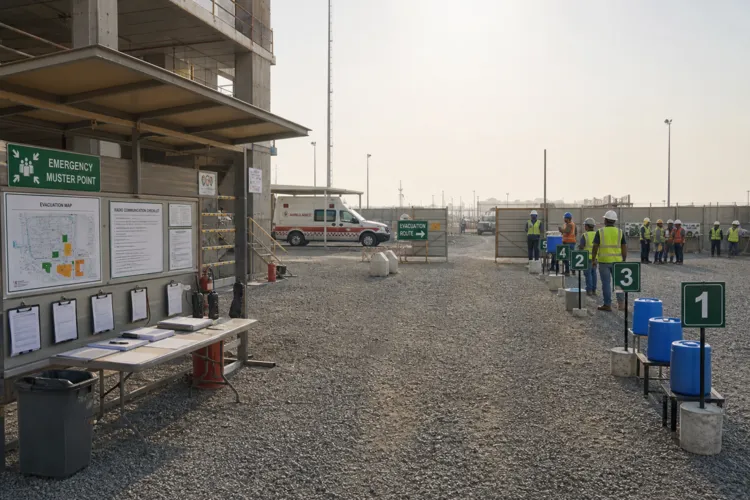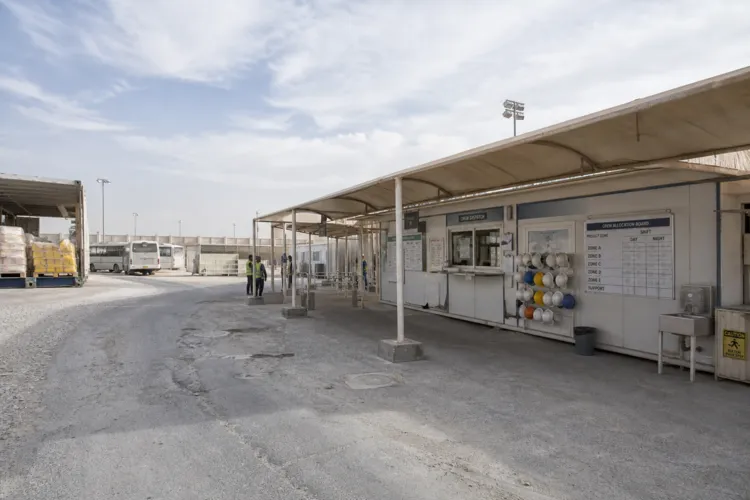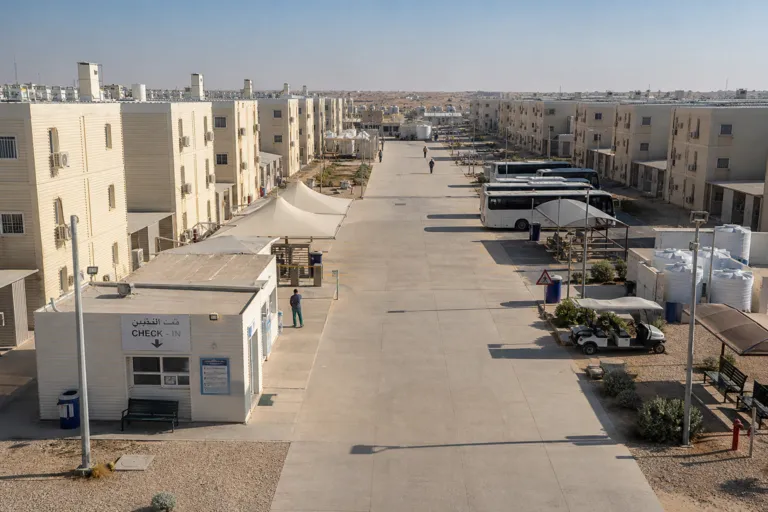
Qiddiya, the entertainment giga-project south of Riyadh, is already operating at a very large on-site labour level. One workforce estimate puts Qiddiya at 95,000 workers now, with a peak headcount projected at 145,000 in mid-2027 as Phase 2 attractions enter fit-out. At the same time, Diriyah Gate is cited at 110,000 workers across its heritage restoration zones and wider mixed-use development. When two mega-sites in the Riyadh orbit carry that kind of headcount, the pressure point is not only recruitment. It is also accommodation, transport, and day-to-day living logistics that must be delivered fast enough to keep the build moving.
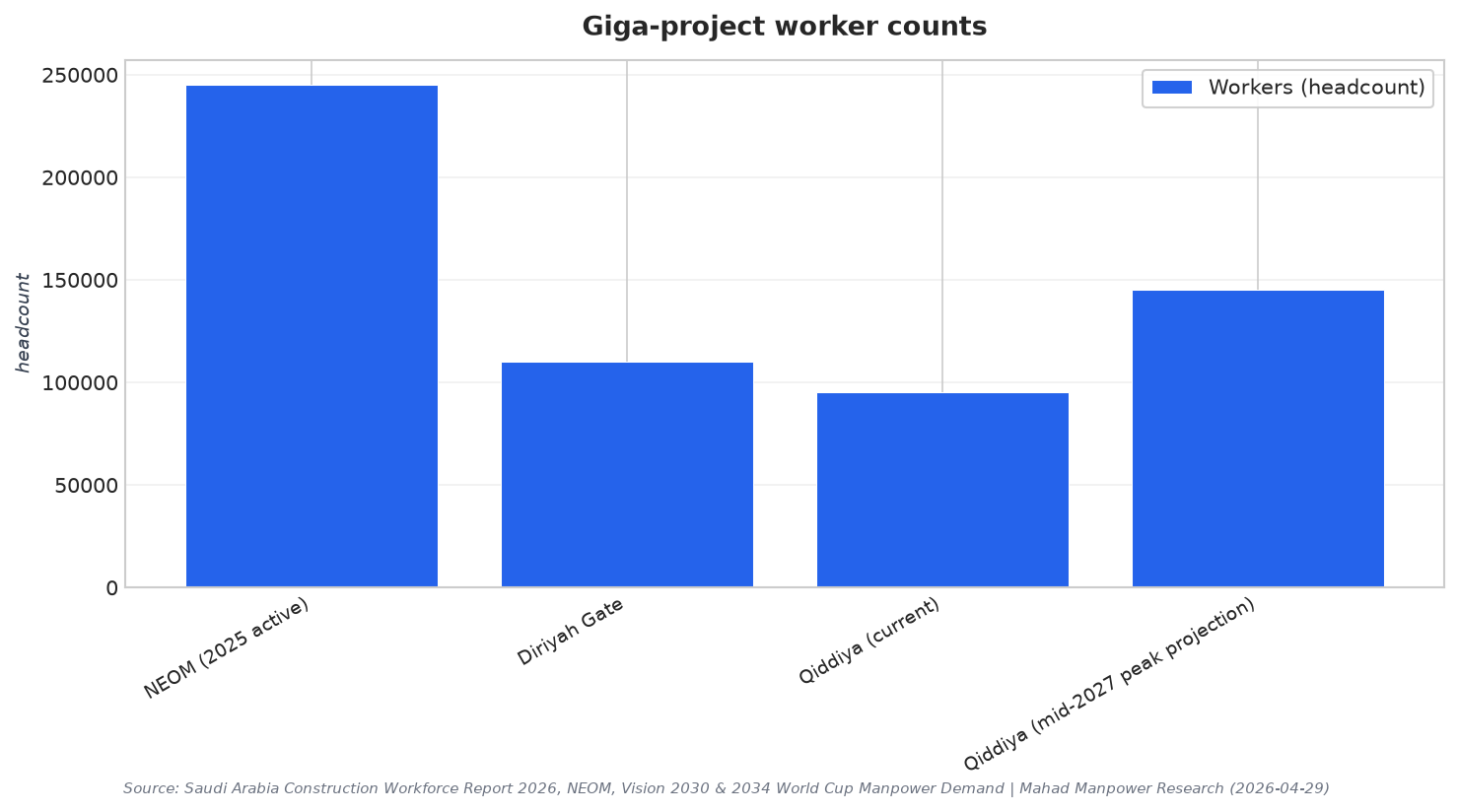
Zooming out, a Saudi construction workforce research snapshot says approximately 870,000 workers are deployed across the active giga-project portfolio as of end-2025, including NEOM, Qiddiya, Diriyah, Red Sea, ROSHN, AlUla, and King Salman Park. Another forecast frames peak labour across NEOM, Diriyah, Red Sea Global, and Qiddiya as potentially topping 1.8 million by 2028. These national-scale figures do not automatically translate into Riyadh bed counts. But they do indicate why planning for construction worker accommodation capacity in Riyadh for 2027 becomes a practical risk question, especially if several programmes hit intense delivery stages at once.
What The Supply Signals Say: Permanent Housing, Permitting, And Policy
Not all accommodation needs are temporary. The Qiddiya City plan described in an Arab News report says the city has been designed to accommodate 500,000 residents in 150,000 residential units, supporting the 300,000 people expected to work at Qiddiya City upon completion. That is a long-horizon end state rather than a mid-2027 construction camp solution, but it shows that residential delivery is a core part of the concept. Elsewhere, NEOM’s SAR 2.8 billion (USD 746 million) Phase II deal with Homagic covers 12,000 permanent modular units built to 50-year durability and LEED Gold standards. Those numbers are for NEOM, not Riyadh, yet they highlight one pathway: purpose-built units intended to last, not only short-term dormitory capacity.
In Riyadh, large residential programmes also shape the wider housing baseline that managers, service staff, and long-term employees may rely on. One forecast notes ROSHN’s 20 km² Riyadh community is planned to house more than 30,000 families once complete, and that in January 2026 ROSHN let SAR 1.5 billion (USD 400 million) of Phase 4-5 contracts and secured SAR 2.1 billion (USD 560 million) of new land. Another datapoint says Digital Etmam permitting slashed average approval cycles to 45 days. None of this is a direct inventory count for worker beds. But it does point to pipeline momentum and faster processing, which can matter when construction schedules depend on keeping labour housed close enough to sites.
Labour supply and regulation can also reshape accommodation demand in unpredictable ways. Two labour-market summaries put Saudi Arabia’s workforce at about 13.4 million in one view and approximately 16 million in another, with the latter stating roughly 10 million expatriate workers and 6 million Saudi nationals. Saudization pressure remains central. A policy outlook states the next Nitaqat phase is designed to expand the number of Saudis working in the private sector by 340,000 over the next three years, while another source explains that Nitaqat classifications affect access to visa services and other advantages. For Riyadh’s 2027 accommodation planning, the key is that headcount at Qiddiya is not the only variable. The composition of that headcount, and how quickly it can be mobilized and supported, is part of the capacity challenge as mid-2027 approaches.
What is Qiddiya’s projected peak workforce, and when does it happen?
How large is the workforce at Diriyah Gate, and why does it matter for Riyadh?
What do sources say about construction worker accommodation capacity in Riyadh for 2027?
Which figures show the wider scale of Saudi giga-project labour demand?
What policy shift could affect labour availability and housing demand through 2027?
Talk to us for your needs in:
-
Sustainable Construction Solutions
-
Strategic Construction Planning
-
Customer-Centric Construction Services
-
Operational Excellence in Construction
-
Leadership and Change Management for Construction
-
Digital Transformation in Construction
-
Saudi Construction Market Research
-
In-Depth Market Study for Construction
-
Market Intelligence and Insights in Construction
-
Feasibility Study and Assessment in Construction
-
Saudi Construction Benchmarking