Saudi Arabia’s ESG disclosure story has moved from “voluntary guidance” to what some sources describe as a new era of expectations. The Capital Market Authority (CMA) first issued ESG Disclosure Guidelines in 2019. The Saudi Exchange (Tadawul) followed in 2021 with its own ESG disclosure framework to encourage listed companies to provide ESG-related information. In 2025, the CMA also formalised a framework for green, social, sustainability and sustainability-linked debt instruments (GSS/SLB), requiring issuers to include relevant ESG disclosures, especially when proceeds are used for environmental or social-impact projects. For contractors, this shift matters because tender decisions often mirror financing and governance expectations in the wider market.
The market signal is visible in sustainability reporting uptake among Saudi-listed companies. One source cites that, in 2024, 94 listed firms issued sustainability reports, up from 81 in 2023. The same source adds that among the top 100 companies on Tadawul by revenue, approximately 65% now report on ESG. Even where reporting remains “voluntary” on paper, these figures show how disclosure becomes a baseline expectation rather than a branding exercise. For procurement teams and project owners, this trend can turn into a simple screening logic: if comparable firms disclose, a bidder that does not may look higher-risk on governance, transparency, and long-term resilience.
From Reporting to Bid Readiness: What Contractors Need to Build
For Saudi contractors, bid readiness increasingly depends on having a repeatable reporting process, not a one-off PDF. Saudi sustainability reporting guidance highlights a structured workflow: define the report scope and objectives; collect data such as energy and water consumption, carbon emissions, social responsibility activities, and governance policies; apply recognised standards such as GRI; analyse results and draft the report; then review and audit internally and externally before publication. In parallel, international standards are gaining traction in the Kingdom. Some listed companies are adopting GRI or SASB, and Saudi reporting discussions increasingly reference IFRS S1 for general sustainability-related financial disclosures and IFRS S2 for climate-related disclosures, including governance, strategy, risk management, and climate-related metrics and targets.
This operational discipline is also connected to financing and lender scrutiny. A Saudi source notes that major banks are incorporating ESG into lending and risk policies, while the CMA’s 2025 GSS/SLB framework links access to certain financing channels with transparency around use of proceeds, impact reporting, and ongoing disclosure. Contractors that depend on performance bonds, working capital facilities, or joint ventures can feel these expectations indirectly through partner due diligence and lender questionnaires. The keyword topic of ESG reporting construction firms Saudi Arabia is therefore less about marketing and more about proving governance and environmental management maturity in a way that stands up to investor and lender review.
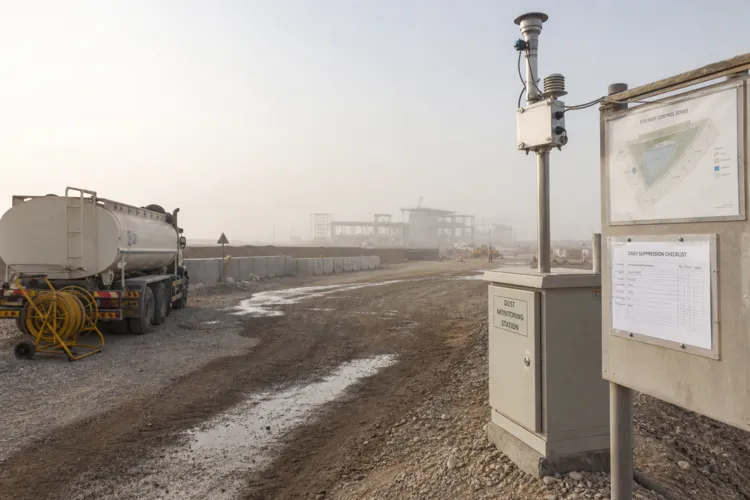
Finally, the broader ecosystem around ESG capability is expanding, which can raise the bar for what “good” looks like in tender files. A regional initiative cited by one source notes the GCC Exchanges Committee introduced 29 Unified ESG Metrics in early 2023 for Gulf-listed companies, reflecting demand for consistent, comparable data. On the service side, environmental consulting demand includes sustainability reporting, carbon footprint analysis, and air quality monitoring, and one source links this to Saudi Arabia’s sustainability agenda through the Saudi Green Initiative targeting 278 million tons annual carbon emission reductions by 2030. In practice, this means more bidders can access specialist help to quantify impacts and document controls, so owners may feel more confident making disclosure and reporting quality part of prequalification.
Is ESG reporting mandatory in Saudi Arabia today?
What recent figures show ESG reporting is becoming a market expectation in Saudi Arabia?
How should construction companies structure sustainability reporting for tender readiness?
How do IFRS S1 and IFRS S2 relate to ESG disclosures in Saudi Arabia?
Why is ESG reporting for construction firms in Saudi Arabia increasingly tied to commercial outcomes?
Talk to us for your needs in:
-
Sustainable Construction Solutions
-
Strategic Construction Planning
-
Customer-Centric Construction Services
-
Operational Excellence in Construction
-
Leadership and Change Management for Construction
-
Digital Transformation in Construction
-
Saudi Construction Market Research
-
In-Depth Market Study for Construction
-
Market Intelligence and Insights in Construction
-
Feasibility Study and Assessment in Construction
-
Saudi Construction Benchmarking