When refineries are targets, the practical takeaway for fleet operators is simple: treat fuel as a security and continuity problem, not just a procurement task. Saudi construction work often depends on diesel-powered assets that must run far from stable grid connections. That reality shows up in the Kingdom’s generator demand profile. Nexdigm notes that diesel gensets hold the dominant position in the KSA genset market because construction and industrial applications require high torque, long runtime, and durability under heavy loads, with widespread fuel availability supporting deployment. In parallel, MarketsandMarkets values the Saudi Arabia diesel generator market at USD 807.3 million in 2026 and projects USD 1,094.2 million by 2031 at a 6.3% CAGR, tying growth to infrastructure development and industrial demand.
For on-the-ground fleet managers, diesel risk is amplified by the way demand clusters. Nexdigm highlights Riyadh, Jeddah, and Dammam-Al Khobar, plus major corridors along the Red Sea, as dominant deployment zones for gensets because they combine infrastructure development, logistics hubs, airports, and industrial activity. It also points to scale: Caterpillar’s Saudi dealer Zahid Tractor supplied 69 generator sets representing 32 MW for construction-related power at the Red Sea development. Those temporary-power loads sit beside heavy equipment and logistics movements, so diesel control must cover more than vehicles. A telematics-led approach to diesel fuel management for construction fleets in Saudi Arabia should connect equipment hours, generator runtime, and refueling events into one auditable picture, especially when projects are running simultaneously and sites are remote.
Telematics-Led Diesel Management: From Delivery to Dispensing
Telematics value increases when it is paired with how diesel physically reaches the site. Verified Market Reports describes a mobile fueling solution ecosystem that integrates IoT-enabled fuel management systems and telematics, including GPS-based location tracking and dispatching, plus user-centric mobile apps for scheduling and payment. It also maps the value chain to refinery and bulk storage sourcing, then technology components such as IoT sensors, GPS modules, and telematics hardware. For construction fleets, this matters because it creates traceability across custody changes: from bulk supply, to mobile delivery, to tank and nozzle activity, to each asset’s consumption profile. In a fuel-security mindset, that chain-of-custody visibility supports both planning and incident response without claiming that any single technology removes risk.
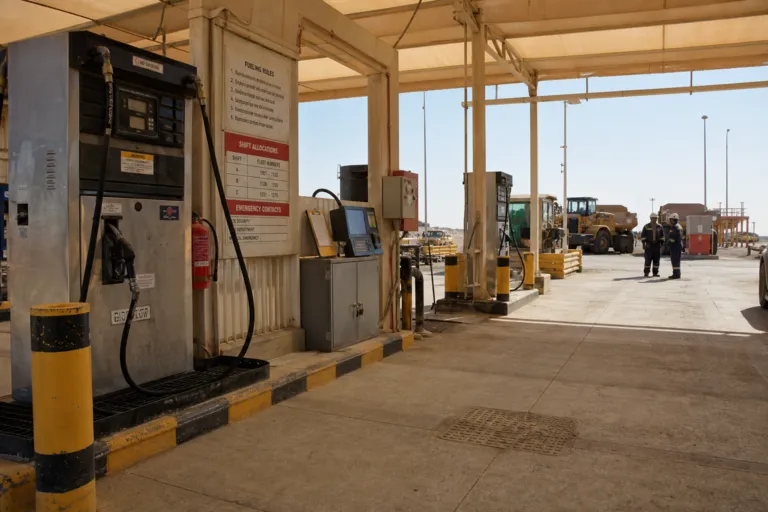
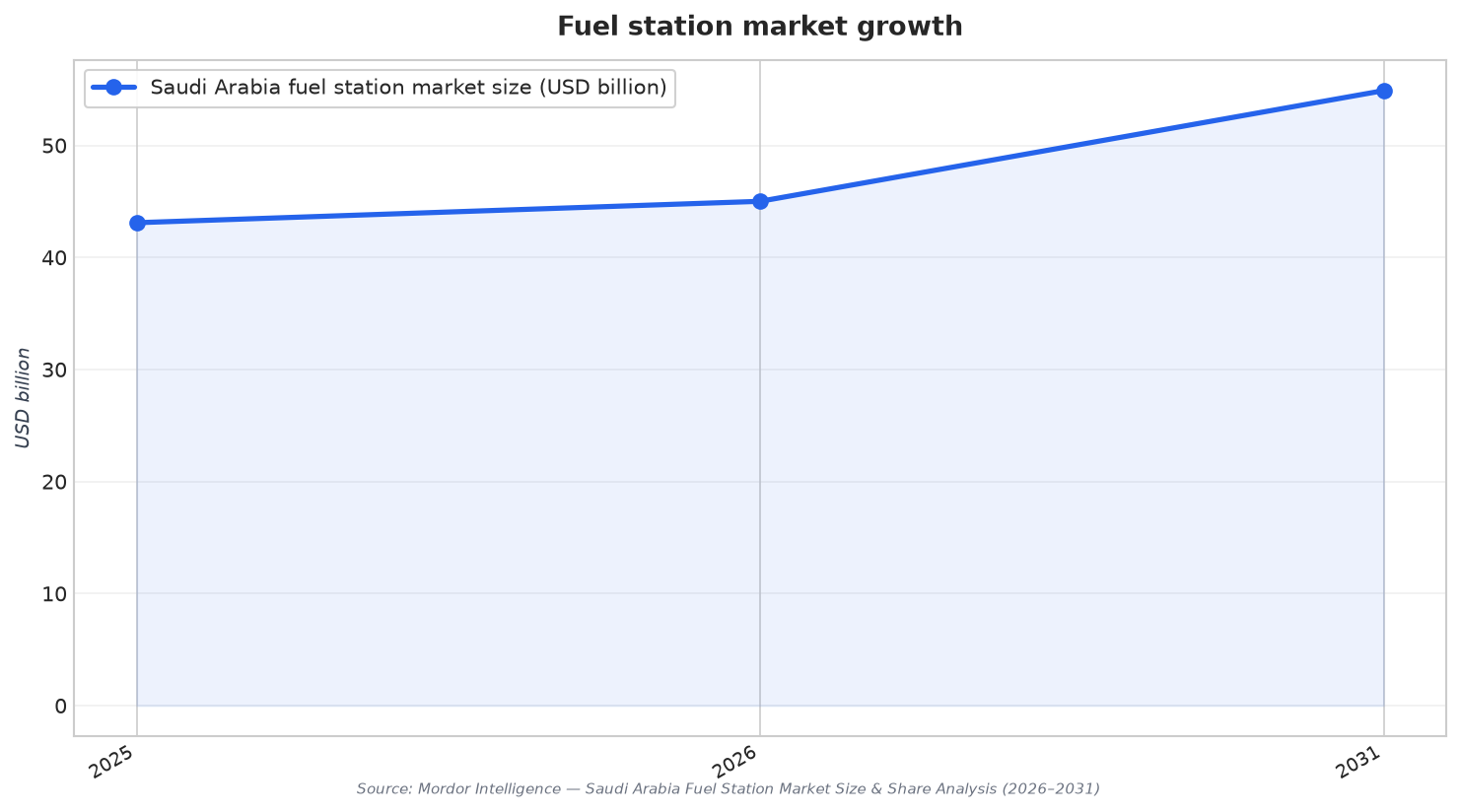
Costs and throughput dynamics in retail fueling also shape operating discipline. Mordor Intelligence projects the Saudi Arabia fuel station market at USD 43.10 billion in 2025 and USD 45.01 billion in 2026, reaching USD 54.89 billion by 2031 at a 4.05% CAGR. It reports that new-vehicle registrations surged 16.8% in 2024, expanding the parc to 15.8 million units, while station operators work with only 5–8 halalas per-liter gross margin under Aramco’s monthly price caps. For construction fleets, these figures are context rather than a direct site proxy, but they still explain why forecourt congestion, time-on-task, and reconciliation delays can become operational pain points. Telematics-based refuel logging, driver identification, and exception reporting help tighten reconciliation when fuel is purchased across many sites and vendors.
Finally, diesel management in Saudi projects is not only about liters; it is about uptime and compliance expectations around critical operations. A separate Saudi diesel generator outlook notes the market moving from USD 0.2 billion in 2025 to a projected USD 0.22 billion by 2026, and it links demand to expanding data centers, remote construction zones, and the Saudi Building Code 2024. It also notes that SASO standards parallel European Stage V emissions regulations, adding compliance pressure on fleets. That combination—growth in diesel-dependent standby power, remote construction needs, and tighter standards—supports a practical playbook: capture run-hours and load behavior, reconcile every delivery and dispense with telematics records, and use the data to schedule fueling and maintenance before disruptions cascade into missed milestones.
Why does diesel remain central to Saudi construction and temporary power needs?
What project-scale evidence shows how large diesel-based temporary power can get in Saudi Arabia?
How can telematics support diesel fuel management for construction fleets in Saudi Arabia?
What does the Saudi fuel station market tell fleets about operational friction at the pump?
What compliance pressures are mentioned for diesel generator use in Saudi projects?
Talk to us for your needs in:
-
Sustainable Construction Solutions
-
Strategic Construction Planning
-
Customer-Centric Construction Services
-
Operational Excellence in Construction
-
Leadership and Change Management for Construction
-
Digital Transformation in Construction
-
Saudi Construction Market Research
-
In-Depth Market Study for Construction
-
Market Intelligence and Insights in Construction
-
Feasibility Study and Assessment in Construction
-
Saudi Construction Benchmarking