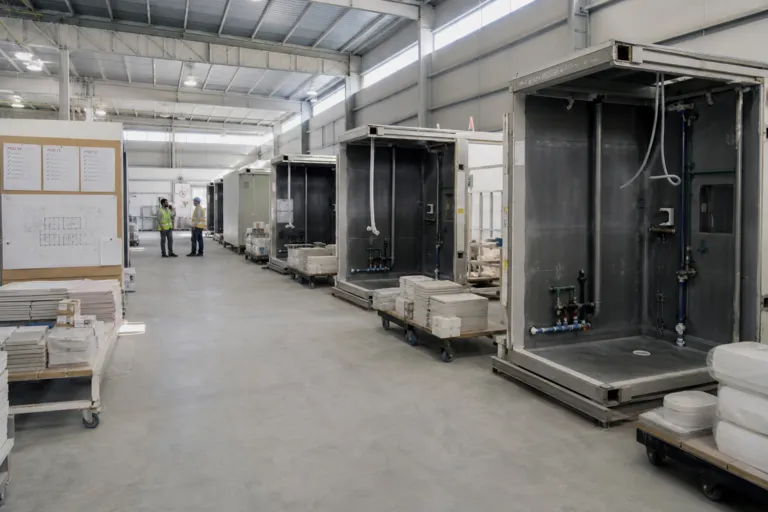
Bathroom pods sit at the center of modern methods of construction (MMC) fit-outs because they turn a high-risk wet-area scope into a repeatable factory product. In Saudi Arabia, the modular bathrooms and toilet PODs market is described as project-based B2B manufacturing and installation, where suppliers convert approved architectural, structural, and MEP designs into factory-finished wet-area modules. Demand clusters in repetitive room formats, especially hotels, residential compounds, hospitals, and workforce accommodation. This aligns with the Kingdom’s large and growing base of tourism rooms: Saudi Arabia had 426,056 licensed tourism rooms in August 2024, and the Ministry of Tourism reported a Q3 2024 pipeline of 275 hotel projects containing 67,614 rooms. Within this context, “prefab bathroom pods MMC components Saudi Arabia” becomes less a niche product and more a procurement strategy to stabilize schedules and finishes.
Market forecasts underline why scaling manufacturing matters. One Saudi-focused report projects the market rising from USD 118.4 million in 2025 to USD 214.4 million by 2031, with forecast growth of 10.40% during 2026–2031. The same source forecasts volume increasing from approximately 21,600 pods in 2025 to 36,430 pods in 2031, a 9.10% CAGR, while average realized value per pod rises from USD 5,481 to USD 5,885. It also notes a shift toward higher-specification hospitality and healthcare units with smart metering, low-flow fittings, and documented digital QA. For manufacturers, these targets place a premium on design-freeze discipline, factory utilization, and the ability to bundle engineering, logistics, installation, and post-handover defect management into a single MMC delivery model.
Scaling Capacity and Standardization Across the Gulf
Saudi production decisions are also shaped by Gulf-wide demand and capacity signals. Across the Gulf, more than 25 mega hospitality and mixed-use projects specified over 50,000 pods combined during 2023–2025. Regional manufacturing capacity expanded by 21% in 2024 with the addition of 6 new assembly lines, and more than 30 large-scale manufacturing plants in the region each produce over 20,000 pods per year. Adoption is strongly tied to large hotel formats: in the Gulf region, 67% of hospitality megaprojects above 500 rooms utilize prefabricated bathroom pods. One Gulf-focused source adds that Saudi Arabia and the UAE collectively account for 72% of regional demand, reinforcing the case for localized MMC component supply chains that can support predictable delivery windows.
Saudi Arabia’s share is also visible in Middle East and Africa market segmentation. A regional report states that Saudi Arabia held 34.90% of regional demand in 2025, while hospitality accounted for 36.7% of the Middle East and Africa prefabricated bathroom modules market share in 2025. That same report describes why repeatable bathroom construction is being specified: developers seek shorter installation schedules, consistent finishes, and less dependence on specialized on-site trades, and factory production supports quality control for projects that require documented waterproofing, antimicrobial surfaces, and predictable handover schedules. It also flags operational constraints that affect scaling, including import dependence, transport constraints, and differing building approvals across countries—issues that push pod makers and their MMC component partners to coordinate designs earlier and plan logistics tightly.
For residential and hospitality builds, modular bathrooms are only as scalable as the component ecosystem behind them. In Saudi Arabia’s sanitaryware market, residential installations represented 67.64% of volume in 2025, while toilets and cisterns accounted for 37.51% of market share in 2025. The same analysis notes that master developers increasingly embed modular bathroom pods into tender documents to compress timelines and lower on-site labor exposure, and that vendors gain specification resilience when they coordinate with pod fabricators, standardize SKUs, and stage just-in-time deliveries. It also highlights procurement dynamics tied to local-content clauses in Public Investment Fund tenders, where buyers steer toward manufacturers with in-Kingdom assembly or joint ventures. Together, these factors define how MMC components—fixtures, cisterns, and integrated systems—must be industrialized alongside pod assembly to keep pace with Saudi Arabia’s multi-project pipelines.
What is driving demand for bathroom pods and MMC fit-outs in Saudi Arabia?
How fast is the Saudi modular bathroom pods market projected to grow?
What capacity signals show Gulf manufacturers are scaling bathroom pod production?
How important is hospitality to prefab bathroom modules in the region?
How do prefab bathroom pods and MMC components in Saudi Arabia connect to sanitaryware demand?
Talk to us for your needs in:
-
Sustainable Construction Solutions
-
Strategic Construction Planning
-
Customer-Centric Construction Services
-
Operational Excellence in Construction
-
Leadership and Change Management for Construction
-
Digital Transformation in Construction
-
Saudi Construction Market Research
-
In-Depth Market Study for Construction
-
Market Intelligence and Insights in Construction
-
Feasibility Study and Assessment in Construction
-
Saudi Construction Benchmarking