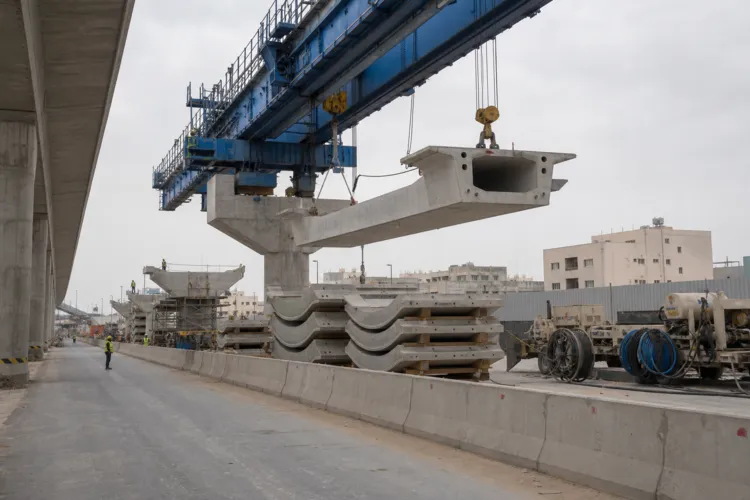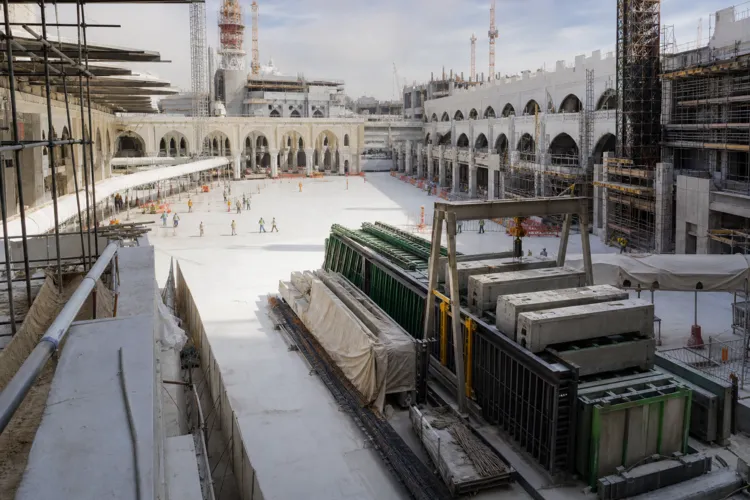
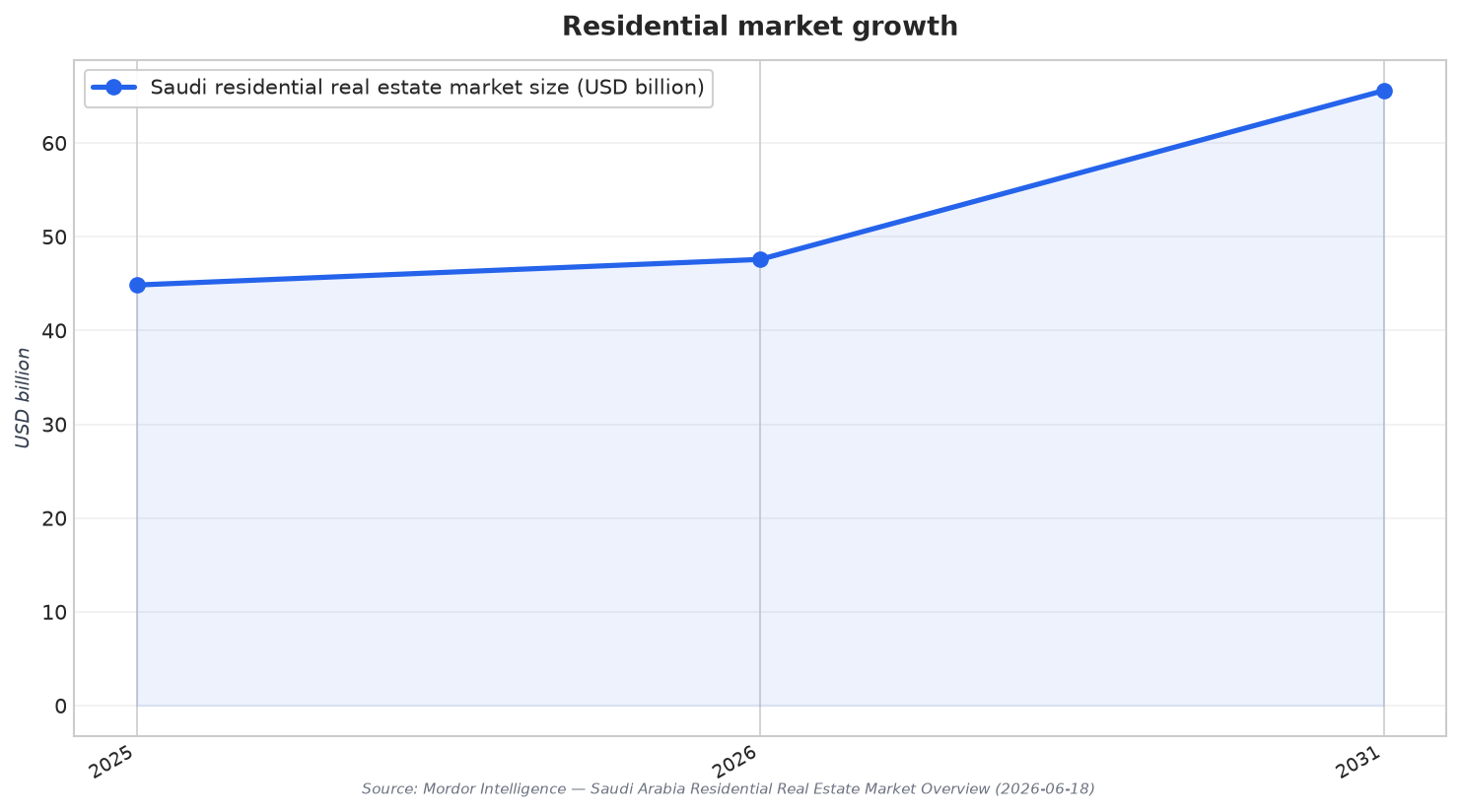
Saudi Arabia’s housing and construction agendas are creating a practical need for long-term mortgage funding that can scale. Mordor Intelligence projects the Saudi Arabia residential construction market at USD 50.34 billion in 2025 and USD 53.41 billion in 2026, reaching USD 71.75 billion by 2031. In the same research set, total construction spending reached USD 49.3 billion, and contract awards for real-estate projects rose 8% year-over-year in H1 2024. This backdrop matters because mortgage liquidity is repeatedly cited as a key enabler. Vision 2030 initiatives aim to reduce down-payments to 5% and enhance mortgage liquidity through securitization, linking finance mechanics to delivery capacity.
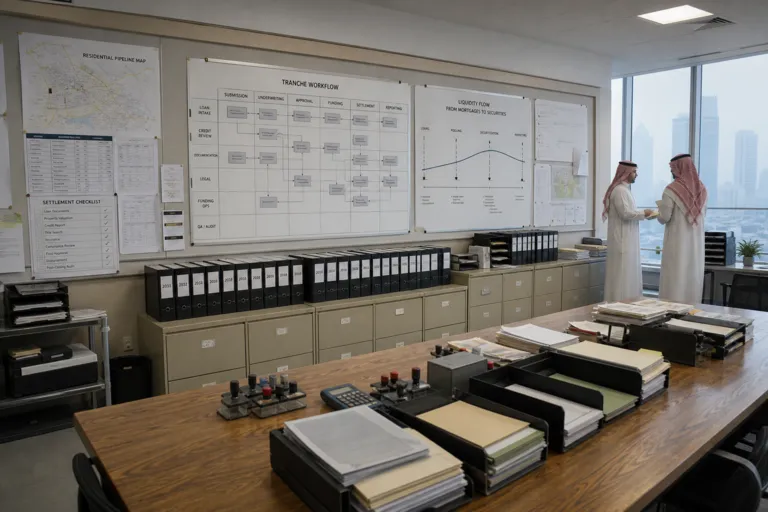
The Saudi Real Estate Refinance Co. (SRC), a Public Investment Fund subsidiary, sits at the center of this shift. Arab News reported that SRC launched the Kingdom’s first residential mortgage-backed securities (RMBS) transaction, designed to boost liquidity in housing finance by packaging residential mortgage loans into tradable securities. The issuance followed the Saudi Central Bank’s no-objection approval on Aug. 21, and SRC described it as a step in building a secondary mortgage market, coordinated with the Capital Market Authority and other Vision 2030-linked programs. S&P Global Ratings framed the opportunity around a $180 billion home-loan market and said securitization can provide a domestic mechanism to channel long-term funds into mortgages, potentially giving banks headroom to recycle capital into new lending.
Why Secondary-Market Mortgage Funding Matters for Delivery
On the ground, delivery targets and unit mix point to a pipeline that benefits from repeatable funding. Mordor Intelligence notes annual housing demand around 300,000 units, and homeownership at 65.4% in 2024, leaving a 4.6 percentage point gap to the 70% goal by 2030. New-build schemes represented 84.5% of residential construction spending in 2025, and apartments and condominiums led with 68.7% of market share that year. This is where the keyword topic—mortgage backed securities residential construction Saudi Arabia—connects operationally: RMBS can help lenders match-fund long-term mortgages, which supports predictable mortgage origination, which in turn supports primary market absorption. Mordor Intelligence also shows primary transactions supplied 56.10% of residential real estate revenue in 2025, underlining the importance of stable end-buyer financing.
Evidence of the refinancing channel is also accumulating. Arab News reported that SRC’s 2025 annual report said it refinanced mortgage portfolios worth around SR16 billion from local banks and mortgage finance companies. The same reporting noted outstanding mortgage loans approaching SR1 trillion, describing this as a potential pool of assets for future securitization transactions. A separate Arab News item said SRC’s debut RMBS could pave the way for follow-on issuances if pricing and performance are smooth and if legal frameworks and data standardization continue to improve. In parallel, Arab News reported that Tadawul proposed draft amendments to market rules to allow special purpose entities to issue and list debt instruments, described as a regulatory foundation needed for securitization within an organized market.
Residential construction is also being pulled forward by large-scale developers and public programs, which increases the value of scalable mortgage funding. Mordor Intelligence reports that private capital accounted for 70.1% of 2025 residential construction spending, while public-sector programs financed by REDF and PIF are set to rise at a 6.31% CAGR to 2031. It also notes that NHC oversees 134,000 units across 17 cities under joint-venture terms, and that ROSHN’s 20 km² Riyadh community will house more than 30,000 families once complete. In January 2026, ROSHN let SAR 1.5 billion (USD 400 million) of Phase 4-5 contracts and secured SAR 2.1 billion (USD 560 million) of new land. As SRC expands refinancing and RMBS issuance, it adds another route for liquidity to support mortgage origination and, by extension, housing take-up that sustains construction starts.
How do mortgage-backed securities relate to residential construction in Saudi Arabia?
What did SRC do that was new for Saudi Arabia’s mortgage market?
What is the size of the mortgage opportunity cited for RMBS in Saudi Arabia?
How much mortgage refinancing did SRC report, and why does it matter?
What construction-market signals show why scalable funding channels matter?
Talk to us for your needs in:
-
Sustainable Construction Solutions
-
Strategic Construction Planning
-
Customer-Centric Construction Services
-
Operational Excellence in Construction
-
Leadership and Change Management for Construction
-
Digital Transformation in Construction
-
Saudi Construction Market Research
-
In-Depth Market Study for Construction
-
Market Intelligence and Insights in Construction
-
Feasibility Study and Assessment in Construction
-
Saudi Construction Benchmarking