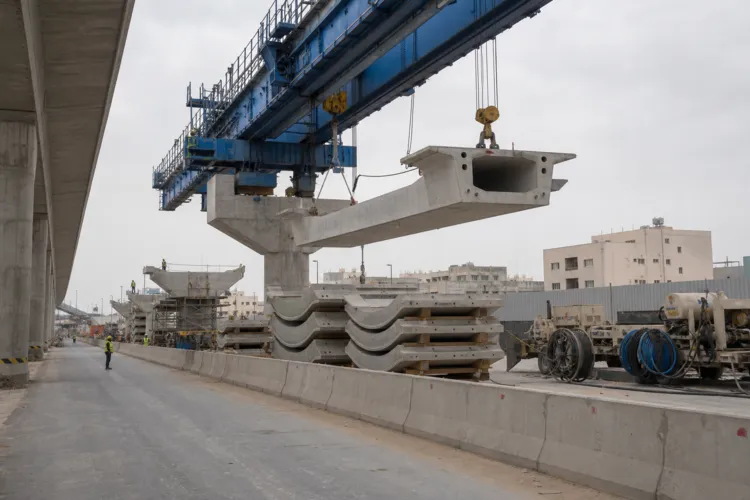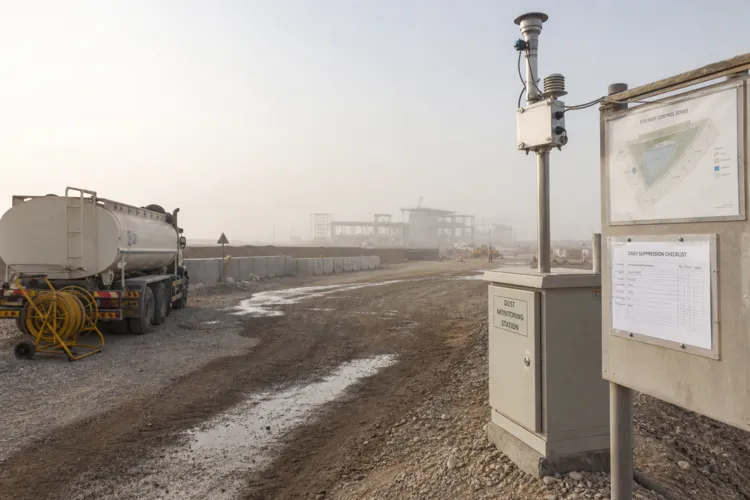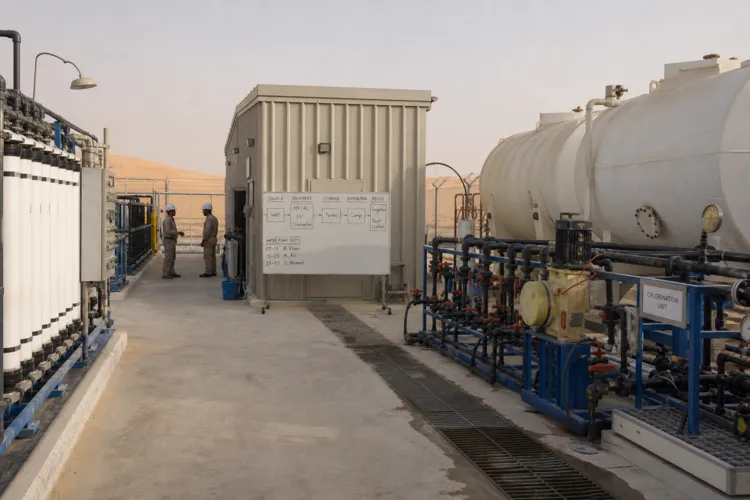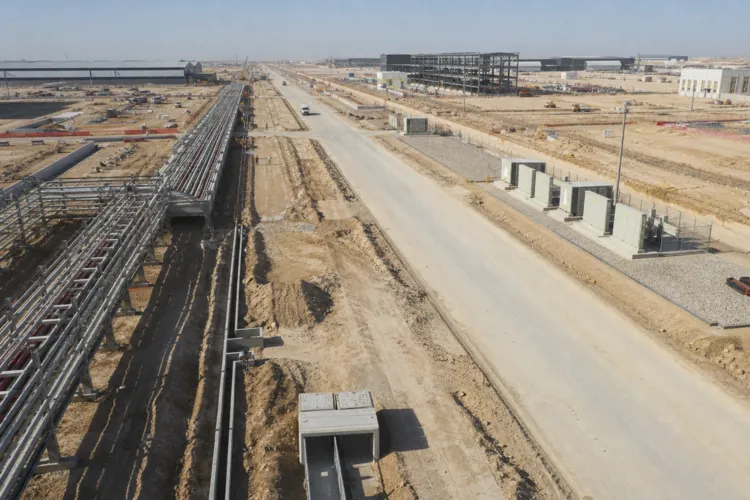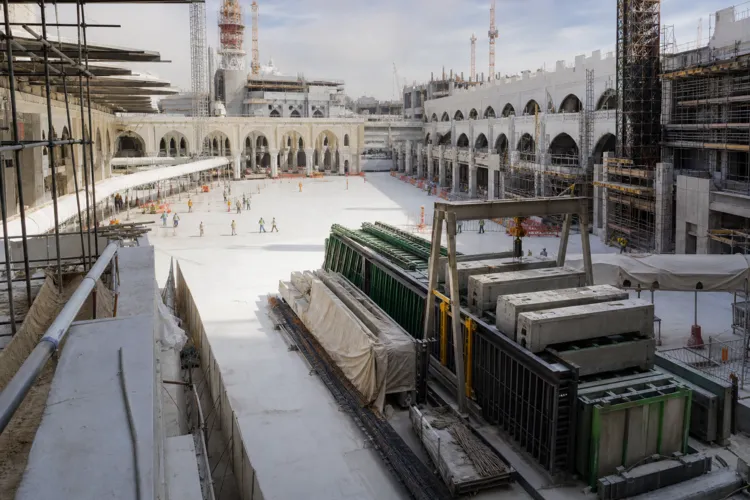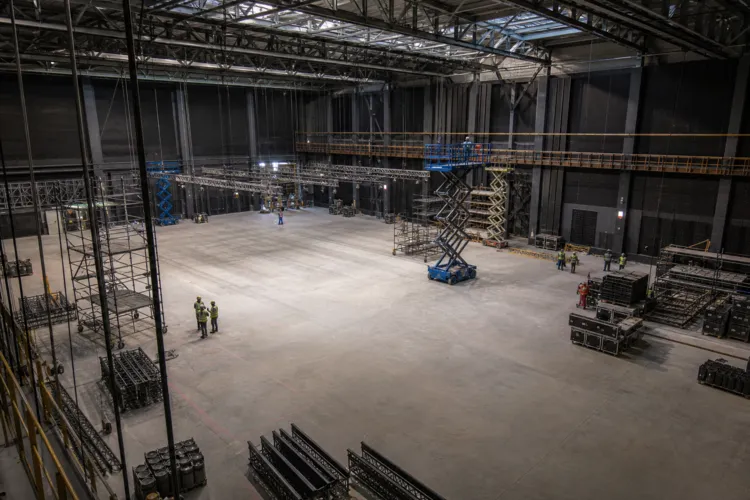
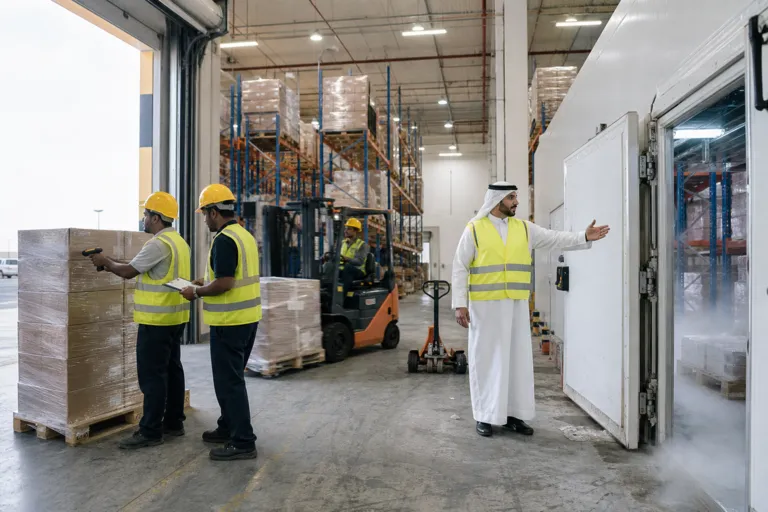
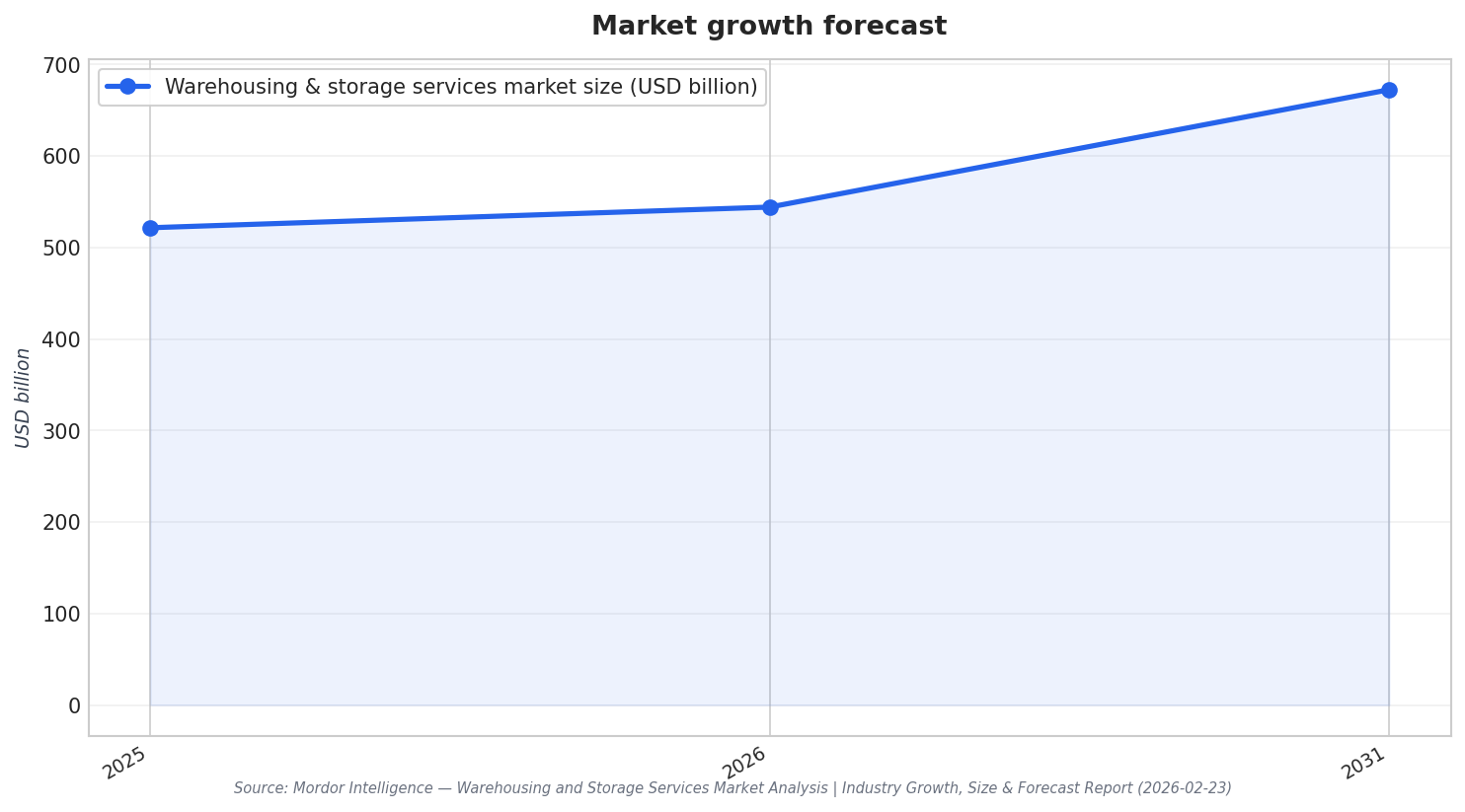
Six new logistics zones can act as a clear signal for where industrial developers and cold-chain operators will look next. The direction of travel is consistent with broad, global demand drivers that keep expanding the need for modern warehouse footprints, higher throughput, and more specialized temperature-controlled capacity. Mordor Intelligence values the global warehousing and storage services market at USD 521.53 billion in 2025, with an estimate of USD 544.11 billion in 2026 and a forecast of USD 672.36 billion by 2031 (a 4.33% CAGR for 2026–2031). In that same global view, general warehousing led with 52.15% share in 2025, while refrigerated warehousing is projected to expand at a 5.36% CAGR through 2031.
For logistics warehouse construction in Saudi Arabia, these global patterns matter because new zones typically concentrate the same ingredients that are pushing construction elsewhere: tighter delivery windows, supply-chain modernization, and investment in automation and cold chain. The same Mordor analysis highlights sustained investment in automation and heightened cold-chain requirements as tailwinds. It also notes that operators expand urban micro-fulfillment footprints to shorten last-mile routes, and that power-intensive automation installations can accelerate sustainability retrofits as operators seek energy savings and carbon-reduction credits. Those design implications can translate into more robust electrical and refrigeration planning, plus layouts that support high-velocity picking and cross-docking.
Cold Storage and Automation Are Pulling Construction Forward
Multiple sources point to cold storage as a construction catalyst, but the numbers must be kept in their original geographic scope. Grand View Research cites the United States Department of Agriculture figure that, in October 2021, gross refrigerated warehouse capacity in the U.S. was 3.73 billion cubic feet. The same report references a 291,000-square-foot cold storage facility leased by CJ Logistics America, designed with advanced refrigeration systems, rail service, and sustainable design. Separately, Custom Market Insights cites an April 2024 example: Americold Logistics, Inc. announced construction of a USD 127 million refrigerated warehouse in Missouri, U.S. These examples illustrate what “modern cold storage” tends to require: specialized construction, energy-aware design choices, and connectivity to freight networks.
Automation is the other pressure point that changes what gets built and how fast projects move from concept to groundbreaking. Market Reports World frames the global warehousing backdrop by stating that global storage capacity surpasses 21 billion square feet and supports more than 180 million pallets stored daily, with more than 120,000 industrial warehouses in continuous operation across major economies. It also says automated warehouse installations have increased by 34%, and that e-commerce contributes over 42% of total warehouse utilization. Grand View Research adds that warehouse automation technologies such as robotics, ASRS, and WMS improve operational productivity and inventory accuracy, while increasing investments in cold storage infrastructure for pharmaceuticals and perishable goods support growth.
Regionally, the North America data shows how quickly refrigerated capacity can outpace general space once networks are rebalanced, which can be a useful comparison lens rather than a local proxy. Mordor Intelligence expects the North America warehousing and storage market to grow from USD 134.69 billion in 2025 to USD 140.47 billion in 2026 and reach USD 172.45 billion by 2031 (4.19% CAGR for 2026–2031). In that North America report, general warehousing held 51.5% share in 2025, while refrigerated warehousing and storage is forecast to expand at a 9.85% CAGR through 2031. Against the backdrop of six new logistics zones, the key planning takeaway is to expect demand not only for “more space,” but for more complex, automation-ready, refrigeration-ready buildings that can serve manufacturing-led supply chains and higher-spec distribution.
How do six new logistics zones connect to demand for warehouse builds?
What do the sources say about global warehousing market growth?
Why is refrigerated warehousing influencing construction plans?
What cold-storage capacity figure is cited in the sources?
What should logistics warehouse construction in Saudi Arabia prioritize based on these trends?
Talk to us for your needs in:
-
Sustainable Construction Solutions
-
Strategic Construction Planning
-
Customer-Centric Construction Services
-
Operational Excellence in Construction
-
Leadership and Change Management for Construction
-
Digital Transformation in Construction
-
Saudi Construction Market Research
-
In-Depth Market Study for Construction
-
Market Intelligence and Insights in Construction
-
Feasibility Study and Assessment in Construction
-
Saudi Construction Benchmarking